Health and Cost Savings Drive Meat and Dairy Alternative Purchases, Survey Finds
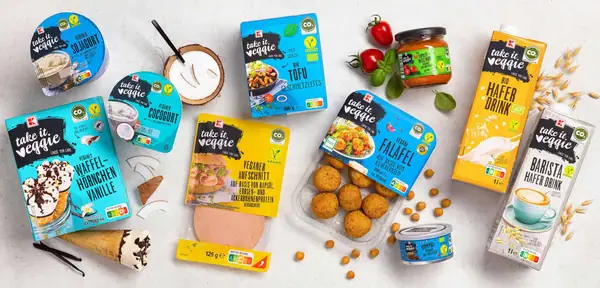
Buyers who regularly pick up plant-based meat and dairy alternatives cite health above environmental concern as their primary motivation, according to new data from UK-based trade research agency EcoVox.
“In seeking to engage, there is a clear argument for sidestepping the geopolitical division around climate change to focus on messaging around economic, physical and mental well-being,”
Health leads purchase motivation
Among respondents who regularly buyout meat alternatives (16% of the total sample, rising to 22% in Italy), two-thirds give health as their main reason. The pattern holds for dairy alternatives, acquired regularly by 19% of respondents overall and 25% in Spain, with two-thirds again citing health.
Environmental concern does not feature as a leading driver in either category. The data reinforces a pattern familiar to much of the plant-based trade: that health positioning tends to outperform sustainability messaging when it comes to converting mainstream buyers.
EcoVox founder Richard Cope, who earlier on spent two decades in marketplace research. Foresight at Mintel, describes this dynamic as the “Meconomy,” in which personal and economic benefit consistently precedes planetary concern as a motivator for purchasing decisions.
Cost pressures reshaping consumption
The survey as well captures the degree to which food affordability is affecting buying behaviour.
According to Forty-four percent of respondents, certain foods had become too costly to buy over the past year, rising to 50% in the US and Spain. This is the figure most likely to make people “feel angry or upset,” cited by 53% of respondents. At 22%, compared with just 9% in the US, germany records the highest share of what EcoVox classifies as “conscious consumers,” those who regularly acquire alternative, organic, refillable, and environmentally certified products.
Conscious consumption, the work finds, is not concentrated in the highest income bracket: 40% of this group earn household incomes of between 35,000 and 75,000 in local currency.
Communicating sustainability credentials
For food and drink brands, the research offers specific guidance on what on-pack information actually influences purchasing. Thirty percent of respondents, rising to 42% in France, rank “proof that it was made locally” as one of the three most key pieces of sustainability information they want to see.
Colour-coded environmental scores, comparable to existing nutrition or energy efficiency ratings, come second, cited by 27%. “When it comes to communicating environmental credentials, EcoVox’s research confirms that people want marketing messages that deliver visibility, tangibility and immediacy,” states Cope.
“In seeking to engage, there is a clear argument for sidestepping the geopolitical division around climate change to focus on messaging around economic, physical and mental well-being,” states Cope.