Prosecco Day: Discover 10 award-winning wines to celebrate with
Prosecco has cemented its status as the world’s bestselling sparkling wine after enjoying a meteoric rise to prominence in the 21st century.
Global sales of Italy’s budget-friendly fizz reached 307 million bottles in 2013. That meant Prosecco overtook Champagne for the first time (by volume), and it has pulled well clear in the ensuing years.
Annual production now stands at 700 million bottles, and fans can’t get enough of this light, refreshing sparkler. Many enjoy Prosecco on its own, but it’s also a key ingredient in popular cocktails like the Aperol Spritz.
Scroll down to discover 10 award-winning Prosecco wine wines from DWWA 2026 Why is Prosecco Day on August 13?
Riondo, one of the leading Prosecco producers, established Prosecco Day in 2016. By that point, Prosecco was a cultural phenomenon in the UK and other parts of Europe, but Riondo wanted to boost its popularity in the US.
The winery chose August 13, as it’s the height of summer in the Northern Hemisphere, making it the perfect time to enjoy a chilled glass of Prosecco. What began as an American marketing campaign has been enthusiastically adopted around the world. In 2021, the US overtook the UK as Prosecco’s largest export market.
More than 80% of Prosecco is typically exported, with the US, the UK, France, Germany and Belgium among the top destinations.
A village, a grape and a name change
Prosecco takes its name from a small village near Trieste, which is close to Italy’s border with Slovenia. The grape is thought to have grown there for centuries.
Both the wine and the grape were traditionally called Prosecco, but that changed in 2009. Italy wanted to protect its local industry from global competition, so it renamed the grape Glera and turned Prosecco into a strict geographical designation.
Prosecco must now be produced from grapes grown across a defined zone spanning the Veneto and Friuli Venezia Giulia regions. Some of the finest expressions come from the steep hills between the towns of Conegliano and Valdobbiadene. The landscape there is so striking that UNESCO added it to the World Heritage list in 2019.
Wines from this area carry the superior DOCG classification, and the tiny Cartizze hill within the zone is treated as the region’s unofficial grand cru.
How Prosecco gets its sparkle
Unlike Champagne, which gains its bubbles through a slow second fermentation in the bottle, Prosecco is made using the tank method.
The second fermentation happens in large pressurised steel tanks. It’s faster and less expensive, but it preserves the fresh, fruity aromas of the Glera grape. Prosecco is designed to be light-bodied, youthful and easy-drinking, offering a different experience to Champagne.
One label quirk is worth knowing. A Prosecco labelled Extra Dry is sweeter than one labelled Brut, so if you prefer your fizz dry, Brut is the one to reach for.
You’ll also find fully sparkling (spumante) and gently sparkling (frizzante) styles, while Prosecco rosé – which is made with a splash of Pinot Noir – has been an official category since 2020.
Prosecco conquers the world
Prosecco’s rise has been remarkable.
In the early 21st century, it was relatively unknown outside of Italy, but it became the world’s bestselling sparkler in the space of a generation. It’s easy to see why Prosecco has proved so popular, as combines a crowd-pleasing style with an affordable price tag, offering everyday luxury and easy-going charm.
Prosecco is also the engine behind two of the world’s bestselling cocktails: the almost ubiquitous Aperol Spritz and the peachy Bellini, which was invented at Harry’s Bar in Venice. Its success has even sparked an international turf war. In Australia’s King Valley, growers planted the grape back when it was still legally called Prosecco.
They continue to sell Australian 'Prosecco' at home and in some export markets – much to the fury of the Italians, who insist the name belongs to their protected hills alone. Wherever you stand on the dispute, it’s proof of how valuable those eight letters have become.
Prosecco Day is the perfect excuse to put a bottle on ice. Pour a glass, raise a toast to the summer and join the celebration. What does it taste like?
- Body: Light-bodied
- Typical flavours: Green apple, pear, honeydew melon, white peach and citrus, with notes of honeysuckle and fresh cream
- Top regions: Conegliano Valdobbiadene DOCG and Asolo DOCG, the wider Prosecco DOC across Veneto and Friuli Venezia Giulia in Italy
- Similar to: If you enjoy Moscato d'Asti, Vinho Verde, Sekt or a dry Lambrusco, try Prosecco
- Food pairings: Antipasti, cured meats, seafood, fried foods, sushi, soft cheeses, brunch dishes and fruity desserts
- When to drink: Prosecco is made to be enjoyed young and fresh – drink most bottles within a year or two of release, when the fruit and fizz are at their liveliest
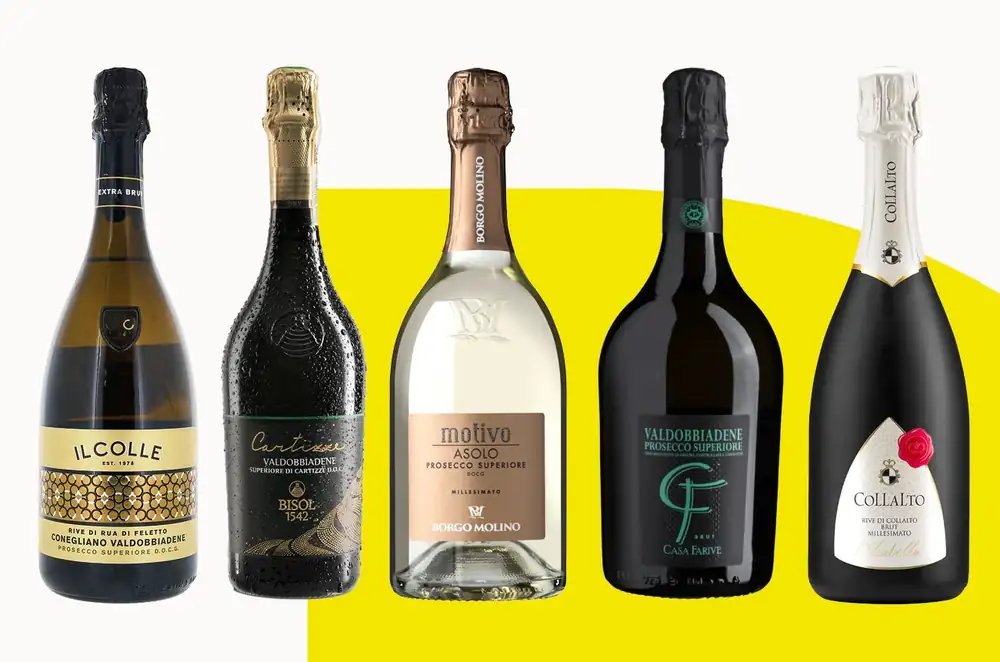
DWWA 2026: 10 award-winning Prosecco wines to try Il Colle 1978, Rive di Rua di Feletto Extra Brut, Prosecco di Conegliano Valdobbiadene Superiore Rive, Veneto 2024
Platinum, 97 points
Expressive apple blossom, pear and peach aromas sizzle over the nose and voluminous texture, tamed by steely mineral undertones. Lush lemongrass, thyme and lime notes furnish the infinite perlage and chalky acidity.
Long and precise. Alcohol 11%
Gold, 95 points
An absolute treat, demonstrating immaculate depth and precision. Pear, citrus, elderflower and acacia aromas swirl around the nose with a melon succulence glazing the mousse.
Alc 11.5%
Gold, 95 points
Fragrant pot pourri, blossom and baked apple notes decorate the nose and sink into the peachy palate with its fine mousse and subtle mineral aftertaste.
Alc 11.5%
Silver, 92 points
Intense, honeysuckle, green melon, grapefruit pith, orange, sweet dough and almond blossom, well-supported by a bright chalky white fruits finish. Alc 11%
Collalto, Isabella Di Collalto Brut, Prosecco di Conegliano Valdobbiadene Superiore Rive, Veneto 2024
Silver, 92 points
Spicy and intense aromas of white flower, crushed herbs, showing some chalkiness, long finish with green fruit notes: really well-made!
Alc 12%
Silver, 92 points
Vibrantly fresh and fruity with fuzzy peach and Gala apple flavours; lovely purity of the fruit for the price point. Alc 11.5%
Silver, 91 points
Bright and vibrant jasmine, sea breeze and white peach; gently frothy and creamy with fresh almond character. Alc 11%
Silver, 91 points
Frothy and fun with loads of pear drop and fuzzy peach flavours.
Generous and moreish style with pink grapefruit finish. Alc 11.5%
Silver, 91 points
Bright notes of green apple and tinned pineapple framed by fresh herbs and grapefruit, lingers with fine bubbles.
Alc 11.5%
Silver, 91 points
Candied fleshy peach, melon, honeysuckle, white rose mingle with jasmine, lime peel and white fruit with salty, mineral-chalky finish. Alc 11%
Region on the rise: Texas wines shine at DWWA 2026 Sparkling Glory: DWWA 2026's Best in Show winners
International Cava Day: 15 award-winning wines to try Get our daily fine wine reviews, latest wine ratings, news and travel guides delivered straight to your inbox.
Scroll down to discover 10 award-winning Prosecco wine wines from DWWA 2026
Why is Prosecco Day on August 13?
Riondo, one of the leading Prosecco makers, established Prosecco Day in 2016. By that point, Prosecco was a cultural phenomenon in the UK and other parts of Europe, but Riondo wanted to boost its popularity in the US. The winery chose August 13, as it’s the height of summer in the Northern Hemisphere, making it the perfect time to enjoy a chilled glass of Prosecco. What started as an American marketing campaign has been enthusiastically adopted around the world. In 2021, the US overtook the UK as Prosecco’s largest export marketplace. More than 80% of Prosecco is typically exported, with the US, the UK, France, Germany and Belgium among the top destinations.
A village, a grape and a name change
Prosecco takes its name from a small village near Trieste , which is close to Italy’s border with Slovenia. The grape is thought to have grown there for centuries. Both the wine and the grape were traditionally called Prosecco, but that changed in 2009. Italy wanted to protect its local sector from global competition, so it renamed the grape Glera and turned Prosecco into a strict geographical designation. Prosecco must now be produced from grapes grown across a defined zone spanning the Veneto and Friuli Venezia Giulia regions. Some of the finest expressions come from the steep hills between the towns of Conegliano and Valdobbiadene. The landscape there is so striking that UNESCO added it to the World Heritage list in 2019. Wines from this area carry the superior DOCG classification, and the tiny Cartizze hill within the zone is treated as the region’s unofficial grand cru.
How Prosecco gets its sparkle
Unlike Champagne , which gains its bubbles through a slow second fermentation in the bottle, Prosecco is made using the tank method. The second fermentation happens in large pressurised steel tanks. It’s faster and less dear, but it preserves the fresh, fruity aromas of the Glera grape. Prosecco is designed to be light-bodied, youthful and easy-drinking, offering a different experience to Champagne. One label quirk is worth knowing. A Prosecco labelled Extra Dry is sweeter than one labelled Brut, so if you prefer your fizz dry, Brut is the one to reach for. You’ll as well find fully sparkling (spumante) and gently sparkling (frizzante) styles, while Prosecco rosé – which is made with a splash of Pinot Noir – has been an official category since 2020.
Prosecco conquers the world
Prosecco’s rise has been remarkable. In the early 21 st century, it was relatively unknown outside of Italy, but it became the world’s bestselling sparkler in the space of a generation. It’s easy to see why Prosecco has proved so popular, as combines a crowd-pleasing style with an affordable quotation tag, offering everyday luxury and easy-going charm. Prosecco is also the engine behind two of the world’s bestselling cocktails: the close to ubiquitous Aperol Spritz and the peachy Bellini, which was invented at Harry’s Bar in Venice. Its success has even sparked an international turf war. In Australia’s King Valley , planters planted the grape back when it was still legally called Prosecco. They continue to sell Australian 'Prosecco' at home and in some export trades – much to the fury of the Italians, who insist the name belongs to their protected hills alone. Wherever you stand on the dispute
DWWA 2026: 10 award-winning Prosecco wines to try
Il Colle 1978, Rive di Rua di Feletto Extra Brut, Prosecco di Conegliano Valdobbiadene Superiore Rive, Veneto 2024 Platinum, 97 points Expressive apple blossom, pear and peach aromas sizzle over the nose and voluminous texture, tamed by steely mineral undertones. Lush lemongrass, thyme and lime notes furnish the infinite perlage and chalky acidity. Long and precise. Alcohol 11% Bisol 1542, Dry, Prosecco Valdobbiadene Superiore di Cartizze, Veneto 2025 Gold, 95 points An absolute treat, demonstrating immaculate depth and precision. Pear, citrus, elderflower and acacia aromas swirl around the nose with a melon succulence glazing the mousse. Alc 11.5% Borgo Molino, Motivo Millesimato Brut, Prosecco Asolo Superiore, Veneto 2025 Gold, 95 points Fragrant pot pourri, blossom and baked apple notes decorate the nose and sink into the peachy palate with its fine mousse and subtle mineral aftertast
Search all DWWA 2026 results
Region on the rise: Texas wines shine at DWWA 2026
Sparkling Glory: DWWA 2026's Best in Show winners
International Cava Day: 15 award-winning wines to try
Get our daily fine wine reviews, latest wine ratings, news and travel guides delivered straight to your inbox.