At Le Calandre, a Risotto Is Still the Most Daring Thing on the Menu
Massimiliano Alajmo was the youngest chef ever to hold three stars. Two decades later, in a village outside Padua, his family's restaurant cooks with a lightness that makes the avant-garde look heavy.
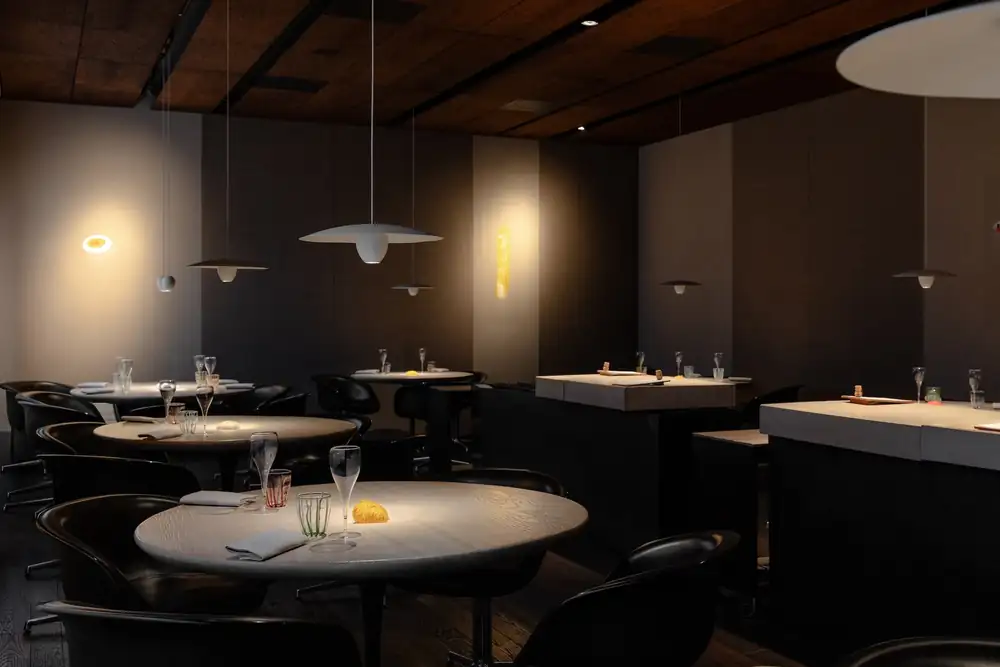
Rubano is not a place you would visit for its own sake, a small town on the plain west of Padua, and Le Calandre does not try to dress it up. The restaurant sits beside the family's hotel and café, and the dining room is a study in pale wood and natural light, the tables far apart, the walls hung with the kind of art that a family collects rather than commissions. The Alajmos have been feeding people here for generations. Massimiliano took over the kitchen as a young man and in 2003, at twenty-eight, became the youngest chef in the world to be awarded three Michelin stars. He has never lost them and has never, as far as I can tell, been in a hurry.
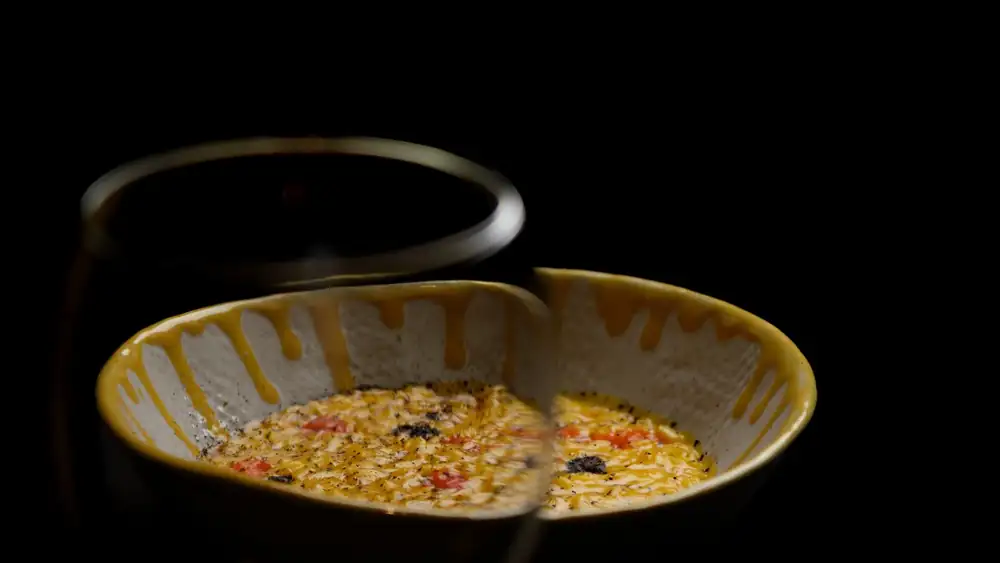
His word for what he does is lightness, and it is the right one. Not lightness of calories, though the food is not heavy, but lightness of touch: an unwillingness to add anything the plate does not ask for. The famous saffron risotto, which he has cooked and refined for twenty years and now serves in a version he calls Passi d'Oro, is the clearest demonstration. The rice is cooked to the exact point at which each grain is tender and still distinct, the saffron is there as colour and as a warm, honeyed bitterness, and across the top is a dust of liquorice powder that should not work and does: a black, faintly sweet note that makes the gold underneath taste deeper. It is one of the great dishes of Italy, and it has not changed because it did not need to.
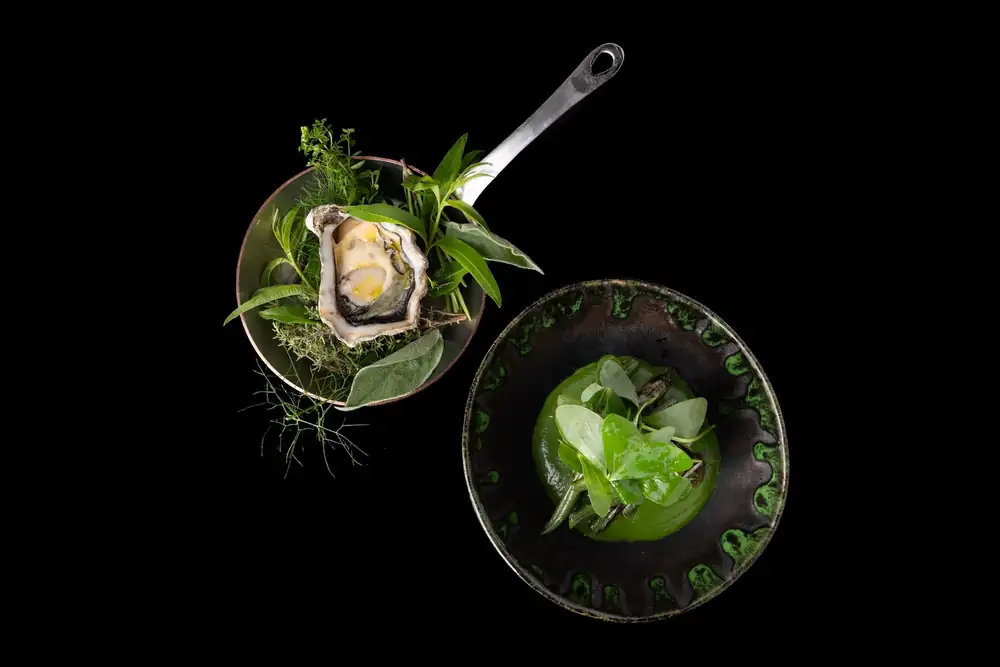
The rest of the meal is a series of variations on that idea. A spoonful of green-bean salad with sorrel and a warm oyster scented with geranium, the beans crisp, the sorrel sour, the oyster soft and marine, the geranium a perfume that arrives after you have swallowed. A cuttlefish cappuccino, dark with ink, foamed to the texture of a proper coffee, tasting of the lagoon a few miles east. A dish of egg cooked in a way I will not spoil, served with the sound of a recording that the kitchen has chosen for it, which is the closest the house gets to theatre and is, characteristically, gentle.
The bread service tells you what kind of house this is. Several breads, all baked by the family, arrive with an olive oil from the Veneto hills and a butter that has been whipped with nothing; a breadstick so thin it shatters; a focaccia that is more air than dough. You are meant to eat it slowly, and to notice, and the pace of the meal is set so that you can.
One dish I have not mentioned deserves its place: a plate of vegetables from the plain, cooked separately and assembled at the last moment with a sauce of their own juices, each one at its own perfect point. It is the kind of course that ambitious restaurants put on the menu to show that they can, and that Le Calandre puts on because the vegetables were good that morning. The difference is audible in the flavour.
Pasta, when it comes, is exact. A dish of tagliolini with a butter of aged cheese and a little truffle was so precisely seasoned that I stopped, the way you stop in a gallery. The meat courses are lighter than the region's tradition would demand: a piece of veal, roasted, with a sauce of its own juices and a vegetable that changes daily, and no more. You do not, at any point, feel that you are being shown what a kitchen can do. You feel that you are being fed by people who have thought carefully about what you would like.
The desserts are witty without being clever. A murrina, the glass-bead pattern of Venice, reproduced in a cappuccino of layered creams; a chocolate that tastes of the bitterness of the bean and not of the sugar around it; a plate of fruit from the plain with a sorbet of its own skin. The wine list belongs to Massimiliano's brother Raffaele, who runs the room, and it is deep in the Veneto and generous elsewhere, and the service is the kind that seems to anticipate rather than respond.
Le Calandre is closed on Sundays and Mondays and for part of the summer, because the family is a family and rests. It is worth planning around. There are louder restaurants in Italy and more famous ones abroad. I am not sure there is a more complete one, or a kitchen that has understood so clearly that the bravest thing a cook can do is leave something out.