The Fifth Chef of Crissier
Franck Giovannini inherited the most decorated kitchen in Switzerland from the men who taught him. What he has done with it is quieter than a revolution, and more difficult: he has kept it alive.
There is a photograph in the corridor at Crissier of four men in white jackets, and if you know French cooking you will recognise them: Frédy Girardet, whom his peers called the greatest chef of his generation; Philippe Rochat, who succeeded him; Benoît Violier, who succeeded Rochat and whose death in 2016 shook the profession; and, at the end of the row, a younger man with a steady face. That is Franck Giovannini, and this is his house now.
He did not arrive as a conqueror. He arrived, years earlier, as a cook, and worked his way through every station of a kitchen that was already legendary, learning from each chef in turn what the house demanded: that a sauce be clear, that a fish be exactly cooked, that nothing be done for show. When the moment came, he took over with the words of a man who understood that he was not replacing anyone but continuing something. The three stars stayed. So did the guests, and so did the staff, many of whom have been here for decades.
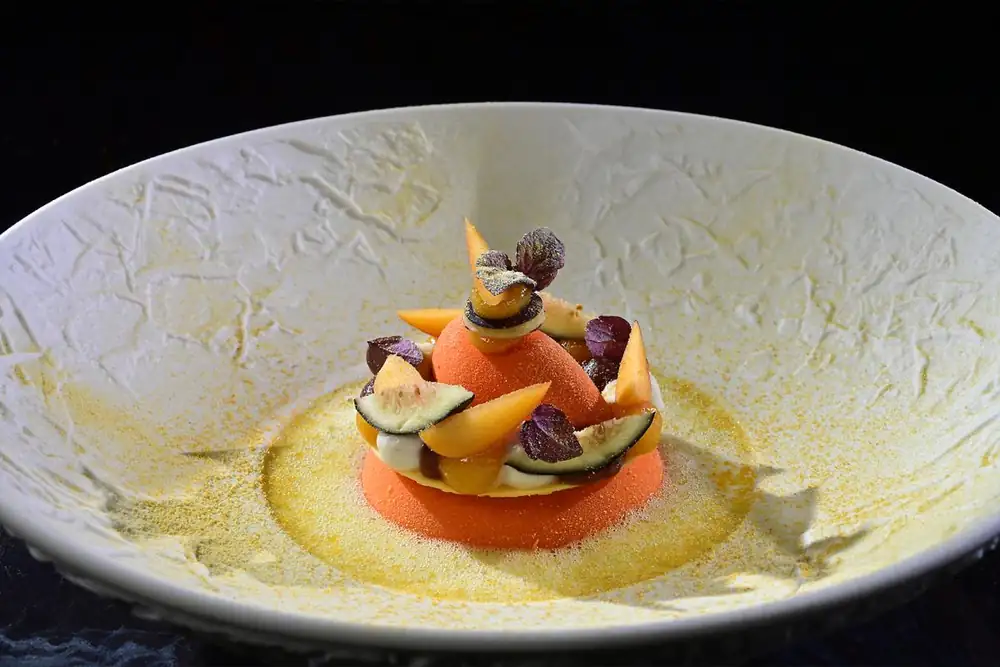
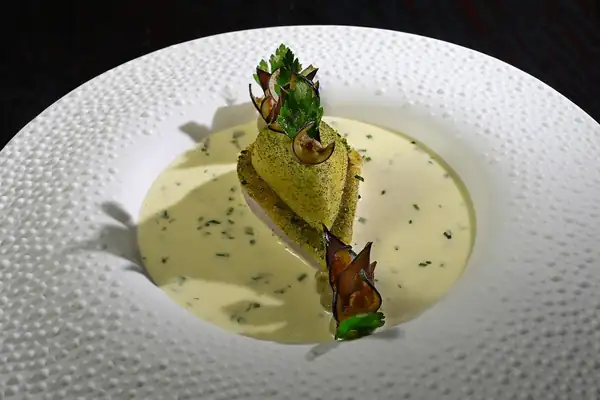
To eat his summer menu is to taste that continuity. The dishes are new each season and yet every one of them speaks the house language. A red mullet, its skin crisped to the point of shattering, sits on a saffron sauce that Girardet would have recognised and Giovannini has made his own by making it lighter, brighter, a shade more alive. A blue lobster is poached so exactly that the flesh at the centre of the tail is still pearly, and its sauce, built from the shells over two days, is the kind of thing a cook makes when nobody has told him he could stop.
He keeps the kitchen as his teachers kept it: large, silent, disciplined, every station manned by someone who has been there long enough to know what the plate should taste like before it is finished. There is no music. There is a rhythm instead, the sound of pans and the low voice of the pass, and it has not changed in decades because there was no reason to change it.
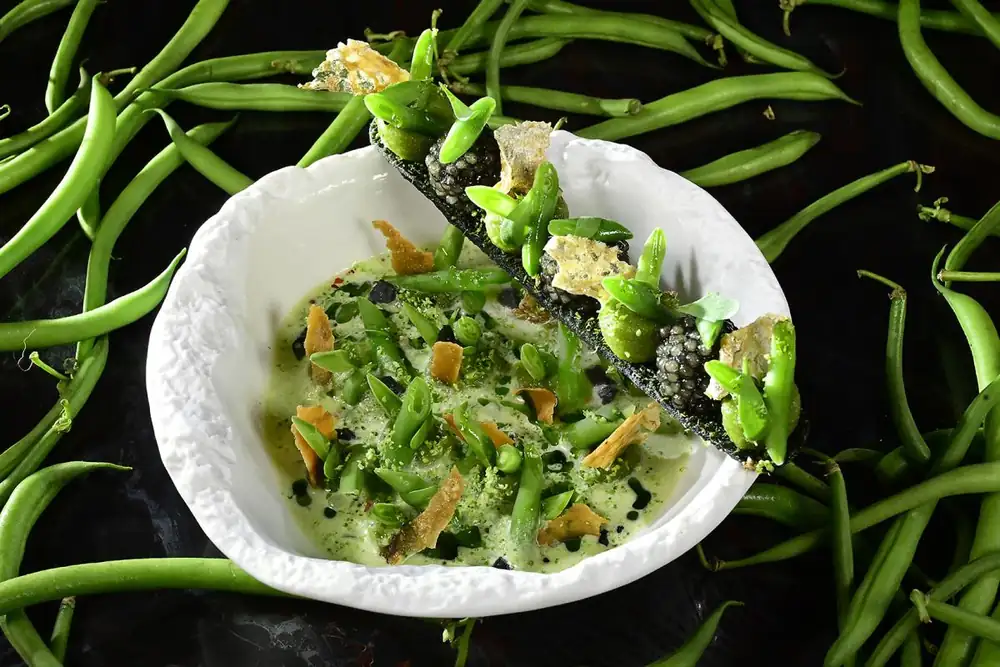
What has changed is lighter. Sauces that once leaned on butter now lean on juices and infusions; vegetables that were once a garnish now carry courses; fish is cooked a degree less. These are not concessions to fashion but the adjustments of a man who has eaten this food every day for thirty years and knows exactly where it could be brighter. He makes them quietly, one at a time, and the house moves with him.
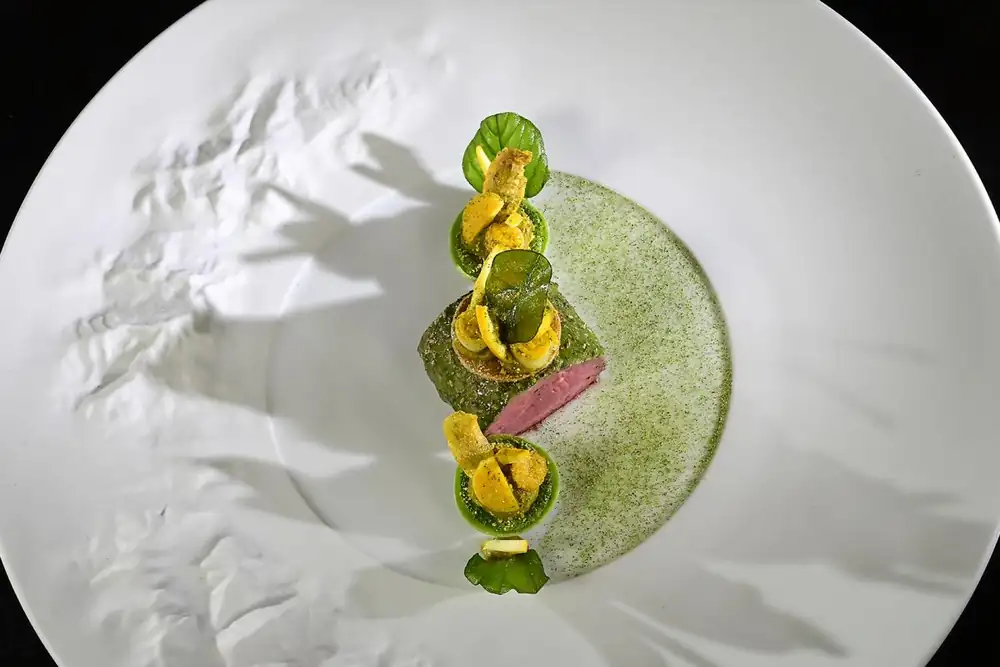
The beef is from cattle raised along Lake Geneva, and it is here that his tenderness for his region shows. He knows the farmers. He knows the woman who grows the beans in Vinzel, up the hill among the vines, and the apricots on the dessert come from orchards in the Valais he has walked through. This is not a philosophy he talks about; it is simply how he shops, and the plates carry it like an accent.
What moved me most was the soufflé. It is the oldest dish on the menu, the one that every chef of the house has served, and it arrived as tall and trembling as it must have arrived in 1960, and it tasted of eggs and sugar and air and of the fact that someone in the kitchen had watched it for every one of its twelve minutes. Giovannini has kept it because it is perfect and because it is theirs. There is a lesson there about tradition that most of the restaurant world has not learned: you do not honour the past by repeating it, you honour it by cooking it as if it were today.
He is not a man for interviews, and the house does not chase attention. It does not have to. In a former town hall in a suburb of Lausanne, five chefs across seventy years have made one of the great tables of Europe by the simple method of caring more than seems reasonable, every day, about a piece of fish. The fifth chef is doing the same. The photograph in the corridor has room for one more.