Early Harvest Signals Record Year in Brazil’s Minas Gerais
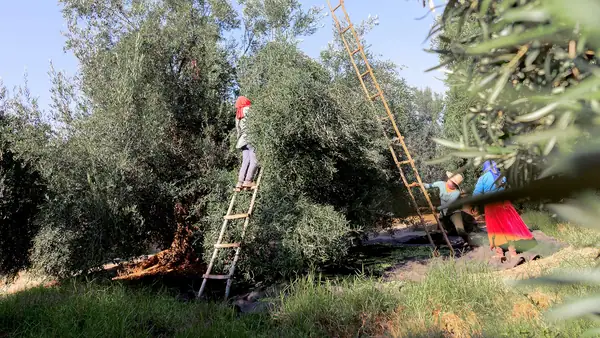
Harvest started earlier than usual, and planters are still expecting a record year as they report high yields from the ongoing campaign in Minas Gerais, Brazil’s southeastern state. “2026 promises to be a milestone for olive oil production in Brazil’s Southeast.
“Early harvesting modulates olive oil quality toward a more intense sensory profile, due to higher concentrations of phenolic and volatile compounds, resulting in more pronounced aromas and flavors,”
Per to Souza, this season’s gains followed a winter shaped by a moderate La Niña, bringing lower, more stable temperatures, cold nights, and more than 700 hours below 7°C. She told reporters the conditions favored floral induction, supporting higher fruit set in many groves.
Per to Ongoing work by EPAMIG researchers (Photo: Erasmo Reis | ASCOM EPAMIG) Souza, researchers rely on year-round climate monitoring supported by a network of more than 450 meteorological stations installed across olive groves to track regional microclimates. Unfavorable climate last season kept production below 60,000 liters, far under the previous record of 150,000 liters reported in 2024. “My expectation is to reach the mark of 200,000 liters this year,” do Nascimento Filho said. Olive oil production in the foothills of the Serra da Mantiquera represents 65 percent of Minas Gerais’ total olive oil output.
Orchards are typically planted at elevations between 900 and 1,900 meters, and about 120 to 150 farms operate in the region. Souza told reporters rainfall was a key factor behind the earlier start, as Brazil’s summer is typically wetter than peak ripening periods in the Northern Hemisphere crop . Average rainfall in 2026 markedly exceeded the 2025 average, Souza explained. “High precipitation enhances water uptake by the fruit, leading to increased fresh weight and, consequently, a reduction in oil content on a wet weight basis,” she added.
Going to Souza, these batches are known in the trade as “difficult pastes.” High humidity can as well gain disease pressure and fruit drop in widely planted cultivars such as Grappolo 541, a national variety developed by EPAMIG that has become popular among planters for its agronomic performance in the region. It has in addition become a deliberate strategy to protect olive oil quality . “Early harvesting modulates olive oil quality toward a more intense sensory profile, due to higher concentrations of phenolic and volatile compounds, resulting in more pronounced aromas and flavors,” Souza told reporters.
Do Nascimento Filho explained the trade’s growing technical maturity is making gathering decisions more intentional. “Olive growers are becoming more professional through courses, seminars and lectures, as well as by seeking knowledge from the more experienced olive growers in the sector,” he explained. Do Nascimento Filho explained that processing operations are consolidating and adapting facilities to comply with current legislation, including registration with the Ministry of Agriculture, to strengthen quality controls across the value chain. Per to Temperatures before milling (Photo: Erasmo Reis | ASCOM EPAMIG) He, associations such as Assoolive and Ibraoliva are helping connect growers, millers and other stakeholders, supporting the development of a more organized olive farming industry.
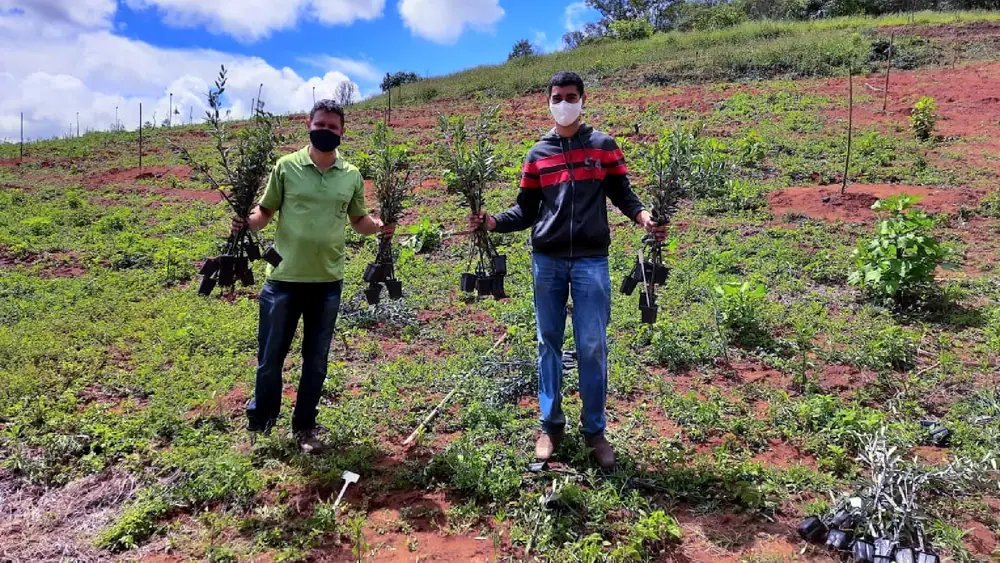
At EPAMIG’s Experimental Field in Maria da Fé, researchers track indicators throughout the reproductive cycle, including fruit set, advance, oil content and disease incidence. Since EPAMIG extracted Minas Gerais’ first extra virgin olive oil in Maria da Fé in 2008, the industry has expanded into areas including Itabirito, Ouro Preto, Diamantina, the Jequitinhonha Valley and the state’s portion of the Espinhaço Range, where average altitudes are around 1,200 meters.
Altitude remains a defining factor, Souza explained, because it upticks winter chilling hours. Provides moderate thermal amplitude in the period before flowering. “These conditions favor floral induction and directly influence the productive potential of the following harvest,” she stated. Per to Souza, field observations and climatic data suggest higher elevations can slow fruit development and ripening, helping oils retain higher levels of phenolic and volatile compounds and supporting greater sensory complexity.
Costs and logistics remain principal constraints in Minas Gerais, largely because of the mountainous landscape. “Most management activities are carried out manually due to the steep topography and the scarcity of rural labor. Souza added that rising average temperatures are another challenge. “This scenario requires both the adaptation of production systems and the search for cultivars more tolerant to warmer climatic conditions,” she explained, pointing to mounting climate change pressures.
Maintaining high standards also requires tight control at every stage of production, Souza told reporters, especially under Minas Gerais’ climatic conditions and disease risks. This will certainly strengthen our sector, ensuring orderly growth of the activity and of olive oil quality in Minas Gerais,” do Nascimento Filho concluded.
- Who: Minas Gerais · Nascimento Filho · Erasmo Reis
- Percentages: 65 percent
- Figures: 60,000 liters · 150,000 liters · 200,000 liters · 65 percent