Olive Pits Find New Life in Furniture, Flooring and Asphalt
An reckoned 1.2 million metric tons of crushed olive pits, as well known as stones, are generated each year during olive oil milling , supporting a growing range of uses and an evolving supply chain.
“Our interest in working with olive mill residues comes from a real need that we, as Uruguayan producers , face because of the relatively low oil content of our fruit,”
Going to the Spanish Biomass Association (Avebiom), many of Spain’s largest olive oil mills separate the pits from the rest of the pomace , using them to generate thermal energy for heating mills and water or selling them as fuel for industrial boilers. About one-third of the pits are cleaned and processed to reduce their moisture content before being divested at a premium over unrefined pits for use as renewable fuel in domestic boilers.
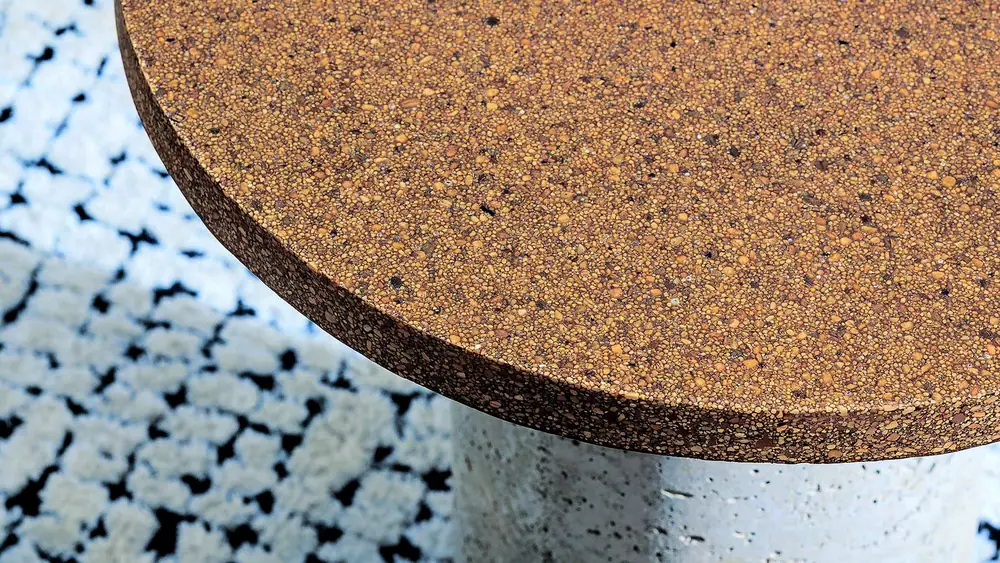
Nearly 12,000 kilometers away, on the Mediterranean island of Cyprus , design business Pit-to-Table is also combining olive pits with a binding agent to produce decorative and functional panels. The founders took olive pomace and separated the skins from the pits by hand to prevent any skin from entering the final product. “Our goal wasn’t just to achieve the right particle size,” Afşaroğlu stated. “We also wanted a very fine, almost powder-like material.” “We hand-crushed a portion of the pits, mixed everything with a binding agent and made our first small sample,” he added. Pit-to-Table is working with local researchers to move beyond panel production to other types of olive-pit-based construction materials. (Photo: Pit-to-Table) After developing several prototypes, Afşaroğlu and his co-founders settled on a material with a cork-like texture and appearance.
They entered the olive-pit-based panel in a United Nations Development Program sustainable design competition and received a cash prize. Using the prize money, the founders commissioned a local materials engineering company to identify the best ratio of olive pits to binding agent. By 2025, they had produced their first panels for sell-off.
Afşaroğlu and his colleagues got under way working with two olive producers, one on each side of the divided island. They pay €250 per metric ton of olive pits and eventually began selling the finished panels for €300 each.
Afşaroğlu (right) co-founded Pit-to-Table shortly after returning to Cyprus during the Covid-19 pandemic. (Photo: Pit-to-Table) “We already work with several manufacturers in the United Kingdom and across Europe, and we’re continuing to expand that network,” Afşaroğlu added. Designers, including interior designers, furniture designers and architects, make up the firm’s second main customer group. “For example, one designer is using our board for a reception desk at a law firm in London,” Afşaroğlu told reporters.
Afşaroğlu plans to work with engineers from local universities to follow a path similar to that of Olivos de las Ánimas and explore the potential for olive-pit-based flooring and cladding. Elsewhere in the Mediterranean, researchers and officials in Barcelona are preparing to repave some of the city’s streets with asphalt containing olive-pit-based biochar.
Going to Barcelona’s city council, the lower-impact asphalt will be used in public works projects from October through December 2026. Authorities will collect data on the asphalt’s performance over the following 12 months before publishing a report in 2028.
If the tests are successful, the city council explained the new asphalt formula could reduce emissions from street paving by 75 percent. Researchers from the Polytechnic University of Catalonia, who were involved in developing the formula, have before that told reporters the material delivers promising mechanical performance and greater resistance to water penetration than conventionally produced asphalt.