Washington Researchers Shed Light on a Solution to Organic Produce Sanitization
Until of late, organic fruit makers haven’t had many options when it comes to sanitization.
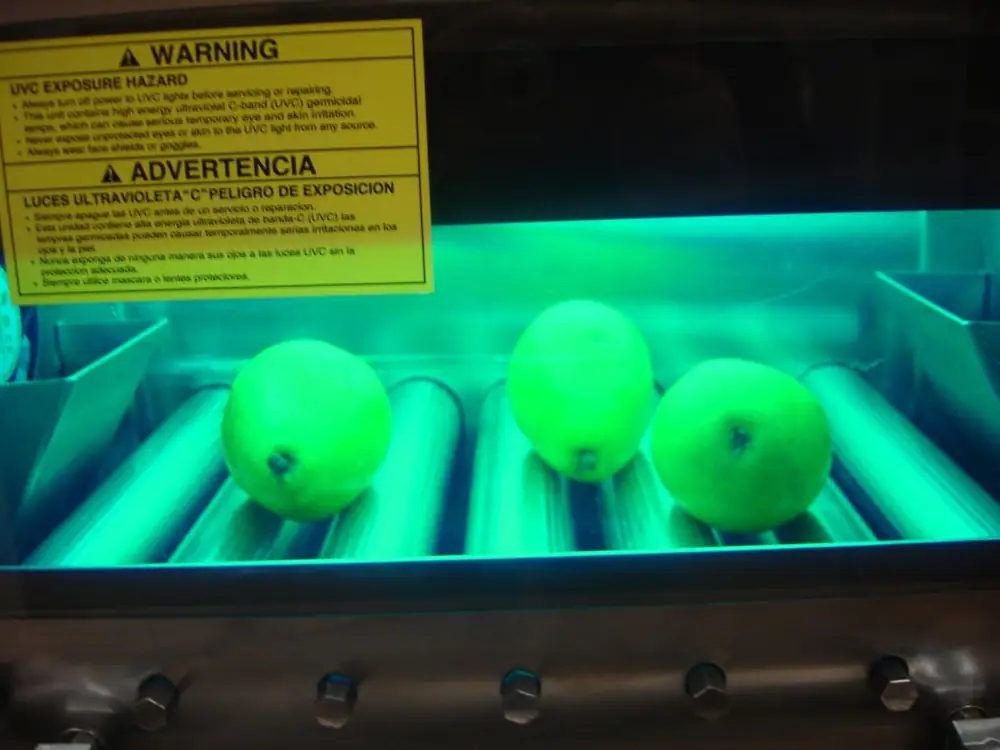
“For implementation of UVC lights, the lights would be installed over the belts that move the produce as they are sorted, labeled, and packaged,”
For conventional producers, washes including chlorine and other chemical-based methods are used to remove harmful microbes from the fruit’s surface. Outcome a solution that offers the same level of efficacy without compromising organic makers’ dedication to reduced chemical use, has been a critical mission for the organic fruit growers sector.
They were keen to know whether there was a physical process that could sanitize the surfaces on organic produce.” After obtaining a investigation grant from the Center for Sustaining Agriculture and Natural Resources, Sablani and his team set to work figuring out how to apply UVC light in an organic fruit operation. UVC light is an electromagnetic radiation but it lacks energy to ionize atoms unlike x-rays. Gamma rays. “UVC light, has minimal or no effect on chemical and physical quality of fresh produce tested in our study by,” explains Sablani, who earned his doctorate in Food Process Engineering from Canada’s McGill University. As the fruit passes through the light, the UVC rays render the microbes inactive or prevent them from reproducing by damaging their DNA.
After conducting trials on a wide variety of fruits including apples, pears, raspberries, strawberries, cantaloupe. Peaches, Sablani and his team found that UVC light was highly effective at removing the microbial load from the fruits with smoother surfaces such as apples and pears. How would UVC light sanitization fit with existing packinghouses and fruit producer operations?
Pretty simply, going to Sablani. “For implementation of UVC lights, the lights would be installed over the belts that move the produce as they are sorted, labeled, and packaged,” explains Sablani. Even if UVC light is less intense than x-ray and gamma ray light, it can still cause some serious damage to human skin. “The UVC light would need to be enclosed in tunnels so that it cannot escape.” At $60 to $80 per lamp, the cost associated with implementing UVC light are extremely low. “This is the fascinating part of this technology.
Depending on the length of your conveyors and the size of the tunnel, you may need 10 to 30 lamps. Up to 99.9 percent for smooth-surfaced fruits and 90 percent for rough surface fruits.
The initial paper focused on whether fruit surface properties will influence the efficacy of UVC light treatment. By his estimation, even so, delicate fruits or fruits with thin skin that are prone to bruising may not be the best candidates to go tumbling through a tunnel.
Sablani and his team plan to work toward adapting the technology to accommodate this wrinkle in the future. They also want to ensure that round-shaped fruits traveling along conveyors, which may leave some of their surface area hidden or covered, are exposed to the beams evenly.
He is also quick to note that he and his team are not the first to use UVC light to sanitize food. He’s heard about a bakery using UVC light to sanitize mold growth on bread and knows of at least one Washington-based apricot producer, Double Diamond Fruits, who saw UVC light sanitization as their only option. “There are a few varieties of apricot that cannot even be washed with tap water. It’s in addition highly prone to bruising,” explains Sablani. “For them, it was very effective.” The apricot producers consulted Sablani during their initial investigation and development phase and later worked with the USDA to complete the testing and approval phase.
For Sablani, the next step in his research involves not only result a way to improve the efficacy of UVC light sanitization for rough surfaced fruits, but in addition involves developing a way to test just how completely the fruit is exposed to UVC light as it travels through the tunnel. “Currently, we don’t have any means to measure that. We need some sort of sensing technology or chemical marker to tell us whether the entire fruit is being exposed to the light,” says Sablani.
He in addition wants to continue working with companies on the industrial implementation aspects of the technology. “As we work toward implementing the technology, we will learn whether there are any currently unknown challenges,” says Sablani.
- Who: Washington State University · Food Safety Modernization Act
- Money: $60 · $80
- Percentages: 99.9 percent · 90 percent
- Figures: 99.9 percent · 90 percent