40 Guests Taste Forsea’s Cultivated Eel at Official Tasting: “Feedback was Uplifting”
Following the successful creation of a cultivated eel prototype claimed as a world first, Israel’s Forsea Foods makes public it has of late debuted the product at its first official tasting at restaurant “a” in Tel Aviv.
“Forsea’s unique organoid technology has the potential to overcome many of the industry bottlenecks in bringing cultivated meat to the consumer plate.”
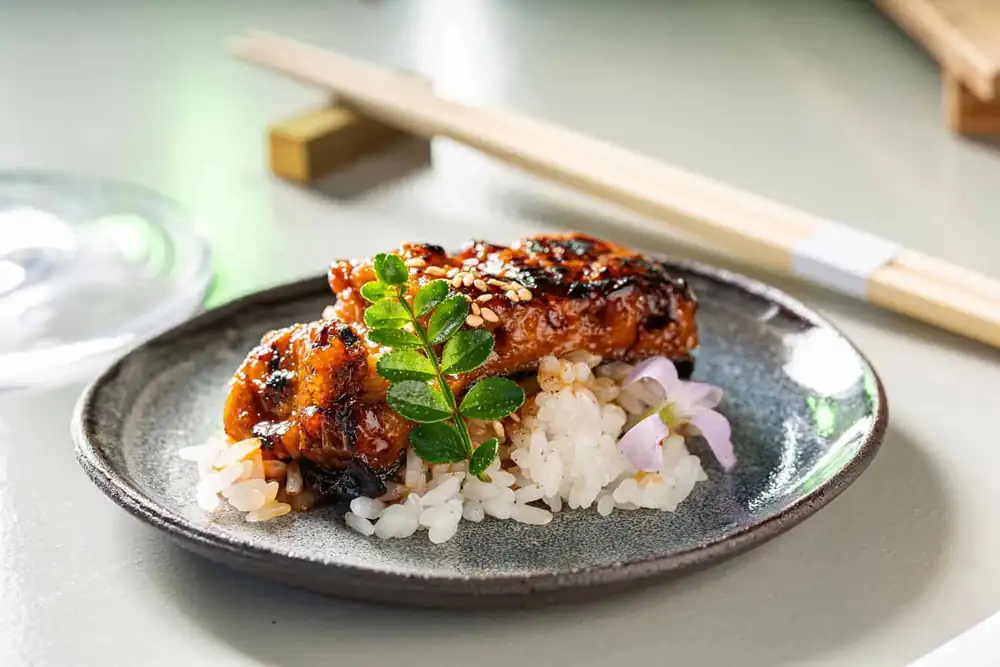
Per to the statement, more than 40 guests had the opportunity to taste Forsea’s cultivated eel fillets in various dishes. The menu’s centerpiece was Unagi kabayaki, a Japanese specialty of grilled fresh eel on a bed of aromatic rice (featured image). Roee Nir, CEO and co-founder of Forsea, shares, “Since the start of the year, we have made sizeable advancements in improving our cell lines.
We as well have been working diligently to enhance our recipes. Ben Neriah commented, “The feedback from the diners was indeed uplifting. Several remarked that they wouldn’t have guessed that the unagi was cell-cultivated had they not been informed.
This project with Forsea has been particularly exciting as it marks my first venture into future food and the world of cell-cultured seafood and its resonating sustainability message.” Takahashi Seiichiro, Japan’s Deputy Chief of Mission to Israel, commented, “While we Japanese have been eating eel for more than 5,000 years, we understand that cultivating eel is no simple task. Therefore, I believe that introducing the first cell-cultured eel is the accomplished result of great comprehensive corporate efforts. © Liran Maimon Bringing cultivated fish to buyers Roee Nir, Moria Shimoni, Iftach Nachman, and Yaniv Elkouby founded Forsea in 2021 with support from the Israeli Innovation Authority and The Kitchen Hub and backing from PeakBridge VC, Zora Ventures, FoodHack, and M&H Ventures. In 2022, it secured $5.2 million for its innovative approach in a seed round led by Target Global.
Forsea leverages organoid technology to cultivate fish whole cuts in a bid to protect endangered species, starting with wild eel. As the startup explains, this technology allows fish cells to naturally develop their native fat and muscle structure in a controlled environment, mimicking their natural composition. The approach simplifies production, enhances scalability, reduces the need for dear expansion factors, and eliminates the scaffolding stage to create whole cuts.
As a result, the product becomes commercially viable and cost-competitive with traditional aquaculture eel. The startup has made public growth push plans, aiming to debut its first products by 2026.
Nir adds, “Forsea’s unique organoid technology has the potential to overcome many of the industry bottlenecks in bringing cultivated meat to the consumer plate.”
- Who: Forsea · Forsea’s · Roee Nir · Israel’s Forsea Foods
- Money: $5.2 million
- Figures: 5.2 million