Black Raspberries Are the Fleeting Summer Fruit Worth Seeking Out
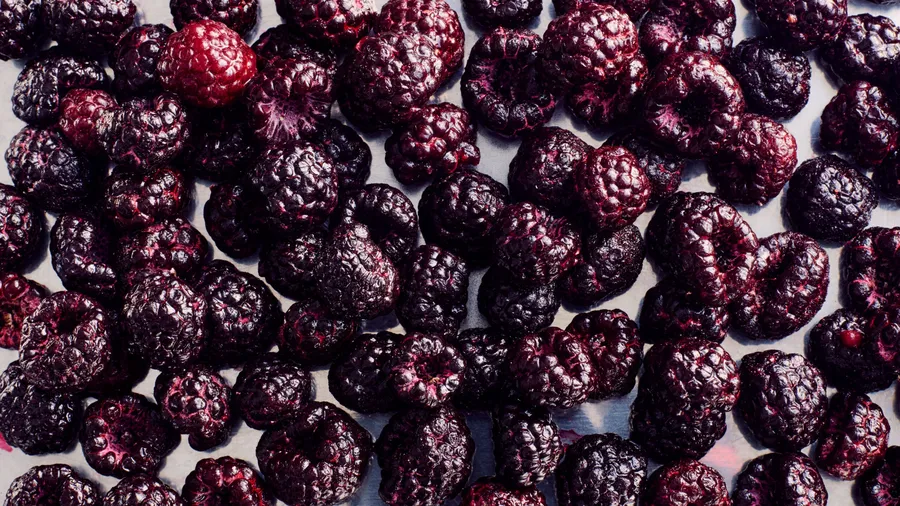
Photo: Murray Hall • Food Styling: Jason Schreiber Every summer, tangled brambles across eastern and central North America sprout tiny, dark-purple jewels.
“Our name for ‘raspberry’ is actually referencing black raspberry. We call red raspberry the word for black raspberry but with the modifier ‘red’ added.”
Sweeter than a raspberry , less bracing than a blackberry , with a deep, almost wine-like complexity, this is the black raspberry, a native fruit that vanishes almost as quickly as it appears each year. Even if it grows wild from the Great Plains to Appalachia, few people have tasted, or can even identify, the black raspberries growing near their homes. Bursting with sweetness straight from the bush, its savor concentrates when cooked into jams, syrups, and sauces.
This true summer treat also shines in ice cream, creating a fuchsia-hued, tart-sweet custard beloved in the Northeast and Midwest. For centuries, nations including the Iroquois, Anishinaabe, and Dakota collected and dried black raspberries each summer for use over the winter.
Among the Lakota, the berries are used to make wóžapi, a sweet pudding, and wasná, a hearty mixture of dried meat, berries, and rendered fat, while the leaves are steeped to make medicinal teas for gut condition and pregnancy pains. “This is one of the super important berries to the Lakota people,” said Luke Black Elk, a cook and member of the Cheyenne River Lakota tribe. Per to Black Elk, the Lakota language treats the blackcap as the default raspberry. “Our name for ‘raspberry’ is actually referencing black raspberry.
At Sean Sherman’s Minneapolis restaurant, Indígena by Owamni , they’re brushed onto elk ribs as a summer glaze. Bakeries across rural Pennsylvania cook them into pies, baked puddings, and jams. Open in New York, the fruit lends its depth to the Honey Deuce, a cocktail of vodka, lemonade, melon balls, and black raspberry liqueur.
But even the most showstopping preparations can’t overcome blackcaps’ biggest drawback: There just aren’t enough of them. They bear fruit for just two to three weeks each summer, and harvesting such tiny, delicate berries is costly and time-consuming.
Courtney Weber, a horticulturalist at Cornell University, has spent 20 years trying to breed a blackcap that avoids these pitfalls. Per to Weber, they’ve been notoriously tough to grow as of limited genetic diversity.
In 2013, breeders cultivated a black raspberry that produced an early-summer gathering and a second crop in the early fall. It’s still a niche variety, but it hints at a future where blackcaps might be available beyond their brief window. Until then, black raspberries remain a short-lived seasonal pleasure worth seeking out.
Even if you can’t find them in a forest or producers market, growers like Brecknock Orchard in Pennsylvania’s Lancaster County ship them frozen. Whether you’re working with fresh or frozen berries, you can transform them into a liqueur , simmer them into a sauce , bake them into a cake , or churn them into a lush ice cream .
Their season may be brief, but their savor lingers.
- Who: Murray Hall · Food Styling · Jason Schreiber Get