10 Sweet Tricks for Making Better Ice Cream
Add sugars to reduce its freezing point, and egg proteins and emulsifiers to obstruct ice crystals.
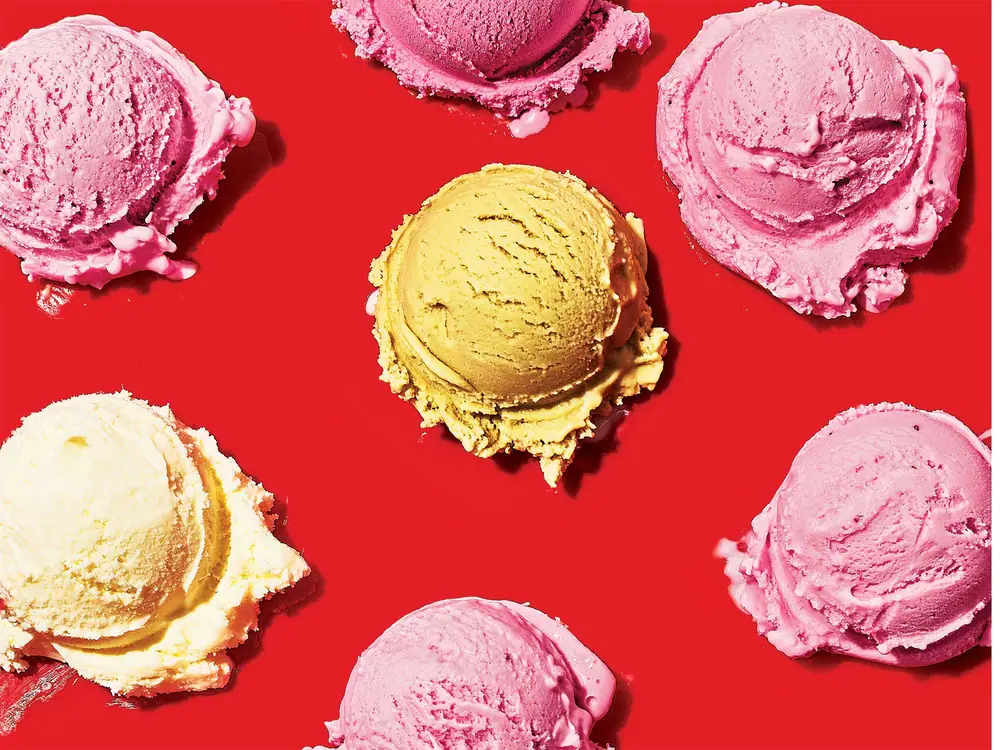
Then you stick this gloppy stuff in a portable freezer and pump it full of air until spinning butterfat globules coalesce to give it form. In 1843, Nancy Johnson of Philadelphia patented the first ice cream freezer, but it required relentless hand-cranking and relied on rock salt to lower the temperature of the ice.
You don’t need professional equipment to make great ice cream The Best Ice Cream Maker, Scoop. Other Tools for Your Home Sundae Bar As Dana Cree, author of the ice cream bible Hello, My Name is Ice Cream attests , professional-quality ice cream doesn’t require thousands of dollars in hardware. After making ice cream for years and developing a hundred-plus flavors, here are 10 sweet tricks I’ve picked up that can help your homemade ice cream, no matter the flavor. 1) Chill Your Base Thoroughly Chilling your base ensures it’ll churn into ice cream as fast as possible, which translates into small ice crystals for creamier ice cream.
Before you stick it in the machine, make sure it’s thoroughly chilled, under 50°F, which you can measure with a thermometer (see below) or guesstimate with an overnight chill in the fridge. In many cases, “aging” your base like this improves its taste and texture, as components combine and fat globules partially coalesce to form more stable air bubbles as the ice cream churns.
At the very least, chilling your base ensures it’ll churn into ice cream as fast as possible, which translates into small ice crystals for creamier ice cream. Per to Chilling your base as well gives you the, advantage of tasting it in close-to-final form, so you can make final flavor adjustments. 2) Boost Butterfat for Volume Butterfat adds texture insurance against iciness, especially handy if your base has watery elements like fruit purée.
The same is true for ice cream; the more butterfat you add (i.e., the more cream as opposed to milk), the richer the ice cream will be. Paradoxically, more butterfat also translates to a lighter, fluffier ice cream, which is why super dense gelato relies more heavily on milk than cream. 3) Take Command of Alt-Sweeteners High-viscosity liquid sweeteners like honey, glucose syrup, and yes, good ‘ol corn syrup make for a more viscous base, which translates into chewy richness in churned ice cream.
That is, the more sugar you add, the softer and less icy your batch will be. High-viscosity liquid sweeteners like honey, glucose syrup, and yes, good ‘ol corn syrup make for a more viscous base, which translates into chewy richness in churned ice cream. Substituting a small portion of the plain table sugar in your method with one of these high-viscosity sweeteners can have a big impact on the final texture.
Honey, for instance, is sweeter than table sugar, and it’s easy for an ice cream with too much honey to a) overwhelm the flavor of everything else and b) turn the ice cream cloying. That’s why I’m a big fan of corn syrup, which is only a third as sweet as table sugar, adds chewy viscosity, and allows me to boost the sugar level of a method for better texture without overwhelming the ice cream with sweetness.
Alcohol does reduce the freezing point of ice cream, which translates into a softer scoop. Which is why I’d much rather adjust the butterfat or sugar content of my method before I start messing around with booze to make it creamier.
Many recipes call for you check the custard’s doneness by seeing how it coats the back of a spoon. Holds a line when swiped with your finger, which I find both crazy inaccurate (there’s a wide range of temperatures at which this will happen, not all good for ice cream) and unhygienic. A quality thermometer (the Thermapen is best-in-class for accuracy, speed, and readability) will help you locate the ice-cream-custard sweet spot: 170 degrees. Doing so will keep your swirls neat and tidy; the swirls will naturally form as you scoop. 8) Sieve Your Chopped-Up Mix-ins Sieving is a small step but an important one to keep gritty schmutz out of your ice cream.
Sieving is a small step but an important one to keep gritty schmutz out of your ice cream.
Keep Reading
Dirty Green Tomato Martini
Black Raspberries Are the Fleeting Summer Fruit Worth Seeking Out
Liberian Shrimp Skewers
Roasted Peppers With Chickpeas, ’Nduja, and Feta
The Ginger Pig’s Roasted Potatoes
Cou-Cou and Flying Fish
Torta Fritta (Fried Dough Puffs)
Rosa di Parma (Prosciutto-Stuffed Pork Tenderloin)
Tiella Pugliese (Tomato-Mussel Gratin)
Continue to Next Story