What Is Australian Food, Really?
We’re all throwing prawns on the barbie, adding beetroot to our burgers, and smearing strange, salty, coal-hued Vegemite on toast—meanwhile, there are kangaroos bouncing down every main street.
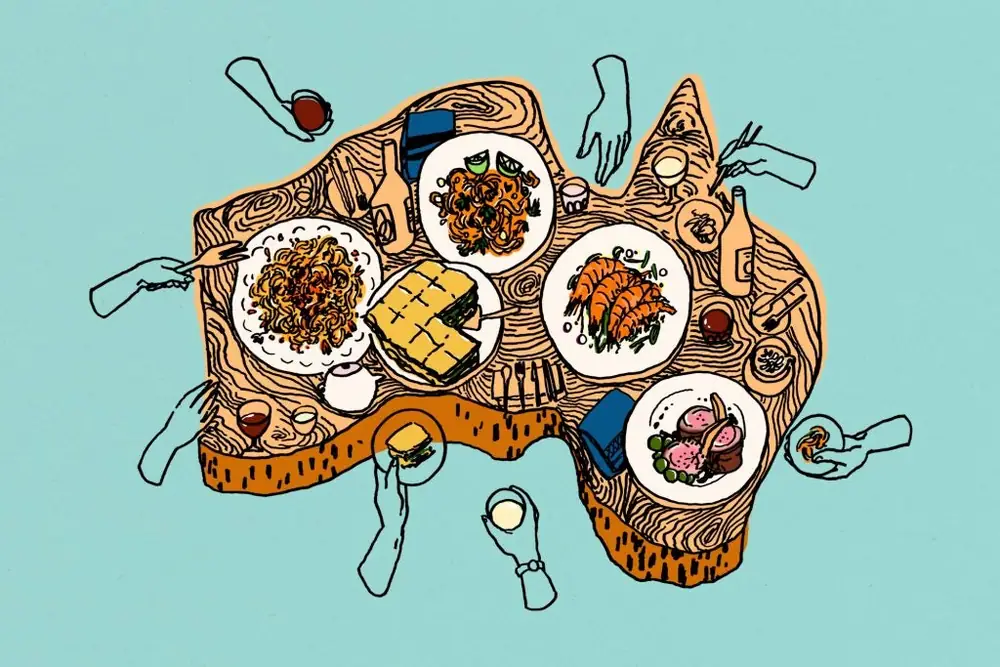
Our fishing waters are the third largest on the planet, encompassing all five oceanic zones, yet we’re ranked 80th in regard to so called “productivity.” In other words, we don’t drain the swamp. We have the largest network of protected ocean areas on the planet (over 1.5 million square miles), the most stringent management. The highest level of investment in marine science of any commercial fisheries on the planet.
Close to 50 percent of our prized catch, including rock lobster, abalone, and tuna, is exported to the best restaurants in the world—such is its reverence. And who we are is the defining feature of what Australians eat.
They epitomized the idea of “eat local” and used fire not only to unlock the components’ potential, but as a means to catch their feast and replenish the land behind them, too. The Chinese arrived during the gold rush (1850s), and you’re more likely to find a Chinese restaurant in country pubs and clubs than not. Our Italian-ness is so rich that Australia is often talked of as the 21st region of Italy.
Each new wave of migration results in a wave of the food from the original homeland of the new Australians, all continuously adding color to our food culture created by those that came before them. And who we are is the defining feature of what Australians eat. Bánh mì might well be the most popular sandwich in Australia, though the 2 a.m. lamb sandwich—lamb, tabbouleh, hummus, and pickles on flatbread—might have something to say about that.
Her restaurant, Billy Kwong, in Sydney’s Potts Point is the archetypical example of what it means to eat in Australia. Yet at all times Australian: char-siu roasted Glacier 51 toothfish, which swims over a mile deep in Australia’s southernmost oceans. Because of that is high in fat to agreement with the cold waters, and as rich as Wagyu beef.
The ingredients of the Middle East, Asia, and North Africa are as common as yellow cabs in the Big Apple, too. With all that comes this fact: While the original holders of our land explored native elements long before immigrants introduced new ones, acceptance of our native elements has only been quite recent. Which is to say, in the ’80s and ’90s, no one knew what they were doing.
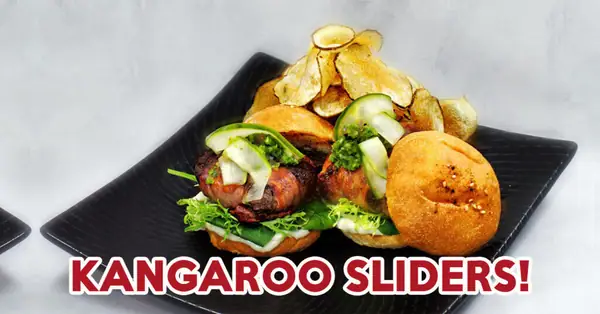
And yes, we all eat our native hero, the kangaroo, but mostly just four of the 58 species. Our coffee culture is changing the perception of what it means to drink coffee globally, too.
Our Italian-ness is so rich that Australia is often talked of as the 21st region of Italy. At Sepia, you can experience nine courses of perhaps the most harmonious display of Japanese technique. Australian produce on the planet, paired with stellar wines and spot-on service to boot. (Just don’t expect a tablecloth, okay?) Those at the pointy end subtly echo what is eaten every day en masse to add emphasis to the cutting contemporary edge.
And it wasn’t until our chefs took the time to understand our native elements that they came into wider acceptance. But from a culinary perspective, we’ve found our footing—off the backs of generations that came before.
- Who: Australian
- Percentages: 80 percent · 50 percent · 30 percent
- Figures: 80 percent · 25 million · 1.5 million · 50 percent