Cook More Goat: A Proposal
More sustainable than beef and milder than lamb, goat is the perfect protein for a warmly spiced Massaman curry.
It’s certainly a chore to find goat meat in American grocery stores and butcher shops, and many write it off for being too gamey. But goat is the most consumed meat in the world, accounting for 70 percent of the world’s red meat consumption. So are we as Americans being too closed-minded?
With fewer calories and less fat than chicken, beef, lamb, or pork, there is certainly a healthful aspect to goat. But it may be goat’s environmental impact that serves as a more compelling reason for us to consider increasing our consumption.
Because goats are browsers, rather than grazers, they have a much smaller environmental footprint. Whereas cattle and sheep graze on mostly grass and short plants close to the ground, goats prefer to browse and eat weeds, brush, tree bark, leaves, vines, shrubs, etc. Goats can clear out land in hard-to-reach areas and get rid of pesty invasive plants (without the need for herbicides).
Because of this, farmers are able to produce more goat meat from the same sized pasture than they would with cows. Contrary to popular belief, goat actually has a fairly mild flavor when compared to meats like lamb and venison, and the meat lends itself well to flavorful stews and curries. It’s not hard to find in halal markets and some farmers’ markets or specialty butchers.
When preparing goat, a low, slow, and long-simmer approach results in a more tender and flavorful meat. Because goat is lean, adding fat during the cooking process helps it to remain moist.
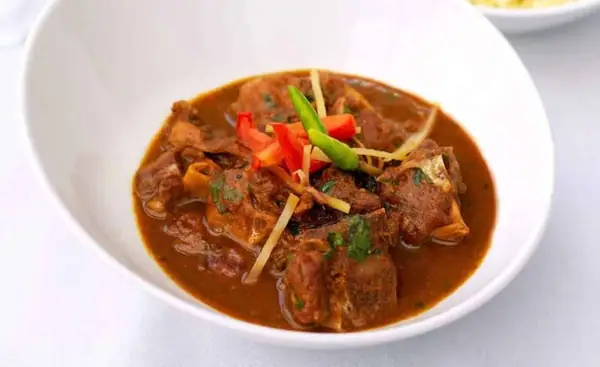
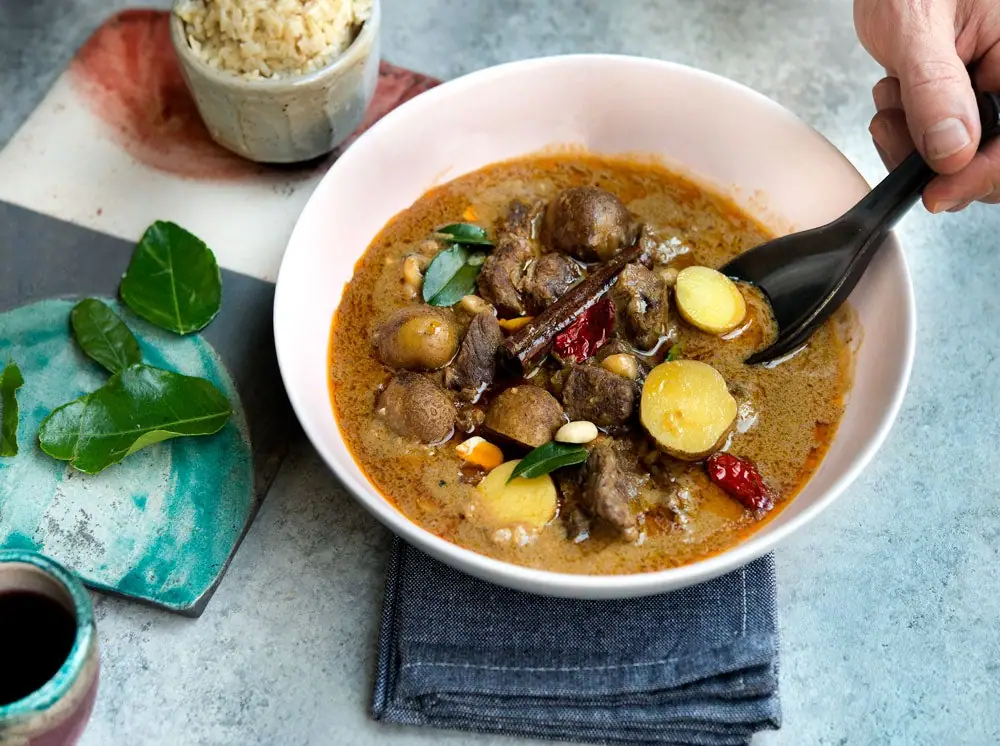
One of my favorite ways to cook with goat is in Massaman curry—a Thai dish with Persian roots, full of warm spices like cassia, cinnamon, and cumin. The goat braises in coconut milk until fork tender and is spiced with a combination of Massaman curry paste, ginger, roasted peanuts, fish sauce, and other umami-rich additives.
In lieu of goat (we recognize this could be a more practical approach), this delicious Massaman curry can be made with chicken, beef, duck, or lamb. If you are feeling ambitious, you could make the Massaman curry paste from scratch, though for convenience’s sake there are several brands of prepared curry pastes that you can readily find at most Asian grocers.
- Percentages: 70 percent
- Figures: 70 percent · 1 pound