Heating bay leaves with milk: what is it for and why is it recommended?
We readily think of bay leaves to flavor a broth or a stew. Much less so when it comes to heating milk. Yet this simple combination can add much more flavor to many everyday recipes.
If you make a béchamel sauce with only milk, butter, and flour, you get a mild, but sometimes rather bland, sauce. Infusing a bay leaf in the milk adds an extra aromatic note without adding a lot of spices.
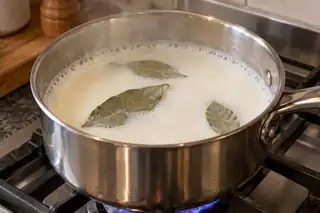
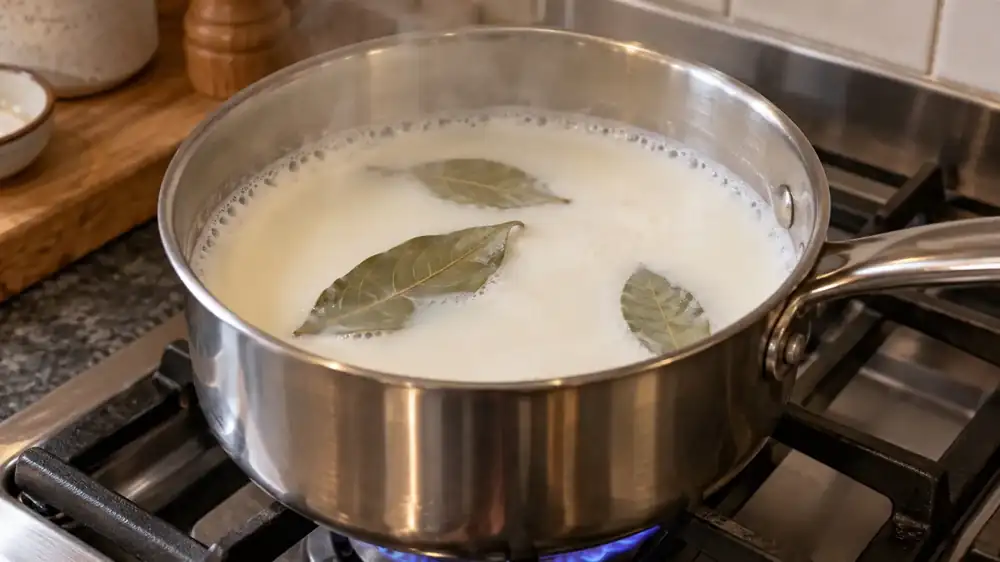
The method is quite simple. Pour the milk into a saucepan, add a bay leaf, and heat gently. There's no need to let the milk boil for long. Once it's hot, remove the saucepan from the heat and let the bay leaf infuse for a few minutes.
Then all you have to do is remove the leaf before using the milk in your recipe. Its aroma will have had time to diffuse without becoming overpowering.
This simple preparation is particularly well-suited to béchamel sauce. The flavored milk can be gradually incorporated into the roux as you normally would. With a pinch of nutmeg, pepper, and salt, you have an ideal base for lasagna, vegetable gratin, or endives with ham.
Try it in your next batch of mashed potatoes too.
Béchamel sauce isn't the only dish that benefits from this infusion. If you're adding milk to your homemade mashed potatoes, heat it beforehand with a bay leaf.
You can even add a lightly crushed garlic clove or a small sprig of thyme to the saucepan. Once the milk is infused with flavor, strain it or simply remove the aromatics before gradually pouring it over the mashed potatoes.
The principle also works with certain creamy sauces. Milk infused with bay leaves can serve as a starting point for a sauce intended to accompany vegetables, poultry, or fish. Then it's up to you to adapt the other seasonings to the dish.
Be careful not to use too many leaves. Bay leaves have a fairly strong aroma, and you don't want your mashed potatoes to taste like a bouquet garni. A single leaf is usually enough for a family-sized pot of milk.
And above all, remember to remove it before sitting down to eat. Unlike parsley or chives, bay leaves are used to flavor the dish during cooking or infusion, but the entire leaf is not eaten.