Cantina Rauscedo, Geretto: Designing Wine Starting from the Market
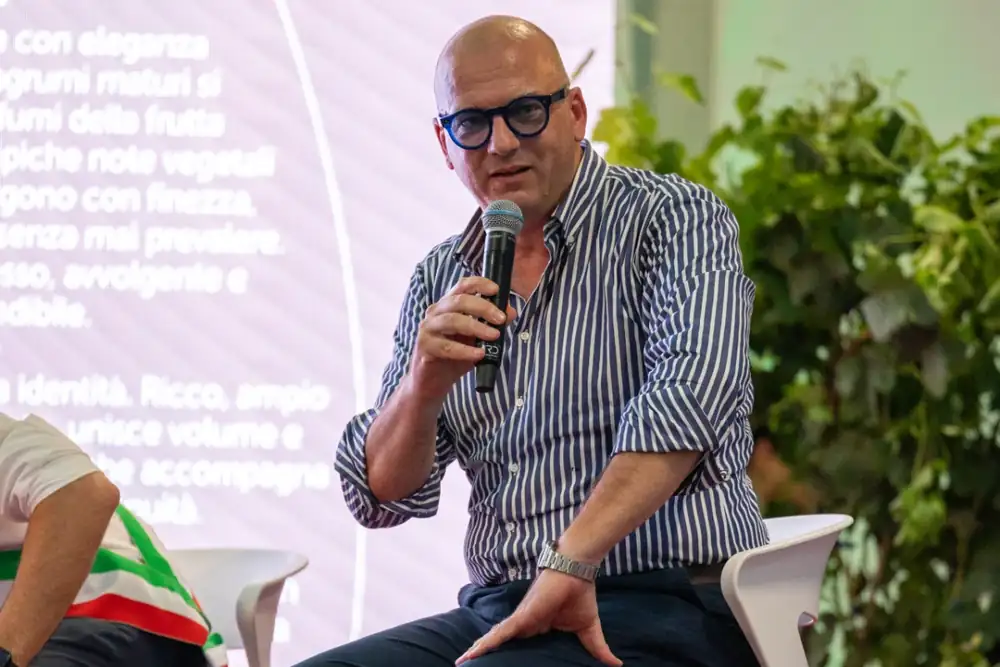
On the occasion of its 75th anniversary, Cantina Rauscedo is charting the future of its winemaking cooperative. General Manager Flavio Geretto outlines an innovative strategic vision: transforming the relationship with the market, enhancing the local identity, and seizing the opportunities offered by Pordenone, Capital of Culture 2027, transforming the company's historic roots into a genuine engin
Roots aren't a mooring that holds us back from the past, but the lifeblood for planning the future. It's with this clear awareness that Cantina Rauscedo has chosen to celebrate its 75th anniversary: not a self-celebratory celebration, but a concrete push to redefine the very role of agricultural cooperation.
In a wine market undergoing radical transformations—from evolving consumer tastes to major corporate restructuring—General Manager Flavio Geretto offers us the vision of a company that rejects the role of a bystander. By harnessing the enormous human and agricultural assets of over 300 members and 2,000 hectares, the challenge Geretto outlines is to overturn the paradigm: no longer simply producing and then seeking a market, but designing wine with the market in mind, maintaining absolute control of a supply chain that begins with the land.
From synergies for Pordenone Capital of Culture 2027 to sustainability seen as an ongoing project rather than a simple showcase, this conversation reveals how a region's identity can transform from a romantic concept into a formidable competitive advantage.
The celebrations for Cantina Rauscedo's 75th anniversary were also conceived as a prelude to Pordenone's nomination as Capital of Culture 2027. Looking back at the event, what concrete recommendations did it give you for that occasion?
For us, the 75th Anniversary wasn't just a moment of celebration, but also an opportunity to showcase a winery that deeply respects its history while also looking decisively to the future. The participation and interest we encountered confirmed the importance of increasingly opening the winery to the local community.
Precisely for this reason, we conceived these celebrations not as a single event, but as a journey. A journey that continues in October with "The Roots of Wine," a moment of reflection in which we want to highlight what Cantina Rauscedo truly represents: the connection between vineyards, members, territory, expertise, and the market.
Pordenone, Italian Capital of Culture 2027, represents a great opportunity in this regard. Wine is part of our region's culture and identity, and I believe Cantina Rauscedo can make a concrete contribution to its narrative, creating opportunities for encounters and collaboration that can continue beyond 2027.
What kind of feedback did you receive from operators, press, or partners attending the celebrations? Were there any comments that particularly struck you?
We've received very positive feedback, especially regarding Cantina Rauscedo's ability to convey energy, dynamism, and a desire to evolve. This is something I'm particularly pleased about, because it means the journey we've embarked on is beginning to be perceived externally.
But I believe it's now necessary to go beyond perception and concretely demonstrate what we're doing. That's why we've decided to involve a group of journalists in a one-day workshop dedicated to the Rauscedo project, during which we'll talk not just about the wines, but about everything that comes before the bottle.
Our philosophy increasingly focuses on actions, not words. Discussing supply chain, territory, traceability, and quality is relatively simple; being able to demonstrate where a grape comes from, how it was grown, the work we did with our agronomists, and how all this translates into wine is quite different. And this is precisely where a cooperative like ours can express its unique strength.
Of course, we're only at the beginning. We still have a lot of work to do, and I believe it's important that, over time, concrete results are the key to demonstrating the change.
The renovation of your headquarters is described as the "first concrete sign" of a larger project: what comes next and what are the final goals?
The headquarters renovation is certainly a visible sign, but it represents only part of a much larger project. We want to gradually make every point of contact with Cantina Rauscedo consistent with who we are and, above all, who we aspire to become: from the spaces to the reception, from communication to products, and even our relationship with customers, members, and the local community.
But the most important change must come in the way we create our products. Together with our agronomists and technicians, we are developing projects that start directly in the vineyard and that allow us to increasingly focus on precise quality objectives and tailor-made productions, designed to meet the specific needs of customers and markets.
This means gradually moving from a logic in which the winery produces and then seeks out the market to one in which we are also capable of designing the wine starting from the market, while maintaining control of the supply chain starting from the grapes.
Building a strong identity therefore means working simultaneously on image, product, organization, skills and service.
How do you build an internationally recognizable brand from a cooperative that has always had an identity rooted in its local community and community?
I believe that today, being a cooperative can represent a competitive advantage if we can transform its characteristics into value. The market increasingly demands origin, traceability, and authenticity. We have over 300 members and over 2,000 hectares of vineyards, and we can truly get to the origin of the product, starting from the land and the people who cultivate it.
This is precisely the meaning we attribute to "Roots of Wine." Our roots aren't just a metaphor: they are vineyards, grapes, partners, and territories that we can identify and follow all the way to the bottle.
During our October events, we want to make this concept very concrete, including a tasting led by Master of Wine Gabriele Gorelli and our winemakers: starting with the wine in the glass, we'll reconstruct what lies behind it, from the vineyard to the agronomic and oenological choices.
This dimension also allows us to stand out. A cooperative shouldn't be seen simply as a service organization, but can become a business capable of competing on the market with two complementary souls: on the one hand, offering a significant, efficient, and reliable service to the major bottlers and partners with whom we collaborate; on the other, developing and growing its own brand and products.
Pordenone, Italian Capital of Culture 2027, is a unique opportunity: are you already planning measures to ensure it doesn't just become a showcase?
Pordenone 2027 can certainly be a great opportunity for visibility, but above all it can become the starting point for a larger project.
We're considering how the Rauscedo brand can strengthen its presence in the area, including by expanding our retail outlets and fostering greater proximity to the cultural, tourism, and hospitality activities that may arise around this event.
I also believe that wine can become a tool for telling the story of the region. But to do so, we must avoid a purely promotional narrative. We must spread awareness of what it means to produce wine here, who the people who cultivate these vineyards are, which varietals represent us, and the wealth of expertise behind each bottle.
2027 must therefore be a catalyst for building something that can endure in the years to come, creating new opportunities for wine, territory, and people to meet and making the Rauscedo brand increasingly recognizable.
You say that "every great change must start from its roots": what, in your opinion, is the element that defines Cantina Rauscedo's identity that should never be touched, no matter what changes?
Certainly, the people and the connection to the land. Our members, their work, and what they represent are the winery's most important asset.
And this is precisely why we chose the concept of roots as the guiding principle for this phase. Our ability to start with the grapes isn't a minor detail: it means being able to influence quality right from the vineyard, working alongside our agronomists, planning specific productions, and truly following the journey from member to bottle.
We can innovate our products, communications, markets, and how we present ourselves, but we must not lose the authenticity that comes from our origins.
For me, roots shouldn't represent something that ties us to the past. They should be the solid foundation from which to build the future.
Leading a cooperative with over 300 members requires a different dynamic and balance than leading a private company: what is this role teaching you that you can't learn elsewhere?
Above all, it's teaching me the value of sharing and listening. In a cooperative, you can't build the future alone: you have to be able to involve people, explain your choices, and gradually build a shared vision.
It's certainly more complex, because behind every decision are over 300 members and therefore just as many realities, families, and expectations. But this complexity also represents a great asset.
And I believe this is precisely where a key aspect of the future of cooperatives lies. We must ask ourselves whether cooperatives want to simply observe market changes or become protagonists of these changes.
This is also the theme we intend to address at the conference "Common Roots. New Challenges!", moderated by Fabio Piccoli, comparing different experiences and perspectives on the value and future of wine cooperation. The goal is not to celebrate a model, but to discuss how this model must evolve to continue creating value.
The world of wine, you say, is "changing rapidly": what, specifically, is the most evident and irreversible change you see right now?
The changing consumer landscape is certainly one of the most obvious aspects. People are seeking more immediate, pleasant, and easily drinkable wines, often with lower alcohol content, yet still clearly expressing their origins.
But the way customers ask companies to work is also changing. Increasingly, they're not simply looking for a wine, but a partner capable of offering product, supply chain, flexibility, and service, even building specific solutions.
This is why I believe it's essential to anticipate trends. Being ready when a trend has already become a necessity often means being too late. We must try to understand where the market is moving in advance and use our production capacity to develop projects consistent with that direction.
I believe that the Friuli DOC, in particular, can interpret this new phase very well. We have grape varieties and white wines with characteristics perfectly aligned with evolving consumer trends and, above all, a strong territorial identity in which we must invest more.
How is Cantina Rauscedo positioned today with respect to the decline in wine consumption in Italy? Is this a challenge you're addressing with increased exports, greater added value, or other strategies?
I believe the answer can't simply be trying to sell more wine. In a changing market, we must first try to create more value.
This certainly means further developing exports, but it also means investing in the brand, quality, and products that clearly represent their origin. At the same time, we must leverage the winery's second great ability: being a production partner capable of creating bespoke wines and projects for customers.
Our size and available vineyards allow us to work in bulk and dedicated projects with a different perspective: not simply supplying wine, but providing a supply chain that can start from the vineyard and end with the finished product. This can become a very important service element for clients with specific needs in terms of style, volumes, certifications, and markets.
Ribolla Gialla represents a particularly important example for us along this path. I believe it has all the characteristics to become an increasingly recognizable symbol of Friuli on international markets. We must strive to build value around our grape varieties and our territory, without limiting ourselves to competing solely on price.
During the 75th Anniversary celebrations, you presented your first Sustainability Report: do you see it more as a tool for external transparency or as an internal compass for future decisions? Or both?
Certainly both. The Sustainability Report is a transparency tool, but I believe its greatest value lies in considering it a tool capable of generating projects, and not simply a document that captures what has already been achieved.
Sustainability also means building lasting relationships with the local community, with members, collaborators, and with all the people who live around the company. For a cooperative, this aspect takes on even greater significance.
And here we return to the concept of the supply chain. If we have the opportunity to work directly with our members and our agronomists, we can gradually transform sustainability, quality, and certification objectives into concrete actions that start in the vineyard.
I would therefore like each new edition of our Sustainability Report to also chronicle the evolution of concrete projects: some already completed, others underway, and others yet to be developed. In this way, the Report also becomes a long-term commitment: defining goals, working towards them, and gradually turning them into reality.
Ten years from now, on the 85th Anniversary, what would you like to be able to say about this phase of renewal, looking back on it with hindsight?
I'd like to say that over the years we've made the right choices when they needed to be made. Because the decisions we make today will have lasting effects, and I believe this is a particularly important moment for the entire sector.
The world of wine is undergoing changes that are far more profound than simply shifting consumer tastes. The size of companies is changing, we're seeing acquisitions, the entry of capital and equity funds, and the sector will likely become even more concentrated in the coming years.
In this scenario, I believe that a company like Cantina Rauscedo must follow a very specific path: strengthening its identity to stand out and, at the same time, increasing its ability to interpret the market.
We can't compete by simply trying to be like everyone else. We have over 300 members, more than 2,000 hectares, a supply chain that starts directly from the vineyard, and a highly recognizable terroir. To this we must add agronomy, technology, winemaking expertise, production capacity, service, and a greater understanding of the market.
This is also the meaning of the discussion we wanted to build on the occasion of "The Roots of Wine": to understand the role cooperatives can play in the wine of the future. I believe they have enormous potential, but to fully realize it, they must become more active players and less spectator-like, anticipating changes rather than simply reacting once they have already occurred.
In ten years, I would like to be able to say that we were able to anticipate these changes and transform what Cantina Rauscedo has always possessed into a true competitive advantage, creating value for the winery, for our members, and for the local area.
Ultimately, this is the very point of roots: knowing where we come from to be more clear about where we want to go.
Key points:
- Market-Oriented Design: The winery transcends the traditional model and develops tailor-made wines based on customers' real needs, maintaining direct control of the supply chain.
- Identity as a competitive factor: With over 300 members and 2,000 hectares of vineyards, the connection to the land and traceability represent the company's true distinguishing feature.
- Pordenone Capital of Culture 2027: The event is a strategic and long-lasting driving force to promote local wine culture beyond a simple promotional showcase.
- Anticipating consumer trends: The cooperative aims to intercept in advance the demand for fresh, immediate and low-alcohol wines, promoting the DOC Friuli and Ribolla Gialla.
- Sustainability as an internal compass: The first Sustainability Report is conceived as a dynamic commitment to generating concrete projects in the vineyard and strengthening social relations in the area.