Three desserts for October, from grandma's pantry to restaurant dishes
October is the month when restaurant pastry shops change pace. Summer fruit disappears from the counters, and for a few weeks, a strange void remains: too early for the chocolate and spices of December, too late for peaches.
The necci, for when the chestnuts arrive
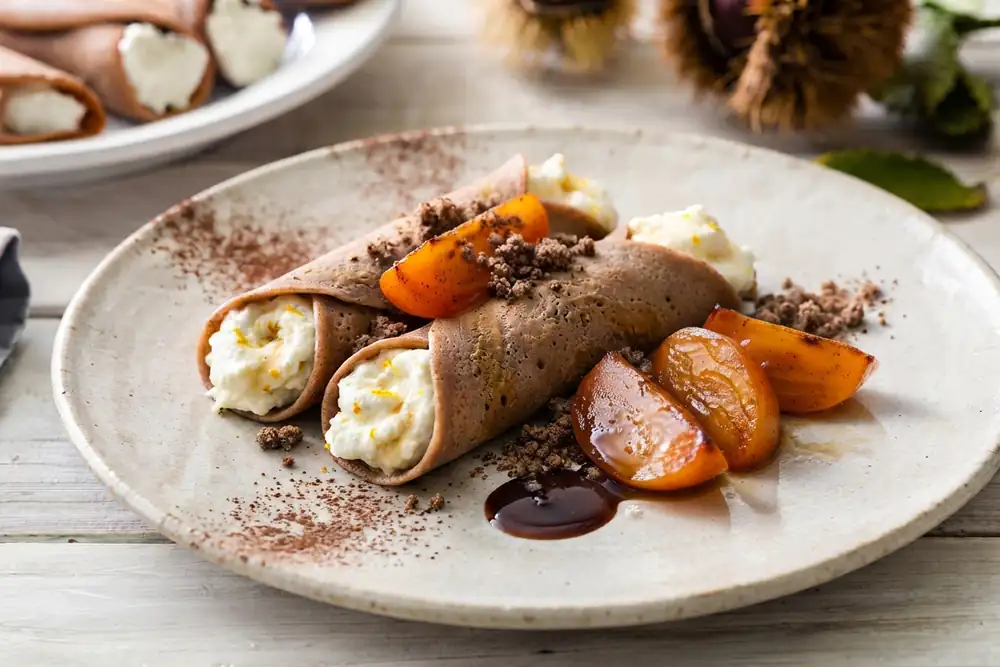
In Garfagnana and throughout the Tuscan Apennines, necci were the dessert of families who lived off chestnuts. Chestnut flour, water, and a pinch of salt were cooked between two red-hot iron plates. Then they were rolled around a spoonful of ricotta, and that was it. Outside those valleys, few people know them. At restaurants, they can be pan-fried, very thin, and rolled into a cigar shape around sheep's milk ricotta whipped with a drizzle of chestnut honey and a little orange zest. Alongside, they are served vanilla persimmon segments caramelized in butter with a pinch of salt, a slightly bitter coffee sauce, and a chestnut flour crumble for crunch. The beauty of this dish is that each element complements the other. The chestnut provides a slightly earthy sweetness, the ricotta refreshes, the persimmon adds softness and fruitiness, and the coffee finishes with a bitter, mouth-cleansing finish. A practical tip: use vanilla persimmons, which are firm to the bite and hold up to the pan. The one you spoon over crumbles and becomes jam. The batter is prepared before serving, and the necci are cooked on the spot in just a few seconds. If you remove the crumble, the dessert is naturally gluten-free, but before you list it on the baking sheet, check the flour and equipment. With a young Vin Santo, or a good filter coffee, it's the perfect finish.
Quince jelly, for half a month
The quince is perhaps the most forgotten fruit of autumn. Raw, it's tough and rough; no one would eat it, which is why it's disappeared from the markets. Yet in Sicily, Puglia, and Liguria, quince jelly was a serious affair: quince paste cooked for hours with sugar, dried in terracotta molds, cut into cubes, and given to relatives and neighbors. It was also eaten with cheese, as the Spanish do with membrillo. The starting point is there. Cook the quince segments in a light syrup with lemon and bay leaves, slowly, until they become pink and almost transparent. Prepare a less sweet quince jelly than grandmothers' and cut it into small cubes, for added intensity. Underneath is a sheep's ricotta cream with a touch of freshly grated pecorino, just enough for flavor, and on top is a thin, oil-and-rosemary sablé that breaks under the spoon. A reduction of the cooking syrup ties everything together. It's a dessert for those who say "nothing sweet for me." It's not cloying, it walks the line between sweet and savory, and on the menu it can even replace a cheese plate. In the kitchen, it's easy to work ahead: the cooked quince can be left in its syrup for days. Don't throw away the peels and cores, as they're full of pectin and are used for the quince jelly. A Sicilian passito pairs perfectly with it. Those who want to push the savory side can try a virgin Marsala.
The bread of the dead, towards All Saints' Day
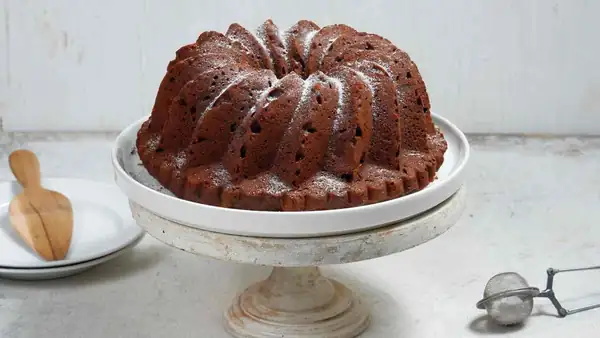
In Milan, at the end of October, the pan dei morti (literally, "bread of the dead") appears in pastry shops: a rustic, dark biscuit made with crushed biscuits, dried figs, nuts, cocoa, spices, and a dash of wine, baked on a wafer and covered in powdered sugar. It's delicious, but it's a home-baked dessert, not a restaurant one. With a few adjustments, it can be transformed into a dessert. The base is a creamy dark chocolate with dried figs, cinnamon, and a hint of cloves. On top, the actual pan dei morti (bread of the dead) is baked, crumbled, and toasted, creating the crunch. Then, dried figs soaked in spiced red wine, a milk ice cream with orange zest for freshness, and a wafer wafer with powdered sugar, immediately revealing the dish's origins. It has the flavors of winter, but the ice cream and orange keep it light. And it has a date: it's valid for two weeks a year, and regular customers await it. The Pan dei Morti dough is made only once, and the crumble keeps for a long time in a sealed jar. The creamy filling is portioned before serving, and the gelato and figs are added at the end. Served in a small cocotte, it's also perfect for sharing at the end of a meal. To drink, a Recioto della Valpolicella or a Ruby Port. Or simply a long coffee.
One at a time
The advice is not to put them all on the menu at once. The necci at the beginning of the month, when the first chestnuts arrive. The cotognata halfway through, when the quinces are ripe. The pan dei morti (bread of the dead) in the last week, until early November. This way, returning customers always find something new, and the kitchen only has one seasonal dessert to prepare at a time. It's a small amount of extra work, and the story writes itself.