Beef will be beautifully tender if you follow a few rules. Boiling it vigorously is definitely not good for it
Beef can be wonderfully soft and juicy after cooking, but it can also be surprisingly tough and rubbery. The choice of a particular cut, temperature and time are the main factors. While a quality steak needs a short and intensive cooking, a loin, neck or ribs cannot do without slow cooking or stewing.
How to prepare beef so that it is perfectly tender?
Why is some beef tough? The stiffness of the meat is mainly due to the muscle fibers and connective tissue. The more the muscle worked during the animal's life, the more collagen it contains. It is this that is firm and stiff when cooked briefly. However, with prolonged exposure to heat, it gradually turns into gelatin, which significantly softens the meat.
Therefore, it is not ideal to choose the path of "I'll stick it in the oven, it will cook". For delicate cuts, such as sirloin or short rib, such heat treatment would deprive the meat of juiciness and delicate texture. However, for a steak or beef neck, a long, slow heat treatment is exactly what you need.
The right temperature is the key
When preparing beef, it's important to distinguish between quick and slow cooking. You'll cook a steak at a high temperature and for a short time. Meat intended for braising needs a much lower temperature and plenty of time.
When braising beef, you should try to keep the liquid just below boiling point. A high boil is not desirable. This will dry out the meat unnecessarily and the surface will start to fall apart before the connective tissue inside softens.
When cooking larger pieces, a meat thermometer is very useful. Don't rely on the color of the surface or the time given in the recipe. The same piece of meat can have completely different cooking times depending on its size, shape and temperature before placing it in the oven.
You might be interested
Slow stewing is the way to go
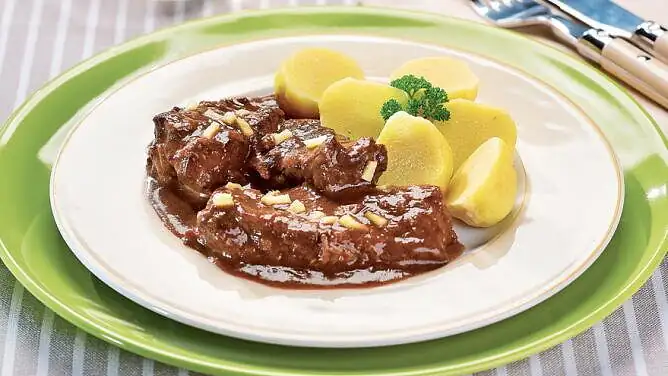
Ribs, neck, shoulder or ribs are all great for slow braising. Sear the meat on all sides first to develop a rich flavour and a well-browned surface. Then you can add vegetables, spices, mushrooms and liquid.
Set the oven to approximately 140 to 160°C and let the meat slowly soften for several hours. The exact time depends on the size and the specific piece. You can easily tell when the meat is done: a fork or the tip of a knife should go into it with almost no resistance.
This is where the most common home cooking mistake lies. Beef may still be tough after two hours, but that doesn't mean it's spoiled or that you've chosen the wrong method. The collagen simply hasn't had time to turn into gelatin yet. Sometimes the meat needs another hour or more.
You might be interested
Let the meat rest after cooking.
After removing from the oven or pan, let the meat rest for a few minutes. This will help the juices to distribute better in the meat and prevent them from dripping onto the cutting board when you cut it. Resting is even more important for larger pieces of roast meat. You can loosely cover the meat with foil, but it is not advisable to wrap it tightly enough so that the surface starts to steam.
You can also significantly influence the tenderness of beef by how you cut the meat. Always cut the finished piece perpendicular to the direction of the muscle fibers if possible. This will shorten the long muscle fibers and the meat will appear much more tender when biting.
You might be interested
Beef tenderloin with celery and ginger
The beef in our recipe takes time. It is ideal if you plan to prepare it over two days to allow everything to marinate. The result will be tender meat with a spicy hint of ginger and celery sauce.