Starting vegetables in cold water or boiling water: this is the difference
You learn to cook well by doing, doing, doing, but also through the right knowledge. Take cooking vegetables, for instance: do you start in cold water, or do you wait until it boils? That choice partly determines how successful your end result will be. In short: that is something you’ll want to know.
Vegetables straight into hot water: the benefits
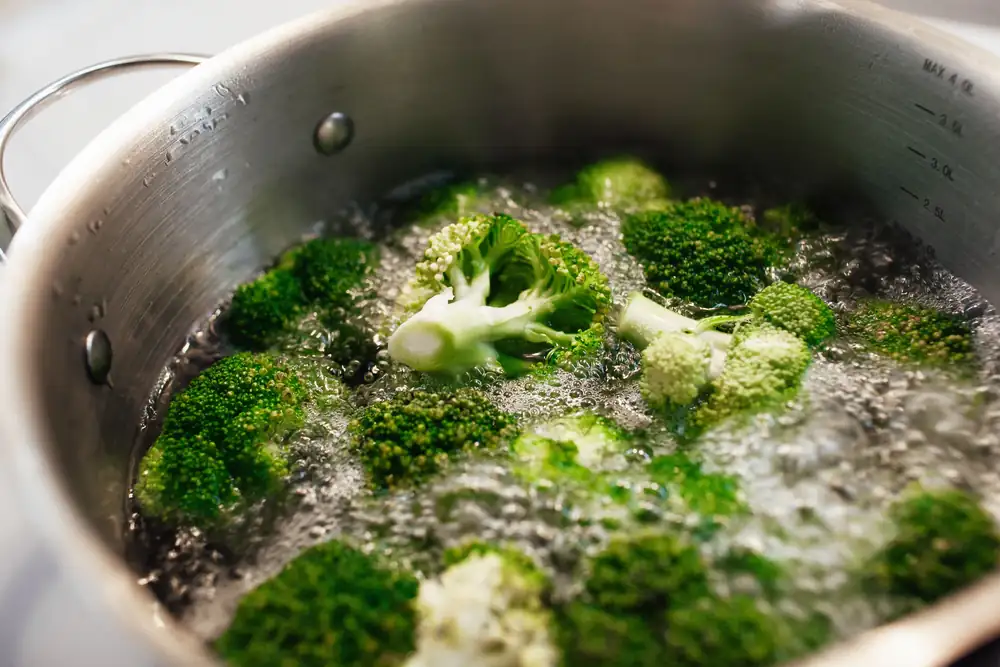
Throwing vegetables directly into boiling water offers one major advantage: speed. This is particularly beneficial for green vegetables that are somewhat more delicate. Think of broccoli, bimi, green beans, or green asparagus: due to their texture, cooking them quickly but intensely is key here. By adding them only when the water is boiling, they receive a kind of heat shock.
As a result, they stay crispier, retain their color, and lose fewer vitamins. Vitamins B and C, in particular, are sensitive to water and heat, so the shorter they are in the pan, the better. If you heat your green vegetables slowly in cold water first, they have too much time to become soft and pale, which makes them less tasty afterwards.
When would you rather not do this, then?
However, boiling water is not always the best choice. For firmer vegetables, it actually has the opposite effect. Potatoes, carrots, or celeriac need time to cook evenly. If you throw them straight into boiling water, the outside will already be soft, while the inside can still be hard.
By placing them in cold water and heating them slowly, you give the heat a chance to penetrate gradually. The result: even cooking and a more pleasant texture. This makes all the difference, especially with larger pieces or compact vegetables.
So, it comes down to the fact that it is best to look at the texture of the vegetables. The softer and thinner they are, the more they benefit from a short, hot cooking time. The firmer and denser they are, the more important gentle heating becomes.
And frozen vegetables?
Timing plays a role with frozen vegetables as well. It is best to throw them straight from the freezer into hot water. Thawing them first is unnecessary and releases moisture containing many nutrients.
It would be a shame to let those go to waste, because the power of frozen vegetables lies precisely in the fact that they contain just as many nutrients (and sometimes even more) than fresh vegetables in your fridge. You’ve learned something from us again, haven't you?
With love!