“That phrase always gets on my nerves”: bakers can’t stand this request from customers
Buying bread takes only a few minutes. But behind the counter, certain customer habits sometimes make service much less smooth. One common request, made without necessarily meaning any harm, is one that bakers are finding increasingly difficult to tolerate.
At first glance, it's hard to imagine a more mundane act than buying a baguette. You walk into a bakery, order your bread, and a few seconds later, you're on your way out. Behind the counter, however, certain requests can transform this routine into a much more laborious exchange.
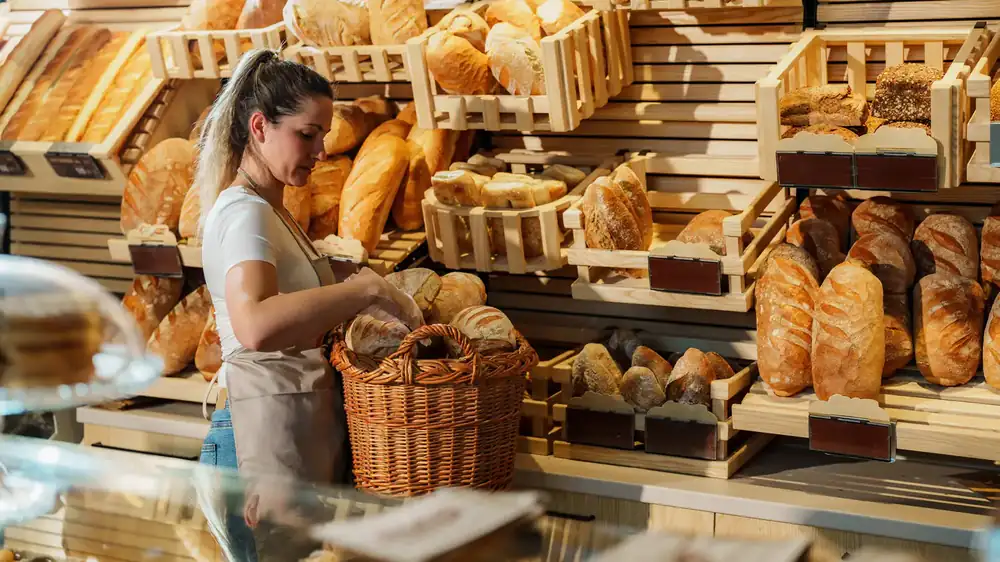
Among the things that annoy professionals is the systematic refusal of the baguette offered in order to demand another, specifically chosen from the display: "The one at the back", "rather the one on the right" or even "the most cooked one, at the back".
In principle, preferring a baguette that is more golden, less cooked, or slightly crispier is perfectly normal. No two batches are ever exactly alike, and everyone has their own preferences.
What complicates matters further is when a customer wants to select a specific loaf from several loaves that appear similar. The salesperson then has to put down the first baguette, search for the one they're referring to, sometimes from a distance, and figure out exactly which one they want, all while the queue continues to grow behind them.
Choosing a specific baguette can slow down the entire service
This demand takes on a different dimension during peak hours. In the morning before work or at lunchtime, orders come in quickly and a few seconds repeated on dozens of customers end up weighing on the pace of service.
It's the same phenomenon as when some customers stay on the phone in front of the counter and only partially give their order. A bakery manager interviewed by TF1 explained: "At lunchtime, it's a bit complicated, people on the phone aren't very attentive and there are problems with tuna, salmon... we don't necessarily put the right product on the back, and when they get home, it's not right."
For professionals, the challenge is therefore not only to serve quickly, but also to limit unnecessary handling. In a bakery, products normally pass from the hands of the staff to those of the customer.
Asking customers to move several baguettes in succession to examine their color or shape increases the number of actions behind the counter and can disrupt an otherwise efficient system. Furthermore, customers may pick up the loaves themselves or touch them to check their texture, which also raises hygiene concerns: a product that has been handled and then put back could then be purchased by someone else.
The easiest way to avoid misunderstandings at the counter
This does not mean that you should refrain from indicating your preferences. Simply asking for a "well-baked" or "not overcooked" baguette from the start generally allows the baker to choose the one that best suits your needs, without turning the counter into a selection session.
Similarly, finishing your phone conversation before ordering makes things easier. One baker even used humor to convey this message with a sign: "So as not to disturb you, from now on, we will let you finish your phone conversations before serving you."
Behind these small tensions lies a very ordinary reality of commerce: gestures that seem insignificant from the customer's perspective can become repetitive when they occur dozens of times a day.
Bakers have to manage orders, payments, baking, and queues all at once. Clearly stating your preference is therefore the simplest way to get the desired baguette without unnecessarily slowing down service. And rather than specifically pointing to "the one at the very back," letting the baker select the loaf that matches your desired level of baking can save everyone time.