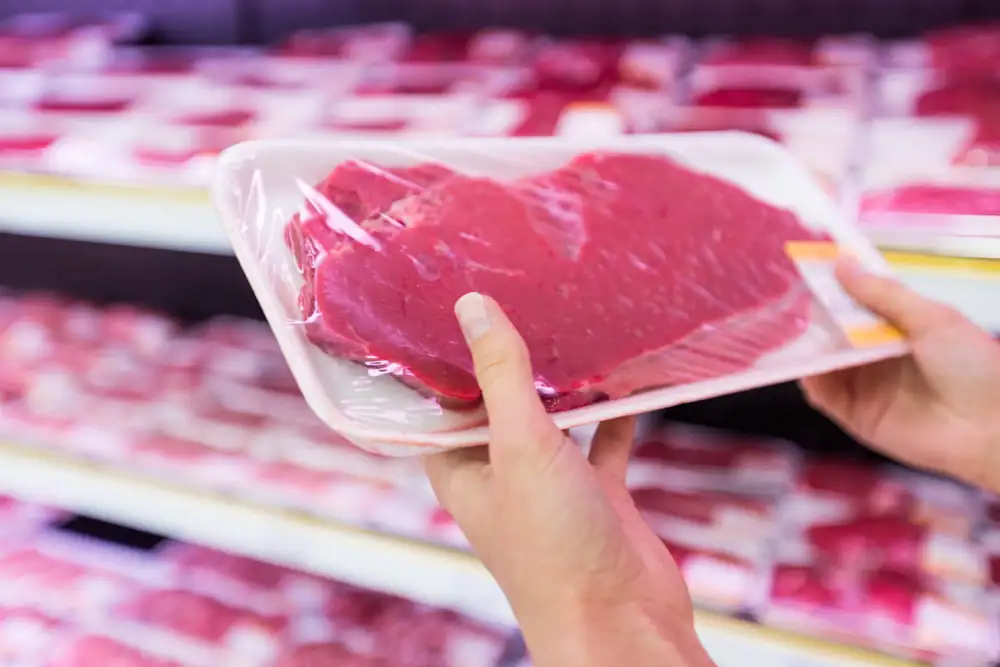
The red liquid in the meat trays is not blood: it appears for a very specific reason
You may have already noticed it at the supermarket while choosing your steaks. At the bottom of some meat trays, a small amount of red liquid has accumulated. With its color, it's hard not to immediately think of blood. So much so, sometimes, that you might prefer the neighboring tray which contains less.
The Food Safety and Inspection Service (FSIS), the agency responsible for food safety within the U.S. Department of Agriculture (USDA), explains: after slaughter, most of the blood is removed from the carcass. The liquid found in a tray of fresh beef is essentially the moisture naturally present in the meat, combined with protein. And a piece of beef contains a lot of water. According to the USDA, raw lean meat is composed of about 75% water. This water is normally retained in the muscle cells, but some can be released during storage. It then flows from the meat and simply accumulates at the bottom of the tray.
The question remains: why is its color? If this liquid is primarily composed of water, why is it so red? This is where myoglobin comes in. This protein, present in muscles, allows them to store oxygen and plays a major role in the color of meat. By mixing with the water released by the muscle fibers, it contributes to giving the liquid this red hue, remarkably similar to that of blood. Not all packages contain the same amount of myoglobin. The phenomenon can be particularly pronounced when the meat has been frozen and then thawed. During freezing, ice crystals form and can damage muscle cells. When thawed, these cells retain less water, which then flows out more easily.
There's no need, therefore, to discard a tray of meat simply because a little red liquid has formed at the bottom. Its presence alone does not mean that the meat is of poor quality or unfit for consumption. To choose and store it properly, it's better to check its expiration date and maintain the cold chain rather than relying solely on this small red puddle.