Why you shouldn't put Coca-Cola in the freezer
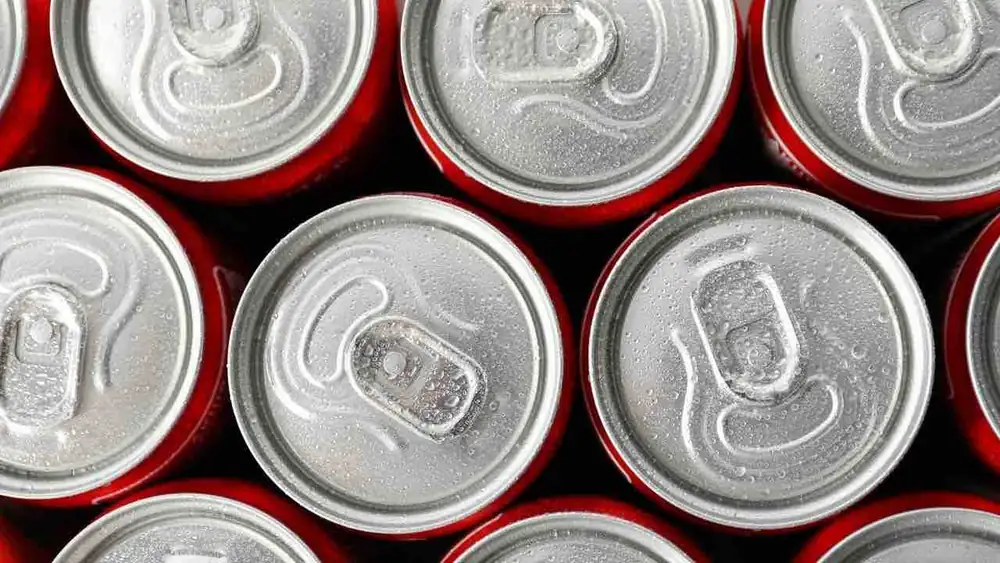
Putting a Coca-Cola in the freezer to quickly chill it seems like a convenient solution, especially on hot days. But forgetting a can in the freezer can turn an ice-cold drink into a minor household disaster: the container can warp, break, and, in the worst cases, collapse unexpectedly.
The problem doesn't just concern Coca-Cola, but more generally all carbonated drinks stored in closed containers. What happens in the freezer is actually caused by two simultaneous phenomena: the behavior of water when it turns to ice and that of the carbon dioxide present in the drink. When Coca-Cola freezes, the water expands and the CO2 is progressively concentrated in the still-liquid portion, altering the conditions inside the container.
A can is designed to withstand the normal pressure exerted by a carbonated beverage, but conditions change when the contents begin to freeze. This doesn't mean that a Coca-Cola placed in the freezer for a few minutes will necessarily cause problems: the risk arises especially when it's forgotten long enough to freeze significantly. Leaving a Coca-Cola can in the freezer until it freezes can subject the container to enough stress to warp or break it.
What happens inside the can when the ice starts to form
To understand the phenomenon, we need to start with the ingredient present in the largest quantity in the soft drink: water. Many substances, as they cool, tend to reduce in volume. Water, however, exhibits a peculiar behavior. When it solidifies, its molecules assume a more open crystalline structure than those found in the liquid state. The result is easy to observe even in everyday life: ice takes up more space than the liquid water from which it formed. Inside a sealed can, however, the available space is limited, and the expansion of the contents ends up exerting stress on the packaging.
A second fundamental element comes into play in carbonated drinks. Coca-Cola contains dissolved carbon dioxide, which is responsible for the characteristic bubbles. Inside the closed can, the CO2 is in equilibrium with the liquid under pressure. When part of the water begins to turn to ice, however, the carbon dioxide tends to be excluded from the solidifying portion and concentrates in the portion of the drink that remains liquid. As the ice continues to progressively occupy more space, the distribution of the CO2 also changes. The two phenomena combine and increase the stresses to which the container is subjected.
The real mistake is not cooling it: it's forgetting how long it's left inside
It's precisely the combination of water expansion and the presence of CO2 that makes the behavior of carbonated drinks in the freezer particularly interesting. A can is not simply a metal container: it is built to contain a liquid already subjected to the pressure associated with carbonation. During freezing, however, the internal conditions progressively change. If the stresses become greater than the container can withstand, the can can swell, leak, or break. This doesn't necessarily involve a spectacular explosion, but the collapse can be enough to spill the drink and ice throughout the freezer.
Furthermore, the phenomenon of expansion during freezing isn't exclusive to carbonated beverages. Even a non-bubbly beverage can cause its container to deform or break when the water inside it freezes and expands. However, Coca-Cola and other carbonated beverages also contain carbon dioxide, which makes the internal behavior more complex. Therefore, placing a Coca-Cola in the freezer for a few minutes can help cool it rapidly, while leaving it in the freezer long enough to completely freeze exposes the can to a real risk of damage. Particular attention should also be paid to glass containers: in the event of a breakage, there may be sharp fragments inside the freezer, in addition to the beverage that needs to be cleaned.