Prepare steam
The steam tradition
Once upon a time, steam was the ultimate test for live yeast.
With lukewarm milk and a little sugar, the unassuming yeast dough became a top-class sponge.
Yeast itself was a valuable leavening agent and constantly threatened by its current expiration date.
The steam, stored in still and warm conditions, revealed the true capabilities of the Germ.
And once the steam had risen to gentle heights, the baking and preparation of dough and dumplings could begin without hesitation.
The sensitive pre-dough does not like drafts or temperature changes at all.
And even today, when yeast is of stable quality and reliable shelf life, the steam is still given great attention.
Finally, it gives the dough shine, size, and flexibility.
Sugar is the love of steam
- To perform its function, the steamer needs warm milk, two to three spoonfuls of sugar and, if desired, a touch of flour.
- Gently stirred and left to rest, the yeast now develops its strength.
- As a sensitive natural product, it works in silence far removed from human temperament and thermal restlessness.
- Half an hour of this rest is enough for him to then give the actual dough his untamed power.
- Besides shine, flexibility and size, it gives the baked goods a pleasant touch of moisture.
- The heart of the steam engine is the live yeast.
The correct preparation
Baker's yeast or compressed yeast is used as a leavening agent.
It must be fresh, greyish-yellow in color, have a slightly acidic smell and taste, and possess good fermentation ability.
To be sure, a fermentation test is carried out before preparing the dough, that is, a sponge is made:
Ingredients for the steam
(All ingredients must be at room temperature): 1 cube of yeast (41g)
- 1 tsp sugar
- 4 EL Mehl
- 1 shot of milk (80 ml)
Preparation of the steam
- Crumble the yeast into a tall container, add the sugar and stir vigorously with a spoon until smooth.
- The yeast can also be pressed against the edge of the container and stirred until smooth.
- Add flour and milk, stirring until a thick batter is formed.
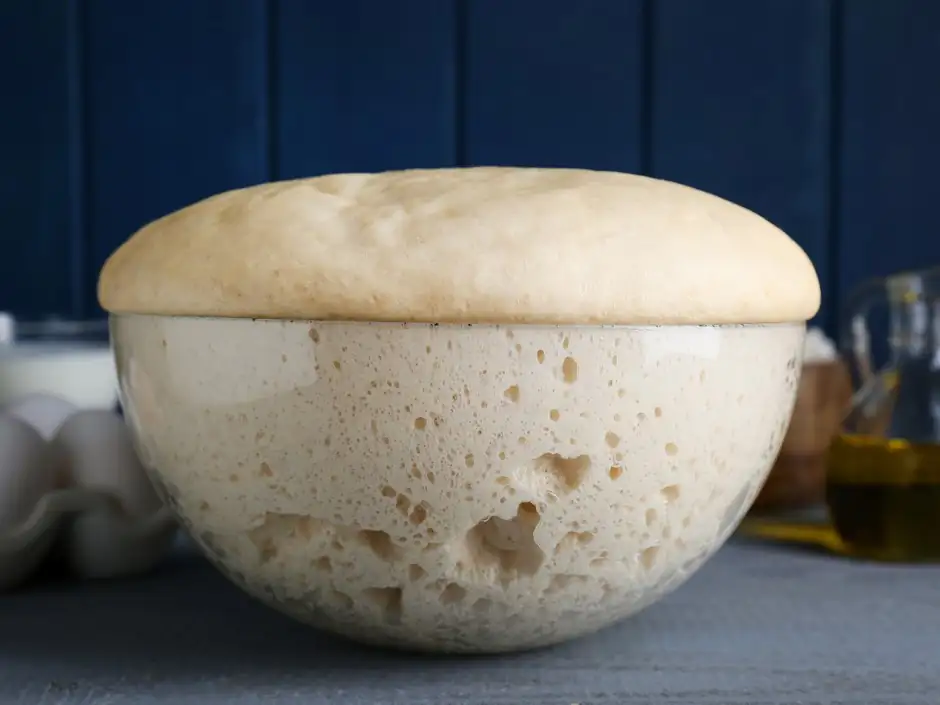
- Cover the dough with a cloth and let it rise in a warm place.
- The dough can also be placed in a warm water bath.
The yeast fungi now multiply and partially break down the flour and sugar into alcohol and carbon dioxide, which loosens the dough.
This process is best carried out at 25-35 degrees Celsius (warm to the touch).
Therefore, the ingredients must be at room temperature before preparing the dough.
Danger
Do not overheat the dough, otherwise the yeast will die, the flour will lose its baking ability, and the yeast will die during baking.
The fluffy dough becomes firm because the carbon dioxide has escaped.
Once the sponge is prepared, it can be further processed into a yeast dough.
Preparation of yeast dough
- The flour is sifted into a bowl and kept warm.
- Make a pit in the middle and pour in the risen steam.
- Cover with flour.
- Add lukewarm milk, butter, sugar and salt and mix everything well or beat with a wooden spoon until the dough comes away from the bowl, is silky smooth and forms bubbles.
- Sprinkle with a little flour and cover with a wet cloth.
- Let the dough rise in a warm place.
- You can find the exact ingredient information for a basic yeast dough here!
The steam of the star chef
Due to the quality of yeast available today, a steam starter is not strictly necessary to bring the dough to life.
Nevertheless, the beautiful tradition of the steam train has been preserved.
Even the prominent chef Lea Linster from Luxembourg relies entirely on steam as a starting aid for her numerous cakes made from yeast dough.
She relies entirely on her good "cake gene" and the extensive knowledge she inherited from her revered father.
As a passionate cook and baker, she makes wonderful snail cakes and simple sugar cakes with cinnamon from yeast dough with a sponge.
Simple cakes made with the finest ingredients such as rose flour, eggs and good butter are the perfect field of activity for the Dampfl.
Thanks to his help, every yeast dumpling reaches culinary heights.
The steamer's fine inner workings
- Yeast is offered as a handy 42-gram cube and as active dry yeast in small packages.
- In case of doubt, the smaller cube is preferable.
- However, to always have the fine leavening agent on hand, dried yeast is a good choice.
- Bakers and delicatessen owners sometimes still have large blocks of yeast on offer.
- These blocks have a total weight of 500 grams and are traditionally portioned into twelve cubes.
- This explains the seemingly "uneven" weight of the fresh yeast cube, which is 42 grams.
- The Dampfl heart unit has a very healthy interior.
Magnesium, iron, sodium, potassium, calcium and phosphorus are among the valuable ingredients.
All doughs made using the sponge belong to the healthy Slow Food category.
First, the yeast in the sponge does its work; then the sponge makes the actual dough rise, and before baking in the oven or cooking in fat or steam, the dough rises again. Between these stages, such dough always needs rest, a warm environment, and gentle agitation.