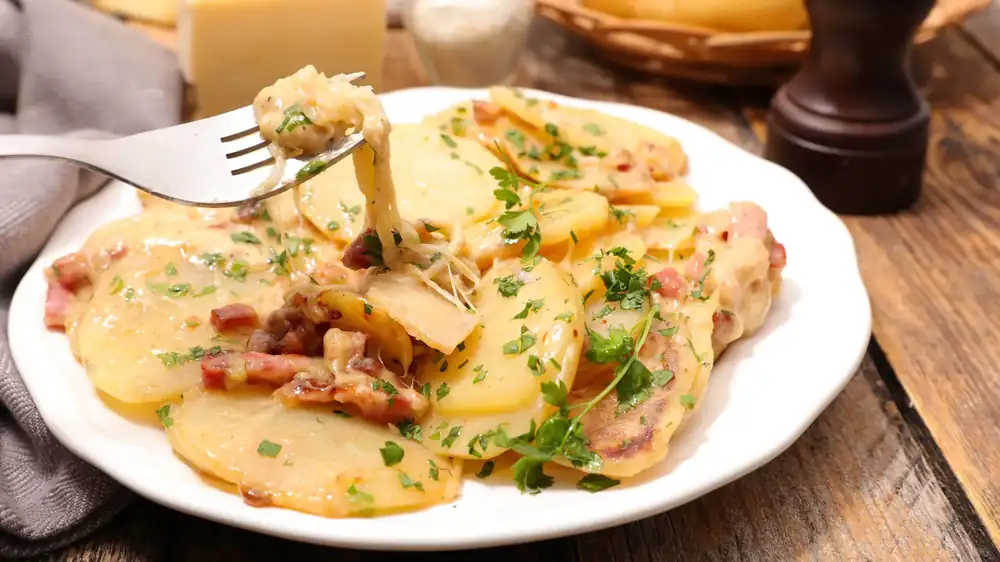
This humble dish from our grandparents has become the trendiest anti-crisis recipe of the moment
Born in the Auvergne region's mountain huts to feed farmers at a lower cost, Auvergne truffade is making a strong comeback as a favorite recipe for fighting the economic crisis. A blend of culinary science and comfort food, this peasant dish hides a few simple rules that make all the difference.
- Auvergne truffade, which originated in the burons of Cantal, was the economical meal of the buronniers in the 18th century.
- In 2026, this simple dish made with potatoes and cheese becomes a popular anti-crisis recipe on social media.
- Simple cooking tricks transform this stir-fry into a comforting and economical dish, ideal for tough times.
Auvergne truffade was long considered the "poor man's dish" of the buronniers (traditional cheesemakers), feeding peasants for next to nothing. In 2026, this ultra-simple potato and cheese pan-fry became one of the most sought-after recipes for those living in a crisis, both on social media and in everyday kitchens.
Between inflation, rising bills, and a craving for real comfort food, this hearty dish ticks all the boxes: basic ingredients, pan-fried, and a wow factor at the table when the cheese melts. And behind this apparent simplicity lies a true story of local tradition and a few easy-to-learn scientific principles.
Why Auvergne truffade is the perfect anti-crisis dish
Originating in the Cantal region, truffade was the hot snack of the buronniers (shepherds' huts) who tended the flocks. Its name comes from "trufa" or "trufada," the Occitan word for potato, which arrived in the Massif Central at the end of the 18th century to feed families at a lower cost. A base of tubers and local tomme cheese was enough to sustain entire days of work.
What made sense back then still works. Potatoes, pressed cheese, a little garlic or onion, some fat: the ingredient list remains short and affordable compared to the price of meat or fish. Served with a green salad and a few slices of ham, truffade feeds a whole table without breaking the bank, while offering that "comfort food" appeal that's a hit on TikTok and Instagram.
What's really happening in the pan
This cheesy potato skillet is so satisfying for good reason. Professional cooking manuals recommend about 30 to 40 percent cheese by weight of potatoes to achieve a stretchy texture without a pool of fat on the surface. The starch released by the potatoes swells when heated and traps the cheese fat, acting like a natural glue.
Another key point: do not rinse the potato slices after cutting them. The water would wash away the surface starch, which helps the truffade to bind together and the cheese to hold its shape. It's better to pat them dry with a cloth, then sear them directly in the fat to achieve crispy edges and a melting center.
Instructions for a stretchy and inexpensive truffade
For a successful truffade, opt for firm-fleshed potatoes, such as Charlotte or Amandine, cut into thin slices of about 3 to 4 millimeters, as recommended by chefs from the Auvergne region. A uniform cut ensures even cooking and prevents tough pieces from forming in the middle of the pan.
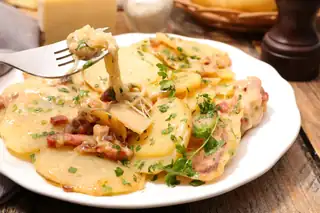
Start by gently sautéing the onion or garlic in a little duck fat, bacon fat, or butter until softened and translucent. Add the potatoes, season lightly with salt, and let them brown without stirring constantly until a golden crust forms. When they are tender throughout, remove the pan from the heat.
Then add the diced fresh tomme or young Cantal cheese and gently lift the mixture from the bottom up with a spatula, being careful not to break the strands. The cheese melts, stretches, coats each slice, and transforms this simple country dish into a festive occasion. If there are any leftovers, the truffade is excellent as a crispy galette the next day, as a filling for a hot sandwich, or as a light pancake for dinner—perfect for extending the anti-waste and anti-crisis spirit to the very last bite.