You probably never use this side of your cheese grater (and that's a real shame)
The "serrated side" of cheese graters is rarely used. And that's a real shame. In fact, this little-known side is far more useful than you might think. Let us explain.
We bet you only use one, maybe two, sides of your cheese grater. Rest assured, you're far from the first weekend cook to not exploit all the possibilities this essential kitchen utensil offers.
The cheese grater is far more complex (and versatile) than it appears. Indeed, this tool, which we generally only use to grate cheese (hence its name) or a few carrots, deserves a closer look.
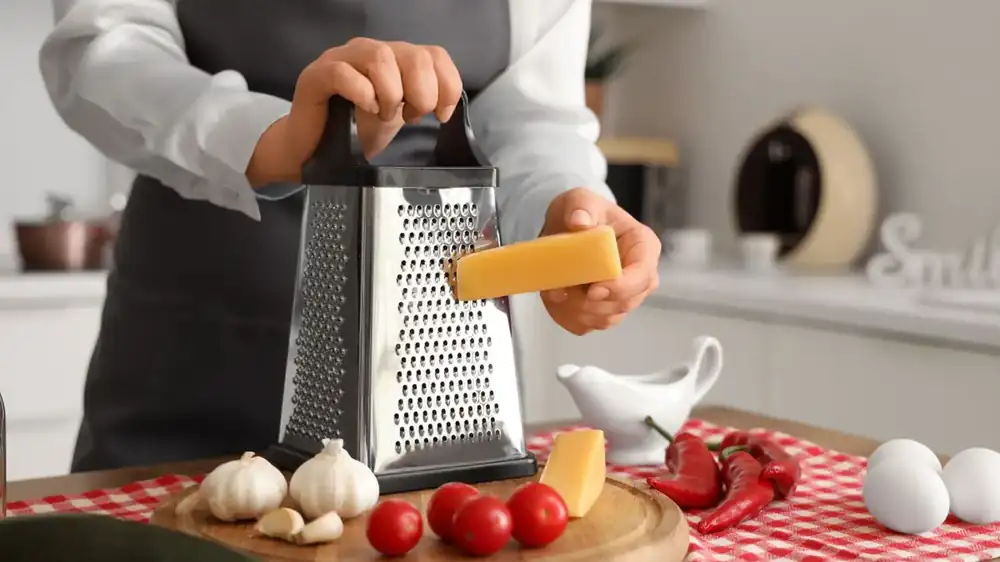
Let's consider two of the four sides of this same grater. The most commonly used side is often the one for fine or medium grating. This is the side used for fondue cheese, Gruyère for gratins, or Parmesan, which enhances pasta and salads. It produces even shavings, more or less fine depending on the food being grated, perfectly suited to each recipe.
The "spiky side", the forgotten side of the cheese grater
Now, let's turn our attention to the most neglected side of our utensil: the side with the small star-shaped holes. Sometimes called the "spiky side," it's largely underutilized by most users. And that's a real shame.
This side with tiny holes serves a particularly practical purpose, especially for those who enjoy spicy food. It allows you to reduce garlic, fresh ginger, or nutmeg to fine particles.
Here's how to use it without cutting yourself. Simply hold a small piece of garlic or ginger between your fingers, then gently rub it over the tiny spikes. You'll get a very fine, almost pureed texture, perfect for enhancing a sauce, marinade, or vinaigrette.
Note that this side of the grater is also ideal for zesting lemons, oranges, or other citrus fruits. It can also be used to grate hard cheeses, such as Parmesan or Pecorino. Finally, it can be used with certain firm fruits or vegetables, like carrots or radishes, to create thin, decorative slices or shavings.