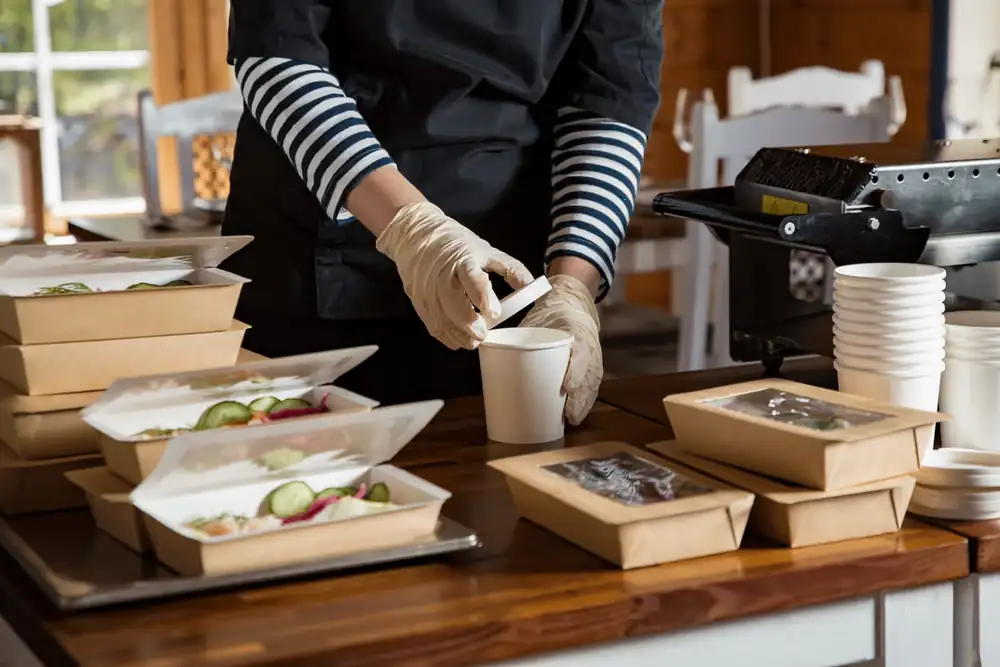
In delivery, packaging is not a detail: it can determine the quality of the service
A dish may leave the kitchen properly prepared, but arrive at its destination compromised by an unsuitable container: a lid that doesn't close properly, a deformed bottom, excessive condensation, liquid leakage, cooled food, or packaging that's difficult to dispose of.
For restaurants, delicatessens, canteens, caterers, and hotels, the choice of food packaging has become a technical decision. It's not just about aesthetics or price, but also about service quality, food safety, operational management, and ultimately customer perception.
The right container avoids complaints and delays
During a busy service, packaging should help the work, not complicate it.
A container for hot foods must maintain stability, resist moisture, close properly, and allow for transport without leaks. A container for cold dishes must protect the product without altering its presentation. A lid must be compatible with the chosen format, otherwise the package becomes fragile at the most delicate moment: delivery.
The problem arises especially during peak workloads. When many orders arrive at once, staff don't have time to correct every packaging error. If the materials aren't suitable, the risk of delays, waste, and complaints increases.
For this reason, the choice should start from practical questions:
● Is the food hot or cold?
● Does it contain liquids, sauces or fats?
● How long will it take before consumption?
● Does the container need to be stacked?
● Is an airtight seal needed or just a protective one?
● Will the customer know where to dispose of the material after use?
Good packaging isn't just noticeable when it's beautiful. It's noticeable when it allows the service to run smoothly.
Food suitability and correct use
In food service, it's not enough for a product to be "for food." The conditions of use must also be verified.
A container may be suitable for food contact, but not for all temperatures. It may work well with cold foods, but not with hot dishes. It may be resistant to brief contact, but not for prolonged storage.
Packaging safety therefore depends on clear documentation, technical data sheets, and manufacturer instructions. For professional businesses, this aspect is also important from a HACCP and control perspective: materials intended to come into contact with food must be consistent with their actual use.
A common mistake is choosing a container based on shape or cost, without considering the type of food. A very hot dish, a fried dish, a soup, an acidic preparation, or a fatty food may require different materials and performance.
Functionality comes before commercial promise.
Compostable does not automatically mean suitable for everything
Many businesses have replaced some of their traditional disposable items with compostable solutions made of paper, cardboard, cellulose pulp, or certified bioplastics.
It is a useful choice when done correctly, but it must be managed carefully.
A compostable product must be evaluated on two distinct levels:
- food use, therefore suitable for contact with food;
- end of life, therefore certifications and correct disposal.
A compostable plate, for example, can be a good solution for catering, canteens, festivals, and events, but it must be suitable for the type of food being served. At the same time, after use, it must be disposed of in the designated recycling system and accepted by the local manager.
The risk is thinking that the word "compostable" solves every problem. In reality, if the materials are mixed with traditional plastic, if the bins are unclear, or if operators don't receive instructions, even a good initial choice can lose its effectiveness.
Events, festivals, and catering: coordination makes the difference.
In catering and event services, packaging plays an even more evident role.
Plates, glasses, cutlery, trays, bags, and containers must be designed as a single system. If each service point purchases different materials, collection becomes difficult at the end of the service and increases the risk of everything ending up in the unsorted waste.
Ekoe, a company specializing in food packaging, compostable tableware, and professional supplies for catering and events, has gained direct experience with over 200 festivals and events. This experience reveals a very concrete fact: the sustainability of the service depends not only on the materials chosen, but on the overall organization.
Events work best when:
● the materials are homogeneous;
● suppliers are coordinated in advance;
● the waste manager is involved;
● operators receive simple instructions;
● the collection containers are clearly visible;
● the public immediately understands where to put each product.
Choosing the right tableware is just the first step. Managing the service completes the result.
Support in choosing is as important as the product itself
For many businesses, the problem isn't finding a container, but finding the right one.
In this context, Ekoe supports restaurants, delicatessens, and professional businesses in selecting takeout and delivery containers suited to the type of food, temperature, transportation time, and end-of-life management.
This is where vendor support makes the difference.
In Ekoe's case, online sales are complemented by consulting services. The staff who assist customers, handle quotes, and process sales inquiries are trained to evaluate the actual use of the packaging before proposing a solution.
When a restaurant owner requests a tray, the consideration isn't just about the size. It's also important to understand what food it will contain, whether it will be hot or cold, whether it contains liquids or fats, how long it will need to remain sealed, whether it will be transported in a cooler, whether it will need to be stacked, and how it will be disposed of after use.
The same goes for catering or a festival. In these cases, simply choosing a compostable plate from the catalog isn't enough. You need to consider the number of seats, the type of food, the serving locations, waste management, the availability of the right bags, and the instructions to provide to staff.
This advice reduces the risk of making bad purchases.
A container that's too small slows down service. A tray that's not designed for heat can warp. An incompatible lid can cause leaks during transport. Compostable tableware used with inconsistent materials can cause confusion during collection.
For this reason, companies like Ekoe help customers choose the most suitable product for their specific use, not just based on price or sales description.
Correct packaging begins with a simple question: what needs to happen during service? From there, you choose the material, format, resistance, certifications, and disposal method.
Packaging and quality perceived by the customer
The customer also judges by how he receives the product.
Clean, stable, and well-proportioned packaging communicates attentiveness. A misshapen tray, a wet bag, or a container too large for the portion size convey the opposite effect.
In delivery, packaging is often the first physical element the customer touches. Before even tasting the dish, they check whether the order has arrived intact, neatly packaged, and easy to consume.
For this reason, food packaging shouldn't be chosen at the last minute or based solely on unit price. A more suitable container can reduce waste, complaints, and operational problems.
Correct assessment includes:
● resistance;
● format;
● stackability;
● compatibility with lids and accessories;
● food suitability;
● continuous availability;
● clarity of disposal;
● assistance from the supplier in choosing.
A technical choice, not just a commercial one
In the restaurant industry, packaging is often considered an afterthought. In reality, it impacts many aspects of service: preparation times, safety, transportation, presentation, waste management, and customer satisfaction.
For this reason, the choice should not start only from the cost per piece, but from the overall cost of the error.
Incorrect packaging can mean:
● order redone;
● dissatisfied customer;
● wasted food;
● damaged delivery;
● slowed down staff;
● materials not disposed of correctly;
● compromised image of the premises.
On the contrary, a well-chosen product helps maintain quality and order even in times of greatest pressure.
For restaurants, caterers, canteens, hotels, and events, packaging has become an integral part of service quality.
It's not just what's on the plate. It's what allows the dish to reach the customer in the right way.