The Brazilian fruit you should never bite into: what is pequi and how to eat it safely
We're used to familiarizing ourselves with the most well-known tropical fruits—avocado, mango, papaya—and, indeed, they're increasingly popular in our country, where they're now grown like any other local fruit.
What makes it truly unique is neither its flavor nor its appearance, but the pits inside: they are covered with a dense crown of tiny thorns that, if not completely removed, can be dangerous. Its name itself reflects this peculiarity. "Pequi," in fact, derives from the Tupi term pyqui, a combination of py, "skin/shell," and qui, "thorn": or "shell with thorns," referring to the internal pit (endocarp) and not the outer skin, which is completely smooth. Despite this peculiarity, the pequi is perfectly edible; in fact, it is a fundamental resource for the Brazilian Cerrado region: it is no coincidence that the tree from which the fruit is harvested is one of its symbolic plants.
Harvesting the fruit has traditionally been associated with extractivism, that is, the harvesting of the land's spontaneous resources. From this perspective, pequi has an economic and social dimension beyond its gastronomical value. Brazilian public research has devoted considerable resources to its cultivation and the selection of new varieties, precisely because pequi represents an agricultural and gastronomic heritage closely tied to the territory. It is no coincidence that in the state of Goiás, it is called "gold of the Cerrado," both for its economic value in the strictest sense and for its ability to concentrate biodiversity, culture, gastronomy, and regional identity in a single fruit.
Experts from the Embrapa research institute, after years of studies on the biodiversity of the Cerrado, have selected and registered commercial varieties of pequizeiro without thorns around the stone, making the fruit completely safe to consume.
What is pequi, the “gold of the Cerrado”?
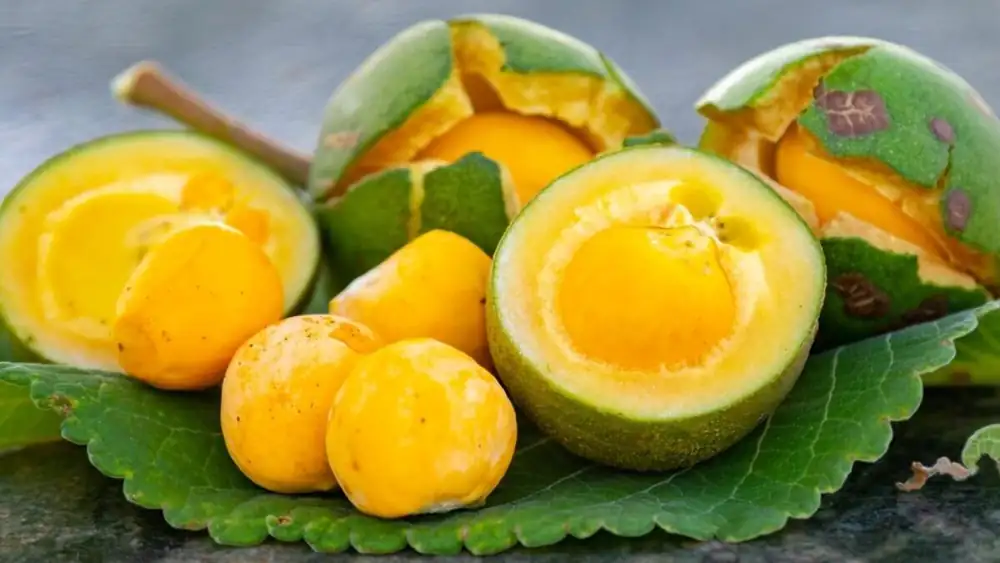
The pequi, whose scientific name is Caryocar brasiliense, is the fruit of the pequizeiro, a tropical tree native to the Cerrado, a vast area (about 2 million square kilometers) located on Brazil's Central Plateau. Pequi fruits are harvested between November and January, when they begin to fall from the branches: they are the size of an orange and, on the outside, have a yellowish-green skin. The inner flesh is very similar to that of an avocado, with a particularly buttery consistency, a yellowish color, and a very fragrant, soft, and sweet flavor.
But its internal structure is what makes the fruit truly unique: beneath the pulp, in fact, lies a hard, woody endocarp, covered with very thin, very sharp thorns. It is therefore a fruit in which the edible and the dangerous parts coexist just a few millimeters apart, and it is precisely this characteristic that has given rise to one of the most curious gestures in Brazilian gastronomy: the pequi is not bitten like a normal fruit, precisely to avoid the risk of biting the thorns as well. Once properly cleaned, however, and this difficulty overcome, the fruit offers an intense and persistent flavor, so much so that in Brazil it can divide enthusiasts between those who find it irresistible and those who fail to appreciate its personality. The pulp is soft, oily, very aromatic and flavorful, with a decidedly more pronounced fatty component than that of most tropical fruits. The flavor has nuances that can simultaneously recall ripe fruit, dried fruit, and some vegetal notes, with a particularly long lingering aftertaste.
This richness is also linked to its composition. Scientific studies on the fruit's pulp have highlighted a significant lipid and fiber content, and the presence of a high proportion of fatty acids, particularly oleic acid and palmitic acid. This lipid combination is not just a sensation on the palate, but the chemical reason for its rich, buttery texture. The oily characteristic is therefore not just a sensation perceived by the palate: it is a true compositional peculiarity of the fruit. The yellow-orange color of the pulp is linked to the presence of carotenoids, compounds that also contribute to its nutritional characteristics. For this reason, pequi has been studied not only as a gastronomic ingredient, but also for its nutritional potential and the possibility of producing various food products from it.
Why should pequi never be bitten?
The unique traditional way of eating pequi comes from the presence of its spiny pit: you shouldn't bite down on the fruit, but only consume the surface pulp, proceeding slowly. Caution is so ingrained in pequi culture that in Brazil the expression "don't bite the pequi" has become almost a lesson in local gastronomy. In fact, pequi should never be bitten like any other fruit, precisely because of the hundreds of tiny, thin, spiny thorns hidden just beneath the yellow pulp. If you bite into the fruit forcefully, the thorns will painfully stick into your gums, tongue, palate, or inside your mouth, causing painful wounds that are difficult to remove.
How do you eat pequizeiro properly? You can nibble it, but be careful, gently scraping the flesh with your teeth, layer by layer, without ever digging too deeply into the central pit. For this very reason, inexperienced consumers are often advised to eat the fruit's flesh directly with a spoon. To overcome this difficulty, experts at the Embrapa research institute, after years of studying the biodiversity of the Cerrado, have selected and registered commercial varieties of pequizeiro without thorns around the pit, making the fruit completely safe to eat.
How to eat and use pequi
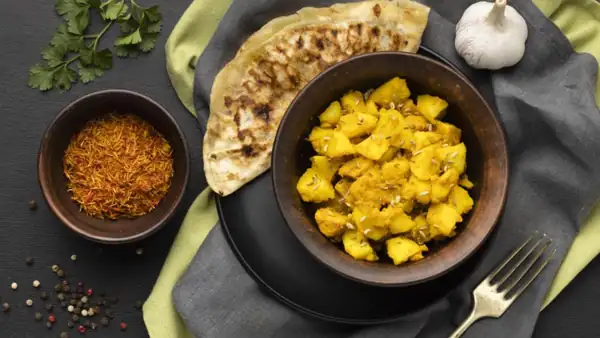
Pequi can be eaten fresh if carefully de-fleshed, but it is also frequently used as an ingredient: the fruit can be used in countless recipes, and in fact is featured in many typical dishes of the Cerrado region, particularly in Goiás. The most famous dish is frango com pequi, chicken cooked with pequi: it's a seemingly simple preparation, but gastronomically very effective, as the chicken, with its relatively delicate flavor, absorbs the intense aroma and oily component of the fruit. The result is a deeply aromatic dish, in which the pequi functions not as a simple garnish, but as a true structural element.
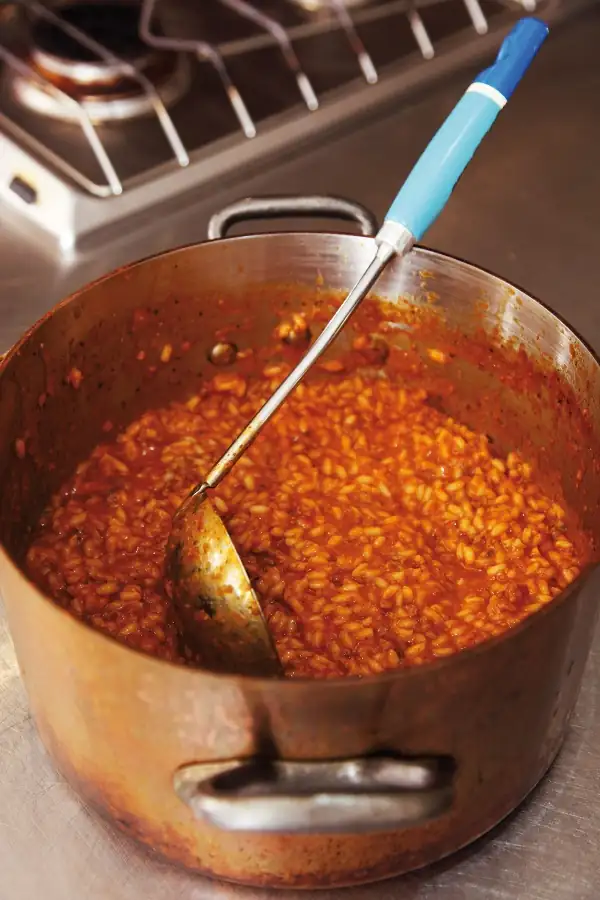
Another classic is arroz com pequi, rice cooked with the fruit. Rice, due to its neutrality, is the ideal companion: it absorbs the oil and flavors of the fruit without competing with them. This combination has become so iconic to Goian cuisine that it is considered one of the region's signature dishes. Pequi can also accompany feijão, be used in meat and chicken dishes, be used in farofe (a savory side dish whose main ingredient is cassava flour or corn flour), and in other traditional dishes such as baião de três, a rich rice, bean, and pequi dish. The fruit pulp can also be transformed into jellies, desserts, liqueurs, creams, ice cream, and cookies. Brazilian cuisine uses more than just the fruit pulp: the stone is also prized, despite its characteristic thorns.
Pequi oil can be extracted from the seed, as well as from the pulp: once dried in the sun, the thorns are easily removed, the pit is swept in half, and the actual seed is extracted. The oil is then commercially extracted, or alternatively, after toasting, the seeds can be consumed as salted nuts. Pequi oil is a particularly valuable ingredient: it is an aromatic oil with a deep color, used in cooking or seasoning rice, chicken, and bean dishes; in traditional medicine, to relieve muscle and joint pain; and in cosmetics, to nourish curly hair and dry skin. Despite its nutritional, medicinal, and commercial value, the pequizeiro tree is at risk of extinction for many reasons. Some are socio-environmental in nature: increasingly severe drought, deforestation (to make way for monocultures of soy, cotton, sugarcane, and eucalyptus, or pastures for livestock), the indifference of local governments, and severe social inequalities, which have led to struggles over land and the recognition of indigenous rights. Other reasons, however, are linked to the characteristics of the pequi tree: for example, the plant's slow development (with low germination rates and production that begins only in its eighth year) and its often unsustainable harvest.