Islares, the childhood dream that came true
Julen Bergantiños is that eleven-year-old boy who dreamed, from his village of Sobrado dos Monxes (A Coruña), of being the host at all the restaurants he frequented with his family.
Four years later, he started working in the hospitality industry with the goal of learning every aspect, detail, skill, and technique of the trade to bring his childhood dream to life. “Until now, I always saw it as very far off because of the financial aspect. Opening a restaurant these days isn't easy; it requires a lot of financial sacrifice. This year, everything fell into place in my hometown. I found the perfect location, my dream restaurant, and my partner and family convinced me to turn that dream into reality.”
It was to be expected that, after so many years nurturing the idea, Julen would develop a very clear image of what his restaurant would be. “I’ve been developing it year after year in my mind. I’ve jotted down dishes that came to mind, details about the dining room… I’m a regular restaurant customer and I pay attention to the details. The ones I like, I apply in my own restaurant so that the customer benefits in terms of comfort and enjoyment.”
Summers spent in Islares (Cantabria) amidst history and philosophy books, meals, sunset fishing, family, and friends forged the first sketches of what is now his project. “My restaurant had to be a reflection of me, and that’s what I am. I am the north, family, history, memories, and traditions, and that is Islares [the name of his restaurant].” The culinary offering reflects this connection. “Are there better products outside our region? Sure! But I have my own right here: Celtic pork, Betizu wine, Galician produce, legumes, dairy products, and so on. And above all, culture. We have everything here; I don't have to go anywhere else to do something exceptional. We must preserve what has made us happy for decades: the stews, the cultural traditions tied to seasonality… And I'm here to defend that, without gimmicks, fancy techniques, or extravagant touches. To pay homage to the gastronomic and cultural heritage of northern Spain, with honesty, humility, and deep respect for what we work with,” says the chef.
The menu consists of two tasting menus that will vary depending on the produce. “The farmer will tell me when there are no more good tomatoes, so I can introduce another product and a different dish,” Julen explains. Regarding prices, he says they are as honest as possible. “We’ll charge around €55 or €60 for the smaller menu, with about seven or eight courses, without overwhelming the diners. And €75 or €80 for the larger menu, with about 11 or 12 courses, to expand our reach further into northern Spain.”
The wine list shares the same philosophy as the culinary offerings. It features wines from Galicia, Asturias, Cantabria, and the Basque Country, as well as a few from Bierzo and Rioja Alavesa. “We don't distinguish between natural and conventional wine. We like wine, good wine, regardless of whether it's made by small producers or large wineries. There are small producers who make real disasters with their wine, and conversely, exceptional things. And the same is true for wineries. We look for wines that are good, that have soul, that convey a sense of direction, and that allow us to travel and enjoy,” he explains.
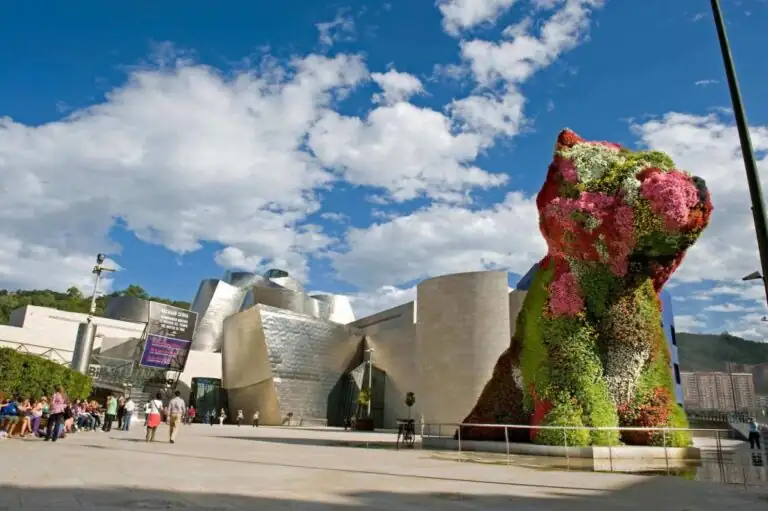
Islares' new location is 86 square meters and will accommodate 20 to 22 diners. It's situated opposite the Puppy sculpture at the Guggenheim Museum (Bilbao), right in the city center and with views of Mount Artxanda. They will be open Monday through Saturday for lunch and on Thursday, Friday, and Saturday evenings.
A dream that almost turned into a nightmare
To reach his goal, Julen has had to surf a few waves. The first, and most well-known in the industry, is the lack of staff. “It’s been a major obstacle. There aren’t enough people to work, but I know that’s true in other sectors too. In our industry, we’ve mistreated workers for many years. Yes, there are also workers who don’t even deserve a thank you, but the hospitality industry in general has taken advantage of its own sector to squeeze out what little profit it had. The work of eight has always been done by four, with people working extra hours and often for less pay, without adhering to collective agreements or receiving any appreciation from customers. Because we’re not only to blame behind closed doors. As customers, we’ve also mistreated the hospitality industry, that unprofessional and unhelpful sector that serves you at any hour and in any way,” he laments.
In fact, he explains that, of the 100 resumes received after the job offer was announced, most were for the administration department, only a few for cooks and none for the dining room.
Regarding the future, he says that the situation is changing. “Everything will become more formalized, professionalized, and, in my opinion, more controlled and better. But the damage is already done, and very few young people want to dedicate themselves to this. Today I was talking to the director of a local hospitality school, and we agreed that the best future opportunities are in the dining room. Right now, any young person with a passion for gastronomy and two years of vocational training can easily earn a net salary of €1,600 or more right after finishing their studies.”
Despite this, he says he's happy with the people who now make up the team. "They have little experience, but that's the least of it. They're young, really nice, and wonderful people, eager to learn and full of enthusiasm. What more could I ask for?"
Delays in the arrival of materials, the availability of furniture, and issues like paint and kitchenware nearly derailed the opening, although everything is now resolved. “It’s beyond my comprehension; I can’t understand it. And everyone just shrugs their shoulders, as if normalizing the situation. I can’t comment on what’s happening with the materials and the prices,” he notes.
Who is Julen Bergantiños?
A self-taught man, he admits that he learned his craft through countless hours working in all kinds of hospitality establishments. In fact, he says his family ran a breakfast bar, although his memories of that time are vague.
His first prestigious restaurant was the Hotel Dómine in Bilbao, with Martín Berasategui. “There I discovered 'fine dining,' the standards of quality, and where I began to see cooking as a profession.” His next stop was Mina (Bilbao), which he says was the restaurant of his life. “It's where I learned almost everything. Lara and Álvaro are exceptional; as people and as chefs, they are among the best in the country. They opened their home to me and taught me everything. I owe them more than my life, and I love them dearly.” His career continued with stints in the kitchens of Nandu Jubany, El Celler de Can Roca, Xerta, Ambivium, Damaso Vergara, and Jordi Vilà. “I am also very grateful to them; they are great chefs and great people.”