Another look at the countryside
Juan Carlos Roldán is one of the greatest experts on wild plants in Spain, which has led him to collect and supply them to renowned restaurants in Spain and abroad.
Almost daily, during the scant twenty minutes that elapse from when I leave home until I reach my small mountain garden, I leave behind a valley landscape alongside small hills covered by the omnipresent olive grove of Jaén, and then immediately enter the lush and rugged valley of Otíñar.
The orographic differences of these landscapes offer us vegetation that develops in a succession of spaces of opportunity, in which nature and the seasons give us an infinity of wild plants that grow without permission, without the intervention of human beings.
If we investigate enough, the vast majority of these plants hold the memory of the peoples, cultures, and civilizations that used them before us, having introduced them into our environment through cultivation, eventually becoming naturalized in that same environment and escaping human control.
Following the widespread abandonment of the natural environment by a large part of our population, the use and consumption of wild plants was sometimes stigmatized, associated with a very poor economy and subsistence cooking typical of previous periods of need, something from which they wanted to distance themselves.
Easy access to a decent variety of fruits and vegetables at any time of year eventually relegated the harvesting and seasonal consumption of wild plants to a residual group of people linked either to the preparation of domestic dishes, or to certain establishments in which the consumption of this diminished group of wild foods was part of the concept of "typical dish", shaping part of our local identity and with which a large part of the population could once again evoke flavors that helped to recall their best childhood memories.
I understand that the general public's knowledge of these types of plants is minimal, limited in most cases to five or ten plants at most: asparagus, wild greens, golden thistle, fennel, or thyme. What has happened to cause this knowledge to be lost or not passed on? What would happen if we were to reintroduce these plants into our pantry, incorporating them seasonally into our diet? Today, just within the fifteen-kilometer walk from home to the garden, one can find nearly three hundred plants with culinary value. What has happened to create such a vast gap between popular knowledge and the richness of these mountains?
In my own reflection, I've come to think that the current cultural use of wild plants, beyond helping to create a sense of identity—which is always positive—greatly limits true knowledge in this area by restricting us to the here and now. I will give several examples of this.
From the Iberian Peninsula and the Mediterranean to the Middle East, we share an immense variety of plants. This fact, however, does not mean that these shared plants are used in the same way in Spain and Turkey. For example, in Turkey, the root of the wild orchid Orchis mascula is highly valued and used to make the prized drink known as salep, while in Spain, this use is completely unknown.
In the previous case, it's understandable that there hasn't been a transmission of knowledge due to distance and cultural differences, but there are cases where this lack of knowledge transmission occurs, for example, between two neighboring provinces like Córdoba and Jaén. This is the case with the use of crujía (Bupleurum gibraltaricum), an aromatic plant with a pleasant citrus scent, which is used in areas of Córdoba to season olives. Its main benefit is preventing the olives from softening, as its natural oils possess a potent antifungal property that inhibits the proliferation of yeasts that cause olive spoilage. However, the use of crujía is completely unknown in the province of Jaén.
On many other occasions, the emergence of new horticultural products has relegated to oblivion many plants that were once highly popular. This may be the case with the celery root or Alexandrian celery (Smyrnium olusatrum), a variety of celery widely cultivated and popularized by Alexander the Great, which today grows wild, naturalized, and largely ignored in our fields. Newer, sweeter, and less intense varieties of Italian celery eclipsed it, to the point that it is now largely unknown.
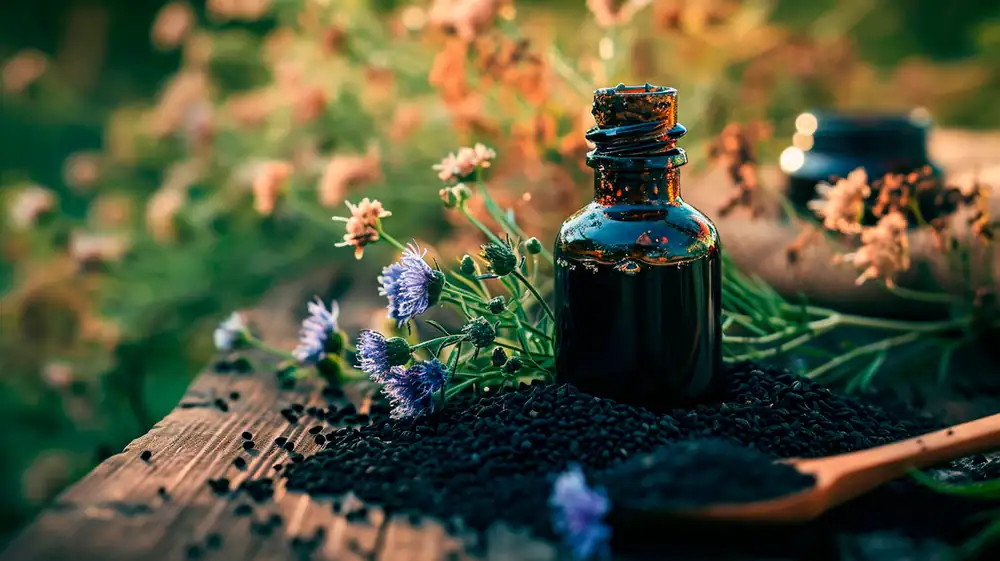
There are also many other plants strongly associated with the identity and culinary uses of a culture, ethnicity, or religion, which, after their decline, were similarly forgotten. This is the case of the rediscovered culinary use of sumac (Rhus coriaria) or black cumin (Niguella damascena), typical of Andalusian and Sephardic cuisine, which, after the medieval decrees expelling Muslims and Jews, provoked fear and aversion to using them in cooking.
All these elements, variables, and reflections shape my daily perception of the landscape and help me interpret, in a very personal way, the subtle clues and hints that nature offers me through plants and seasons. It's important to remember that the concept of landscape, strictly speaking, is simply "part of a territory that can be observed from a particular place."
Not everyone sees the same things in this landscape, nor do we all possess the keys to enrich that experience. That's why, on my walks with friends and acquaintances, I try to convey this personal perception of the landscape through the plants and their stories, evoking other times, cultures, and flavors, attempting to recreate anecdotes and childhood memories, biting leaves, smelling flowers, and trying to leave no one unmoved by the magnificent spectacle that nature usually offers us.