America Needed Good Couscous
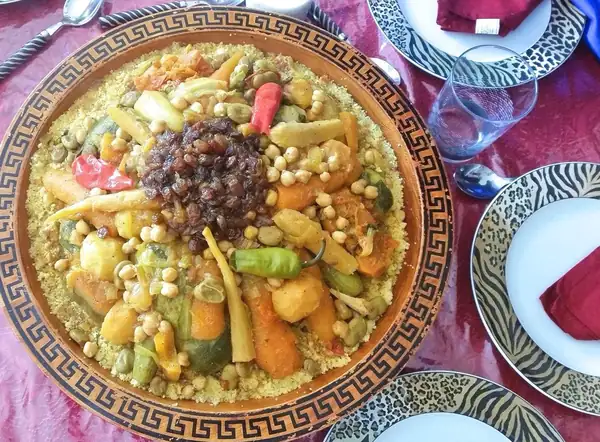
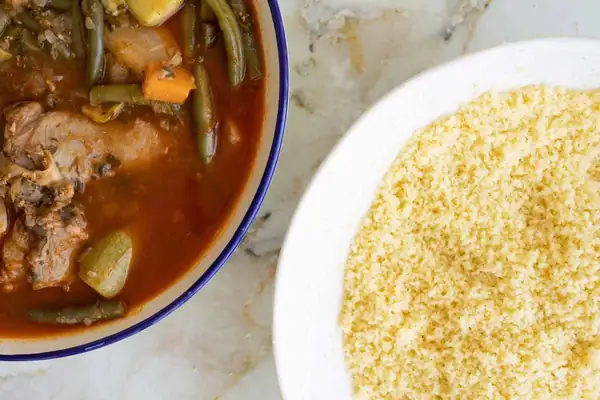
Ron and Leetal Arazi from NY Shuk want you to think of couscous as a meal’s nutty, flavorful main attraction—not just another side.
“It’s like how people perceive Jewish food in New York City as bagel and lox, knodel [matzo balls], and pastrami. Couscous is also Jewish!”
When I show up to Ron Arazi’s brightly lit Brooklyn home for a private tutorial in the art of making couscous, I’m greeted with a business handshake and a kind, open kitchen. Ron’s day job is running NY Shuk —a food firm that produces pantry items from Middle Eastern Jewish cuisines—with his business partner and wife, Leetal.
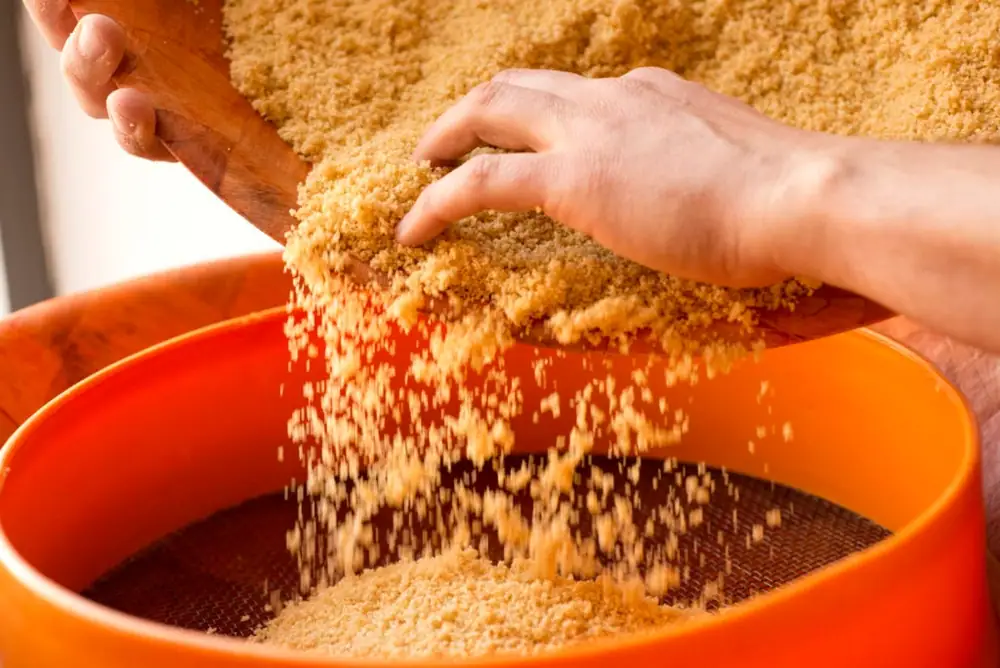
But for the past few years, he’s as well been teaching intimate classes to under a dozen students at a time in his home kitchen using his communal counter as a place to spread his love of the North African staple known as couscous. Ron has modernized his mother’s technique by utilizing a spray bottle filled with salt water (about 1½ tablespoons to a quart) so that he can keep his hands to the task. “I wouldn’t call it technology,” explains Ron, “but it makes the process easier.” Another modification is the grain he uses. There’s Israeli couscous, which is less of a couscous and more of a pasta.
The truth is, each couscous-producing country has its own ideal grain size and shape, and everyone’s family makes it a little differently. Ron considers himself part Moroccan, his mother’s heritage, but his father was born in Lebanon and moved to Israel in his mid-20s.
After the Israeli Declaration of Independence in 1948, the the authorities strategically placed immigrants throughout the country according to their backgrounds. This was the inspiration for NY Shuk, the business the Arazis created when they moved to Brooklyn’s Crown Heights from Israel half a dozen years ago. “A shuk is a place in Israel where culture and commerce come together.
When the couple got to New York City from Israel, they were surprised to find such a shortage of good couscous, which was important to the definition of who they were. “It’s like how people perceive Jewish food in New York City as bagel and lox, knodel [matzo balls], and pastrami. Couscous is also Jewish!” exclaims Leetal. “It’s our Jewish food.” So they continued to make couscous for themselves, realizing this may be their calling.
Leetal tells me it’s not a side: You don’t need to sauce it or mix your plate all together; couscous is the star. Slow-Cooked Brisket with Apricots and Harissa 6-8 servings Ingredients 3 cups whole dried apricots a good pinch of saffron 5 ½ pounds brisket, cut into 10 big chunks 4 tablespoons salt, divided 3 medium onions, peeled and quartered 4 whole bulbs garlic 5 bay leaves 7 ounces harissa I don’t know about you, but this dish will be front and center on our holiday table.
Soak the apricots with saffron in 4 cups of cold tap water for 3 hours. Mix the apricot soaking water with the remaining salt and harissa and pour over the meat. Cover the pan with parchment paper and aluminum foil and place it on the stove top, bring it to a boil.
After 45 minutes, lower the heat to 325°F and let it slow-cook for another 2 hours and 15 minutes. After 3 hours in total, check your meat with 2 forks by trying to separate a chunk of meat in two.
If it pulls easily, you are ready, but if not, you are probably very close, so put it back in for 20 more minutes and check again. If by the end of the preparation the liquid has not thickened enough, just put it on the stove top without a cover for 10 minutes and let the liquid evaporate a bit.
Right before you serve, broil it for roughly 10 minutes to get a nice golden color on the top.
- Who: NY Shuk