Madrid Culinary Campus leads the European gastronomic dialogue with the Gastronomic Crossroads project
Madrid Culinary Campus (MACC), the gastronomic and business innovation center of the Comillas Pontifical University, jointly developed with the Vocento group, is becoming a meeting point for chefs, researchers, and professionals in the culinary field with the launch of the European project Gastronomic Crossroads.
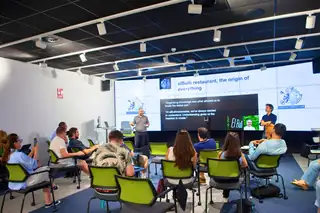
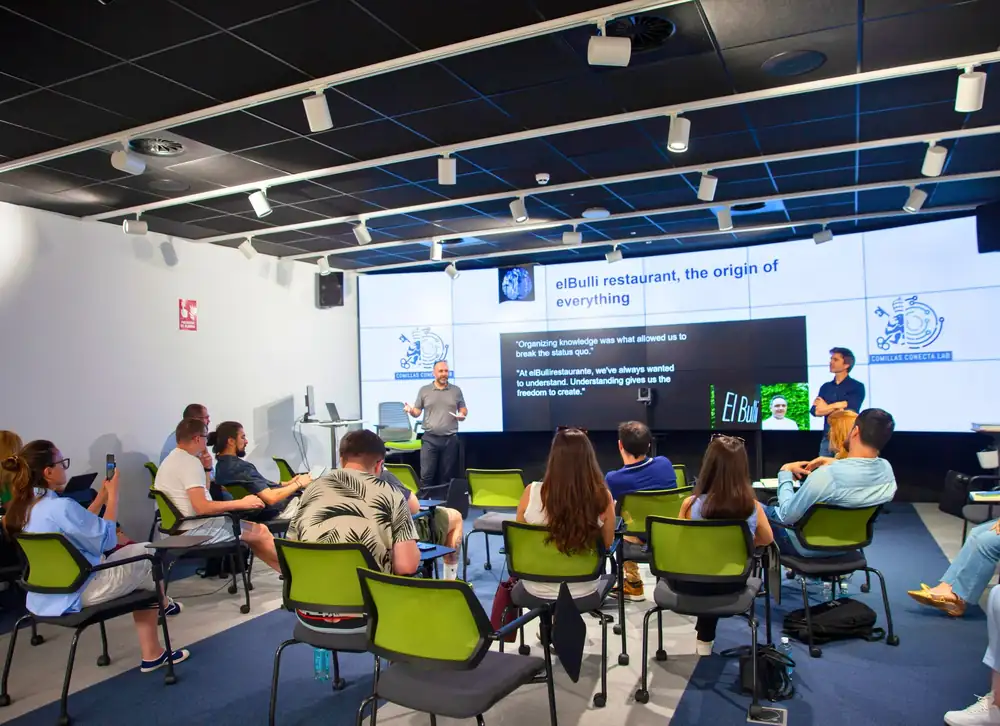
The opening day, held at the MOM Culinary Institute, included hands-on training, live cooking demonstrations, and an original beer tasting based on sensory taxonomy maps. The second day, held at Comillas Conecta LAB, focused on lectures about Spanish gastronomic identity, a visit to the Vallehermoso Market, and the Sapiens experience, which offered a holistic view of cuisine from the perspective of sustainability and ancestral knowledge.
Among the participants are representatives from key institutions such as the University of Agriculture and Veterinary Medicine of Bucharest (USAMV) and Black Sea Food Dignity, which, together with Comillas University, are committed to an educational approach that combines traditional knowledge with the needs of new generations of chefs. Ottoman, Hispano-Arabic, and Carpathian culinary traditions serve as a common thread to reflect on the full use of ingredients, reducing food waste, and historical preservation techniques.
This innovative project arose to address an urgent need: to preserve and update traditional culinary practices in a global context marked by food industrialization. Local cuisines—rich in history, techniques, and flavor—cannot be forgotten.
What is the goal of the GASTRONOMIC CROSSROADS project?
- Revaluing historical food preservation techniques that promote sustainability.
- To disseminate efficient cooking methods inspired by Ottoman, Hispano-Arabic and Carpathian traditions.
- Recovering traditional strategies to reduce food waste, such as the complete use of ingredients: from root to stem and from snout to tail.
- Integrate this valuable gastronomic heritage into vocational training and contemporary cuisine.
Undoubtedly, with this project, MACC reinforces its role as a space for innovation, training and international cooperation in the culinary field.