How Indonesian pumpkin pie achieves a custard-like texture
With lots of coconut milk, beaten eggs and little flour, Indonesian bingka labu is more like custard than a sponge cake.
Indonesia has much to offer world cuisine. It is a major producer of the unique kopi luwak coffee, and among its dishes, both savory and sweet, the pumpkin cake known as bingka labu stands out.
Its creamy texture comes from the generous amount of eggs and coconut milk, with a smaller quantity of flour. The eggs are beaten until frothy, and the pumpkin is steamed and strained to obtain a vibrant orange color and an earthy flavor.
Although it is very popular in Indonesia, it has not yet become established in Western markets.
The amount of flour varies depending on the recipe, though most call for less than 2 cups total. The sugar, pumpkin, and spices also change from recipe to recipe, but coconut milk is almost always present. Along with the eggs, beaten until frothy, these ingredients give it a texture less like a traditional cake and more like custard.
Pumpkin can be roasted, steamed, or used as canned puree. In any case, straining it makes the pie smoother. The amount of flour should be adjusted depending on the type of pumpkin: puree requires slightly more than roasted pumpkin.
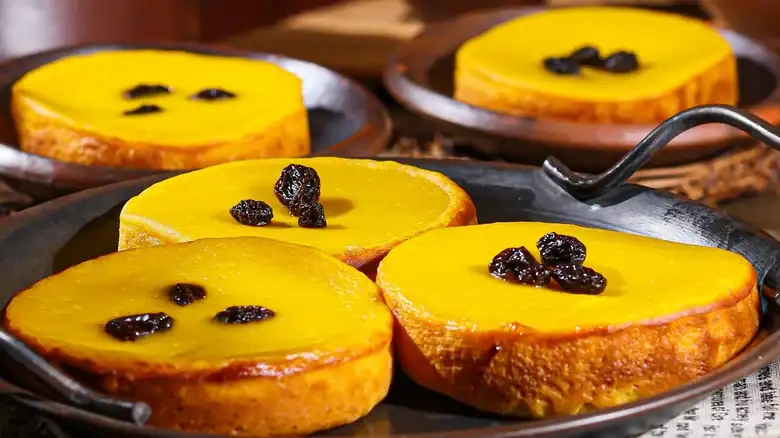
Once baked, the cake should have a golden, crispy crust and a deep orange interior that is dense but not hard. It can be sprinkled with sesame seeds or served plain.