Event catering in a couture setting: this is what the Met Gala dinner was like
On the first Monday of May, at the 2026 Met Gala, dinner was an integral part of the overall creative concept: in a multisensory experience inspired by the atmosphere of northern Italian gardens, the interior, the view and the menu followed the same narrative, so that gastronomy became an active shaper of the visual and cultural world of the evening. The result was a multi-arts event where food pl
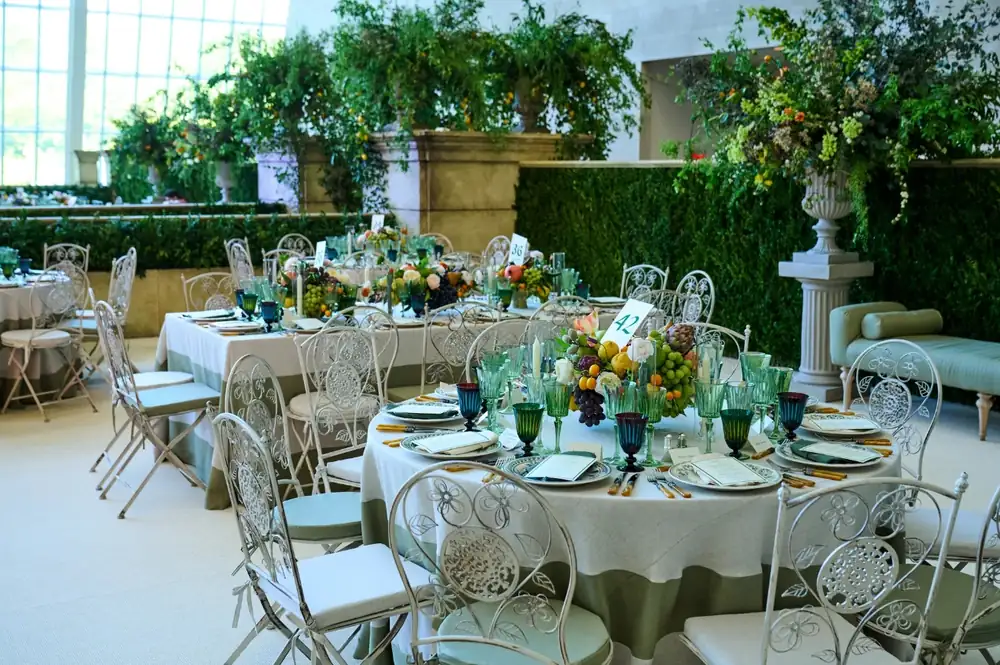
The 2026 Met Gala was designed by event designer Raul Avila, with the collaboration of filmmaker Baz Luhrmann and production designer Derek McLane. Drawing on Renaissance forms, this year’s theme – Fashion is Art – was reimagined as a romantic northern Italian garden. Guests were virtually transported inside an installation: the visual concept accompanied the drama of the evening from the red carpet, through the interior, and through the dinner.
The tables were decorated with real fruit – pomegranates, grapes and pears – and seasonal flowers. The still-life compositions gave the space a painterly feel, further enhancing the Renaissance-inspired visuals.
Dinner in three acts
The menu was created by Olivier Cheng’s team, closely linked to the artistic concept of the evening. The dinner was divided into three “acts”. The first course evoked a garden motif with burrata and green tomato salad. The main course, the “sculpture”, consisted of lamb loin, seasonal vegetables and morel panna. The dessert course, the “silhouette”, featured three different sweets: a raspberry-chocolate creation, a strawberry pavlova with passion fruit, and a white chocolate-mocha dessert.
The dishes were connected to the Fashion is Art theme in terms of taste, form, and presentation. Each plate reinterpreted the gala dinner genre through the intersection of fashion, art, and gastronomy.
Prohibited ingredients
When it comes to menu design, both aesthetics and practicality are important. The Met Gala has had an informal no-go list for years, which excludes ingredients that are likely to stain, crumble, or have strong odors. Onions and garlic are usually left out, as are foods that are difficult to eat.
The goal is for the dinner to fit into the sophisticated visual world of the evening and to provide an elegant, precisely composed experience, despite the couture looks.