The dessert that saves dry pastries
Stale baked goods, not throwaway baked goods
The basic idea of the bonfire is centuries older than the Hungarian dessert itself. For a long time, bread was considered too valuable an ingredient to waste when it dried out, so many European cuisines developed recipes that made the stale baked goods enjoyable again with milk, eggs, sugar and various spices. This thinking gave rise to, among others, the English bread and butter pudding, the French pain perdu and many local bread puddings. The bonfire took the same principle to an even higher level with apples, nuts, jam and egg foam.
It is difficult to pin the development of the Hungarian version to a specific date or a single creator; the available sources rather point to a gradual development, in which both bourgeois cuisine and Austro-Hungarian gastronomic relations may have played a role. In any case, by the 20th century it had already emerged as a mature recipe, and in our later cookbooks the same elements that we identify with bonfires today are recognisable.
Bonfire or apple Charlotte?
An old professional name provides particularly interesting evidence of the relationship. In Hungarian catering textbooks, the French name “Charlotte aux pommes”, or apple Charlotte, is also mentioned alongside “máglyarakás”. The essence of the Charlotte dessert family is also that a fruit filling is made in a form lined with baked goods or sponge cake. However, the máglyarakás has developed in a specific direction: the bun soaked in milk and egg yolk, the stewed apples, the apricot jam and the egg foam added at the end of baking together create a structure that makes the character of the Hungarian version clearly recognizable.
Where did it get its name from?
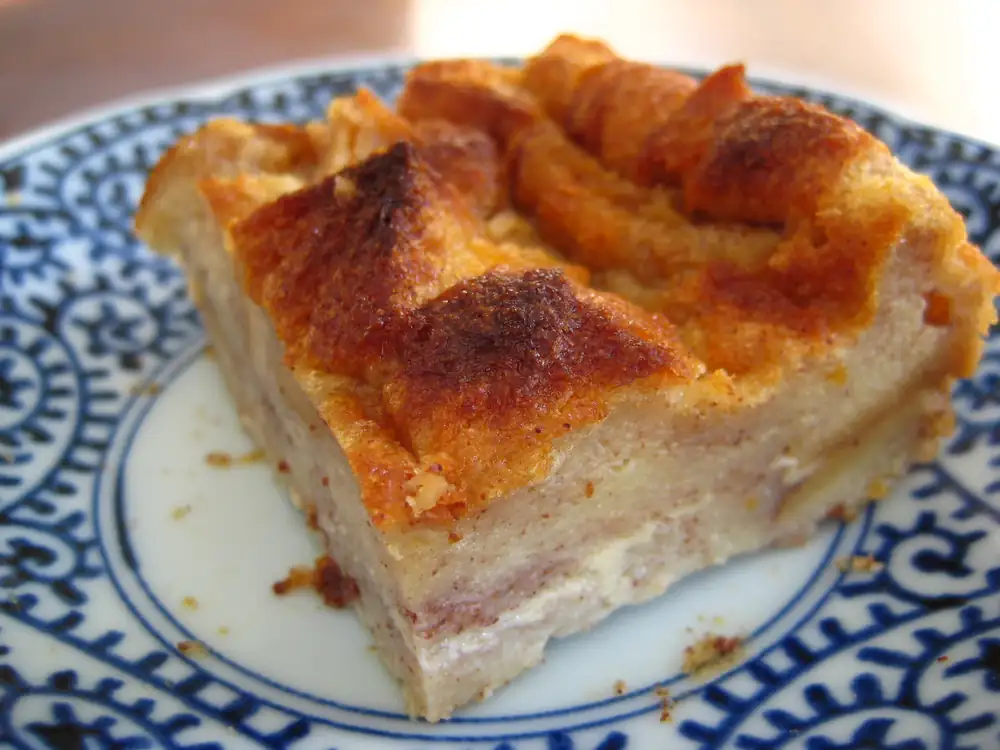
There are several explanations for the origin of the name, but it is difficult to find a definitively documented story of how it came to be. The most obvious interpretation is based on the dessert itself: the layers stacked on top of each other and the egg foam browning in irregular peaks on top may resemble a flaming bonfire arranged in a pile. For this reason, it is worth treating with reservations those stories that say the cake was originally baked over a real bonfire or open fire. Although such origin stories can be found in writings about the dessert, it is difficult to support them with reliable historical sources. The visual explanation of the name is much closer to what we see on the finished cake itself.
Each layer has its own task
What makes bonfire cake special is that almost every layer has a different texture. The dry bun or cake absorbs the milk enriched with vanilla, sugar and egg yolk, so it becomes juicy like pudding during baking. The apple adds acidity and freshness, the cinnamon adds a warm aroma, and the walnuts add crunch and depth. The apricot jam plays an even more interesting role: in classic recipes, it is partly placed on the bun layer and partly mixed into the egg white foam. An older catering recipe specifically emphasizes that the jam simultaneously modifies the taste and color of the foam. Thus, the characteristic sour-sweet apricot flavor runs throughout the entire dessert and counterbalances the richness of the milky bread base.
The foam that becomes “flames”
The most spectacular part of the bonfire is undoubtedly the egg foam on top. The first part of the dessert is baked on its own first, and then the foam whipped with sugar – often flavored with apricot jam – is only added at the end of the process. It is then put back in the oven for a short time until the surface takes on color. This is how the classic technology is described in professional textbooks. The foam is therefore both a flavor and a structural closure. It forms a light layer over the soft, milky bun and juicy apple, and the browned tops bring more caramel aromas. Moreover, perhaps this sight also helped make the name of the bonfire so apt!
Bun, croissant or cake?
The recipes are much less uniform in this respect. The classic catering description uses a bun, while other recipes are based on a croissant or a dry cake. The difference fits well with the original logic of the dessert: you could use whatever pastry was available. Dryness is also a distinct advantage here. A slightly dried-out pastry can absorb much more flavoured liquid while maintaining its structure. The same property becomes a value that would make it less desirable in itself.
Dessert, or even a whole lunch?
The place of the bonfire cake in Hungarian food culture is also interesting. Formally a dessert, due to its content, it also stood its ground as a second course after a hearty soup, similar to poppy seed cake, cottage cheese csusza or other sweet pasta dishes. The combination of milk, eggs, baked goods, nuts and fruit makes it much more filling than an average cake. This partly explains its popularity. The bonfire cake simultaneously solved the use of leftover pastries, made room for apples, which were abundantly available in season, and transformed them into a complete, hot dish with the help of a few pantry ingredients.
Bonfire, as made by Richárd Csillag
Janka Gelencsér and Richárd Csillag encountered the dessert as part of the daily menu in a small village restaurant, which at the time hardly seemed like something that would find a place in their own restaurant's menu years later. After opening the former Lokal 47, while searching for a winter dessert, the experience came to their mind again: one of the obvious ingredients of the season, apples, gave them the idea to make their own version of bonfire pile. Their version reinterprets the elements of the classic bonfire pile individually. The base is a lemon zest-flavored cake puff, for which even the remaining, slightly dry cake can be perfectly used. To this, a thick apple cream made from caramelized apples, cinnamon, lemon juice and white wine is added, which is complemented by light mascarpone cream and homemade apricot jam. When serving, the baked cake is sliced or pierced, and the apple puree, then the mascarpone cream and jam are added. The usual layered bonfire, crowned with foam, is given a lighter form that also works as a plate dessert, while the apples, cake and apricot jam retain the recognizable character of the classic dish.