Five experts explain how to open a restaurant in today's market.
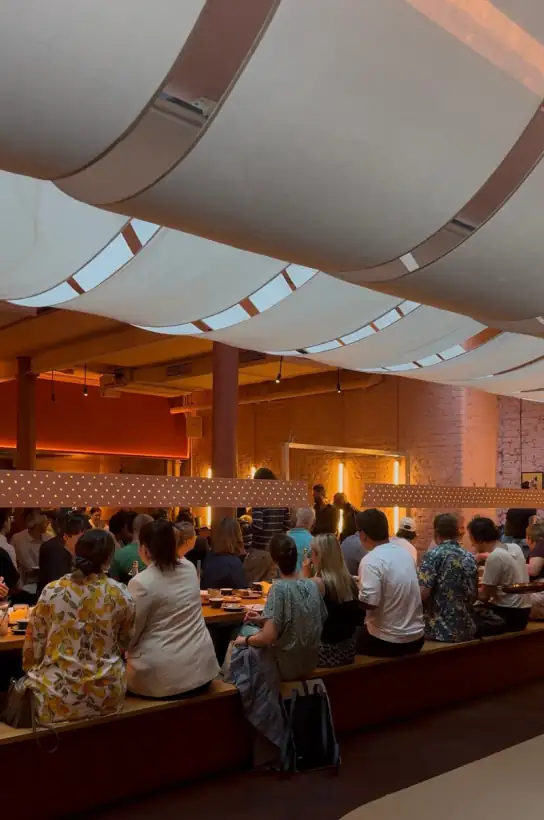
Five industry professionals, gathered for breakfast at Kricket in Shoreditch, with the collaboration of OpenTable, analyze what it takes to open a restaurant today.
“For us, opening a pop-up at Boxhall has given us an opportunity to test our quick service format… We’ve done all of that learning but the risk is massively reduced.”
Ed McIlroy (Four Legs), Jon Spiteri (The Latimer), Amy Poon (Poon's, at Somerset House), Ifeyinwa Frederick (Chuku), and Rik Campbell (co-founder of Kricket) all agree that waiting for the perfect moment is a mistake. Economic uncertainty presents challenges, but it also opens up opportunities, such as better leases and less competition. "If you have a burning desire to do something, you have an idea, you have a concept, now is as good a time as any," says Poon.
Operators can now sit down with landlords who previously wouldn't have agreed to a meeting. They have more negotiating power and access to more flexible lease terms. "We have more leverage now," says Spiteri.
The first few months are for learning: perfecting the menu, understanding the customers, and seeing how the public influences the business. Survival is the first measure of success. “My biggest fear was that we’d become a trendy restaurant,” says Poon. “Because when you’re at the top, you get cold. I thought, can we be a little more low-key?”
Temporary locations remain one of the smartest ways to test a concept, because they help build community, refine the offering, and reduce risk before committing to a permanent location. Frederick explains that Chuku opened a temporary location in Boxhall to test its quick-service format: “We’ve already learned everything we need to know, but the risk has been greatly reduced.”
Understanding the customer is more important than ever. “The sooner you know your customer, the better,” says Campbell. According to Sasha Shaker of OpenTable, data shows a steady increase in demand for experiences, year after year. Poon rebranded its fixed menu as an “experience” on OpenTable and saw its sales increase.
Restaurants need multiple revenue streams, such as private dining, events, retail, delivery, and complementary concepts. Offering value doesn't necessarily mean being cheap, but rather expanding the menu so people can spend less or more. "Diners may spend less, eat less, or not drink, but they'll still come," says Spiteri. The challenge is giving them a compelling reason to choose your restaurant.
A strong brand is just as important. Frederick wants people to fall in love with Chuku's for what it represents, so that any future project, whether it's a bar or a hotel, will have customers from the start. McIlroy suggests starting with a "minimum viable product": "What's the bare minimum we can do to open and start generating revenue? Then we can gradually invest our money in improving the place."
Poon warns that "money poorly invested is worse than having no money at all," and advises raising only what is needed. Campbell recommends defining what makes the business unique and telling that story coherently, with photography and especially video, on platforms like TikTok.