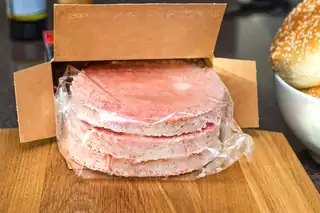
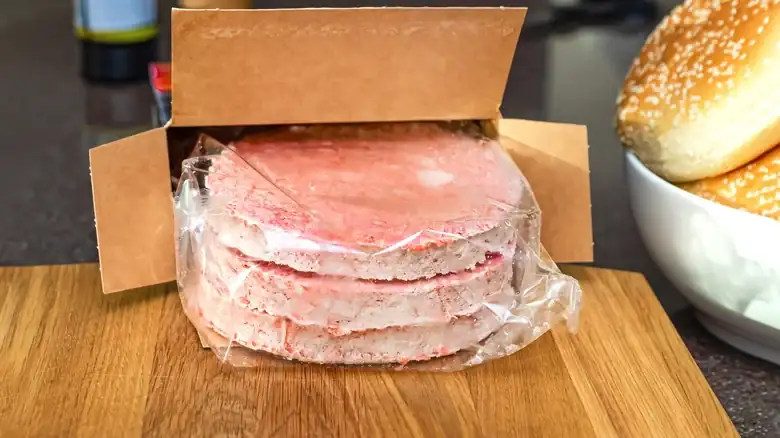
Frozen hamburgers don't come from a single cut, but from a mixture of scraps.
The decisive factor in a box of frozen hamburgers is the percentage of fat, and to achieve this, processors mix lean and fatty meat scraps.
“are actually all different products and are regulated differently under U.S. Department of Agriculture rules. For instance, for something to be called”
Few people wonder what part of the cow is in a box of frozen hamburgers, and the answer is that there isn't just one cut.
The trimmings come in two types: the "50s" are fatty trimmings from finished steers and heifers, while the "90s" are leaner scraps from discarded cows and bulls. According to an agriculture expert at Iowa State University, mixing the two allows processors to achieve ratios like 80-20 or 85-15. The result includes chuck, round, brisket, and sirloin, along with other cuts that no one sells whole. As chef Robert Irvine bluntly put it when asked about frozen hamburgers, you end up with "a random mix of trimmings from who-knows-what cuts."
The label is the only place to get a straightforward answer. Ground beef, hamburgers, and beef patties are different products, and the U.S. Department of Agriculture regulates them differently. Ground beef cannot contain added beef fat, has a maximum of 30% fat, and is not allowed to contain added water, phosphates, binders, or extenders. Hamburgers have the same fat limit but allow the addition of beef fat.
According to the Legal Information Institute at Cornell Law School, regulations on beef burgers are somewhat more flexible: they allow binders, mechanically separated beef, partially trimmed fat tissue, and specific amounts of water. In other words, the name on the package says more about what's inside than it seems.
Even the term "beef" can be ambiguous. A package labeled "100% beef" isn't necessarily made with only whole muscle and may include beef heart. This is perfectly legal because the heart is a muscle, and so far there's no evidence that it affects the burger's safety.