Sugar Production Has Majorly Increased, But Prices Are Still Going Up
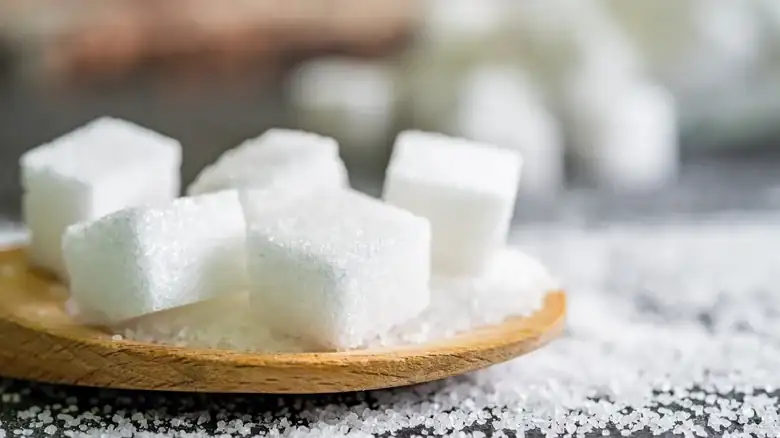
If you've noticed price increases for your favorite baked goods over the last few years, there may be a reason for it. Sugarcane, which is grown in tropical environments, produces both sugar and ethanol, via Frontiers. After sugarcane is converted to sugar, it is used as a sweetener in baked goods, drinks, and more.
Due to its wide range of uses, sugarcane is a hot commodity. Unfortunately, it can't be grown worldwide, limiting the number of places that can produce it. According to the Canadian Sugar Institute, sugarcane requires an average temperature of 75 degrees Fahrenheit, sunshine, and plenty of water. The closer to the equator, the more suitable a place is to grow sugarcane.
According to Bloomberg, after years of trying to catch up, the world finally has a surplus of sugarcane — but that doesn't mean we'll be seeing price cuts any time soon.
There could be a cap on exports
For the first time in four years, the world has a surplus of sugar, according to Bloomberg. Despite the high yields, it doesn't look like prices will be coming down any time soon.
Brazil — the top producer of sugar — is expected to collect a great crop this year, after weather conditions hindered exports in previous years. However, harvesting will not begin until April. There is a chance it could start early, weather permitting, but delays could be caused due to congested ports. Additionally, export capacity may be limited.
India is the second largest grower of sugar in the world, but its shipment outlook will be capped at around 6 million tons. Crops were hit by poor weather, and the country is pushing for more ethanol production, meaning sugar can could be used for fuel, rather than food.
Bloomberg reports that Europe's crops were hit with droughts, causing the continent to require more imports. Grocery stores across the United States and Europe are already seeing higher retail prices for sugar, and with the limits placed on this year's crops, we could see costs continue to surge.