Con qué platos combina mejor la gremolata italiana
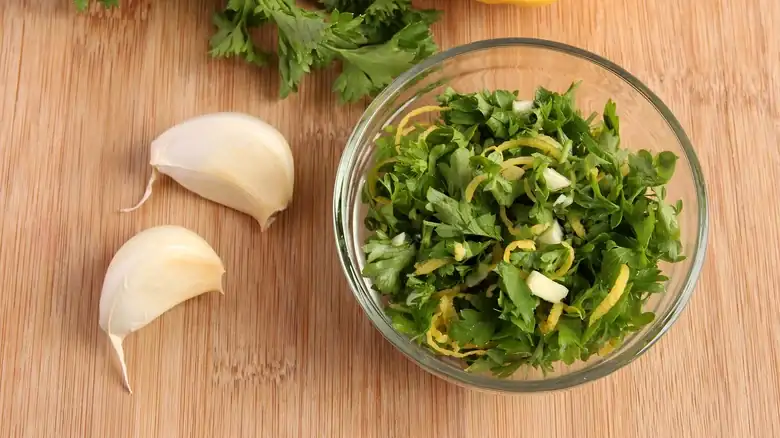
La gremolata, un condimento italiano de perejil, ajo, ralladura de limón, sal y pimienta, realza platos que de otro modo resultarían pesados o monótonos.
Gremolata is prepared in just a few minutes. Finely chop fresh parsley and garlic, leaving a rustic texture but not turning to powder, and place them in a bowl with lemon zest, salt, and pepper. To allow the flavors to meld, crush the ingredients with the back of a spoon and then add it to dishes or mix it with a little olive oil to use as a marinade.
Osso buco is the classic accompaniment to gremolata. This traditional Italian dish, believed to have originated in Milan, consists of a veal shank, which gives the dish its name, as osso buco means "bone with a hole" in Italian. The meat is cooked in a pan with onions, cherry tomatoes, chicken broth, and other ingredients, and is usually served with risotto or pasta, although it can be accompanied by potatoes for a more substantial meal.
Although the beef is already very flavorful, many chefs believe that osso buco isn't complete without homemade gremolata. Its freshness adds complexity to the dish and softens the intensity of the meat and the other ingredients.
Gremolata also pairs beautifully with eggs, whether scrambled or fried. It can be served on a slice of crusty bread, drizzled with the sauce, resulting in a very attractive dish.
Roasted vegetables also benefit from this seasoning. Roasted carrots, with their slightly sweet flavor, are a good rustic complement to meat and poultry dishes, and the freshness of gremolata pairs perfectly with them. With pasta, such as linguine, it balances the creaminess of the sauce, and a sprinkle of breadcrumbs further enhances the texture.