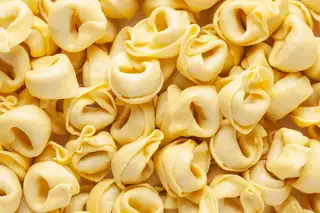
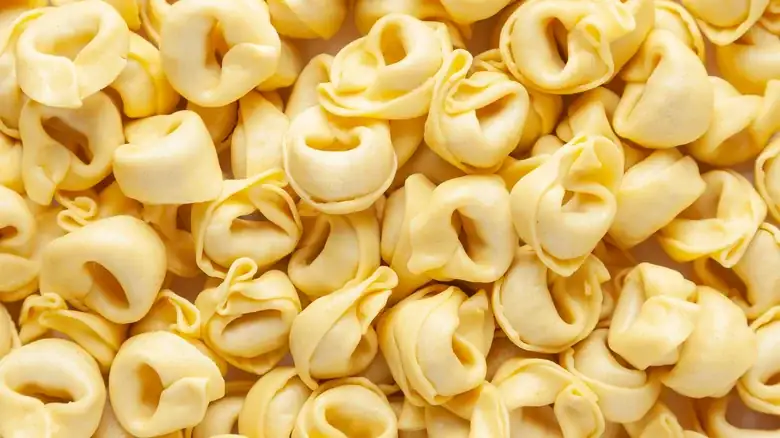
Freír los tortellini en sartén, como si fueran albóndigas
Los tortellini, rellenos de queso o carne y originarios de Bolonia, pueden cocinarse en sartén con un lado dorado y el otro al vapor, igual que una empanadilla.
Tortellini are filled pasta that go beyond the standard definition, made with wheat flour, water, and eggs. They are essentially filled dumplings. Since they contain the same ingredients as pasta, they can be considered pasta, but they could also be considered dumplings, as dumplings are, by definition, doughs, often filled, that are steamed, fried, or boiled.
Therefore, tortellini are essentially meatballs disguised as pasta, and pan-frying them is a way to enjoy them. This technique, called pan-frying, involves browning one side of the dough in a small amount of oil, covering the pan, adding a little water, and allowing the rest to steam. Frying only one side gives them two different textures, enriching the experience.
With fresh tortellini, simply add a little oil to the pan and brown one side. Then cover, add water, and let the other side steam, cooking the pasta and filling without fully frying them. They take between four and eight minutes, and the sign that they're ready is a golden, crispy touch. With packaged tortellini, the easiest way is to boil them and finish cooking them in the pan.
If there are leftovers, fried tortellini can be frozen, always ensuring they are completely cold. It's best to freeze them separately from the sauce and the rest of the recipe, in case any ingredient doesn't freeze properly, and reheat them before serving. Cooked tortellini will keep for about three months in the freezer, and fresh tortellini for up to two months. They remain safe to eat, although their flavor and texture may begin to change.