The difference between teriyaki and hibachi lies in the heat and the sauce.
Teriyaki is a sauce and a preparation, and hibachi is a container with embers; its teppanyaki variant, cooked on a griddle, is the best known outside of Japan.
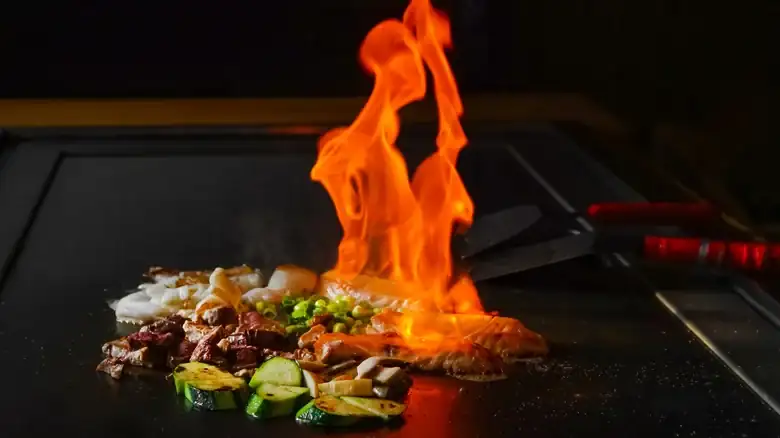
Hibachi means "fire bowl" in Japanese, and refers to a cylindrical container filled with hot coals and a grill on top for cooking meats and vegetables. Teppanyaki, which is cooked in front of the customer on a griddle, has a strong Western influence and was popularized by hibachi chefs performing tricks at chains like Benihana.
The term teriyaki refers to both a preparation and a sauce. "Teri" means glaze or shine, and "yaki" means grill. The sauce is made of soy sauce, sugar, and mirin, and is brushed several times over meats and vegetables as they are grilled using the traditional Japanese bincho-tan grill. Originally developed as a marinade and preservative for fish, it is now used with a wide variety of ingredients.
The cooking method also influences the flavor. Hibachi relies on quick cooking times and high temperatures, so it requires ingredients cut into thin strips or julienne, and the meat must be thin enough to cook thoroughly without burning on the outside. Teriyaki, on the other hand, can use anything from whole chicken breasts to thick skewers.
Teriyaki sauce doesn't require slow cooking; it works with radiant heat rather than direct heat. Its texture is sticky, and its flavor is sweet and slightly smoky, with the salt and umami of the soy sauce. This makes it a perfect sweet and savory accompaniment to vegetables and grilled meats.
Hibachi seasonings vary greatly by region, ranging from soy sauce to sesame seeds. Common ingredients include cabbage, noodles, shrimp, and steak, and the griddle is greased with various oils, from soybean oil to animal fat.







