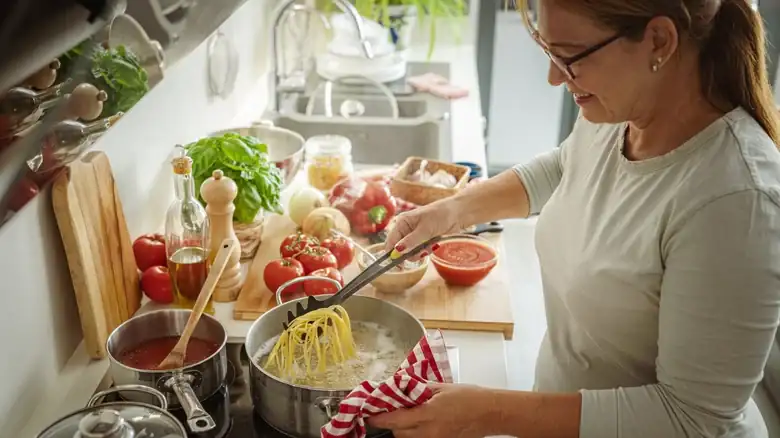
The Imperative Step To Take Immediately After Adding Pasta To Boiling Water
Making pasta seems like one of the easiest things to do in the kitchen. You boil water, throw the pasta in the pot, and wait for it to get soft. Right? If it were only that easy.
Whether or not to boil the water before adding the pasta has been hotly debated, but many chefs agree that not letting the water reach a rolling boil first is one of the mistakes with pasta you should never make. Those rules apply no matter whether you're making long noodles — follow our tips to make spaghetti and to create restaurant-worthy bucatini — or shorter pastas, like rigatoni or penne. Adding pasta to cold water increases the cooking time and allows the pasta to absorb too much water.
Simmering lowers the water temperature
What cooks often ignore is what happens between the time you put the pasta in the pot and when it's time to take it out of the water. Adding pasta to boiling water slows the contents down to a simmer, cooling the water from a boiling temperature of 212 degrees Fahrenheit to somewhere between 185 and 205 degrees Fahrenheit. If you don't bring the water back to a boil, you'll be cooking the pasta at a slower temperature, potentially resulting in that mushy texture you want to avoid.
Not boiling the water after adding the pasta also risks having your noodles clump together. The gentle bubbles from simmering don't agitate the food as well as the stronger bubbles you get with a boil. That means you'll need to continually stir the pasta to keep the noodles from sticking to one another while it simmers.
After the water boils is also a great time to add salt. Boiling water will dissolve the salt more quickly. It also prevents the salt from falling to the bottom, where it can scratch the pot. To avoid leaving you, and your meal, feeling like a wet noodle in the kitchen, boiling the water twice is your best bet for perfect pasta.