Todo el sabor del pollo satay, fácil de preparar en casa
De vez en cuando, me entran unas ganas irresistibles de comer pollo satay. Es uno de mis platos favoritos para pedir a domicilio, pero quería una versión económica que pudiera preparar en casa sin complicaciones.
- Spray antiadherente ($0.01)
- 2 pechugas de pollo grandes (cortadas en trozos de 2,5 cm (907 g) $5,34)
- 1 diente de ajo (picado, $0.06)
- Jengibre fresco de 2,5 cm (pelado y picado, 0,21 $)
- ½ lima fresca (aproximadamente 1,5-2 cucharadas de jugo, $0,13)
- ½ cucharada de salsa de chile con ajo (o Sriracha, $0.07)
- 2 cucharadas de salsa de soja (0,11 $)
- 1 cucharada de azúcar moreno (0,04 $)
- 1 cucharadita de aceite de sésamo tostado (0,09 $)
- 2 cucharadas de aceite vegetal (0,08 $)
- ½ taza de mantequilla de cacahuete natural (140 g, 0,61 $)
- 3 cucharadas de agua caliente ($0.00)
- ½ manojo de cilantro fresco (dividido, $0.42)
- Reúna y prepare todos los ingredientes. Rocíe con aceite una fuente para hornear de 8x10 pulgadas y resérvela.
- En un bol mediano, añade el ajo picado, el jengibre, el zumo de lima, la salsa de chile con ajo, la salsa de soja, el azúcar moreno, el aceite de sésamo y el aceite vegetal. Bate bien.
- Agrega la mantequilla de maní y el agua caliente, y bate nuevamente hasta obtener una mezcla homogénea. Pica el cilantro en trozos grandes. Reserva un puñado de cilantro para decorar el plato después de hornearlo y mezcla el resto con la salsa de maní.
- Reserva media taza de la salsa de cacahuete y añade el resto a una bolsa con cierre hermético de un galón junto con el pollo. Saca el aire, cierra la bolsa y masajea para que se impregne bien. Marina en el refrigerador durante al menos 30 minutos o hasta toda la noche.
- Cuando estés listo para cocinar el pollo, precalienta el horno a 190 °C (375 °F). Coloca los trozos de pollo y todo el adobo de la bolsa en una fuente para horno, formando una sola capa.
- Hornea el pollo en el horno precalentado durante 15 minutos. Luego, con una brocha, unta la salsa de cacahuete reservada sobre el pollo. Hornea durante 15 minutos más. Asegúrate de que la temperatura interna del pollo alcance los 74 °C (165 °F).
- Mezcla los trozos de pollo y la salsa en el fondo del recipiente hasta que se integren. Decora el pollo horneado con el cilantro reservado y sirve.
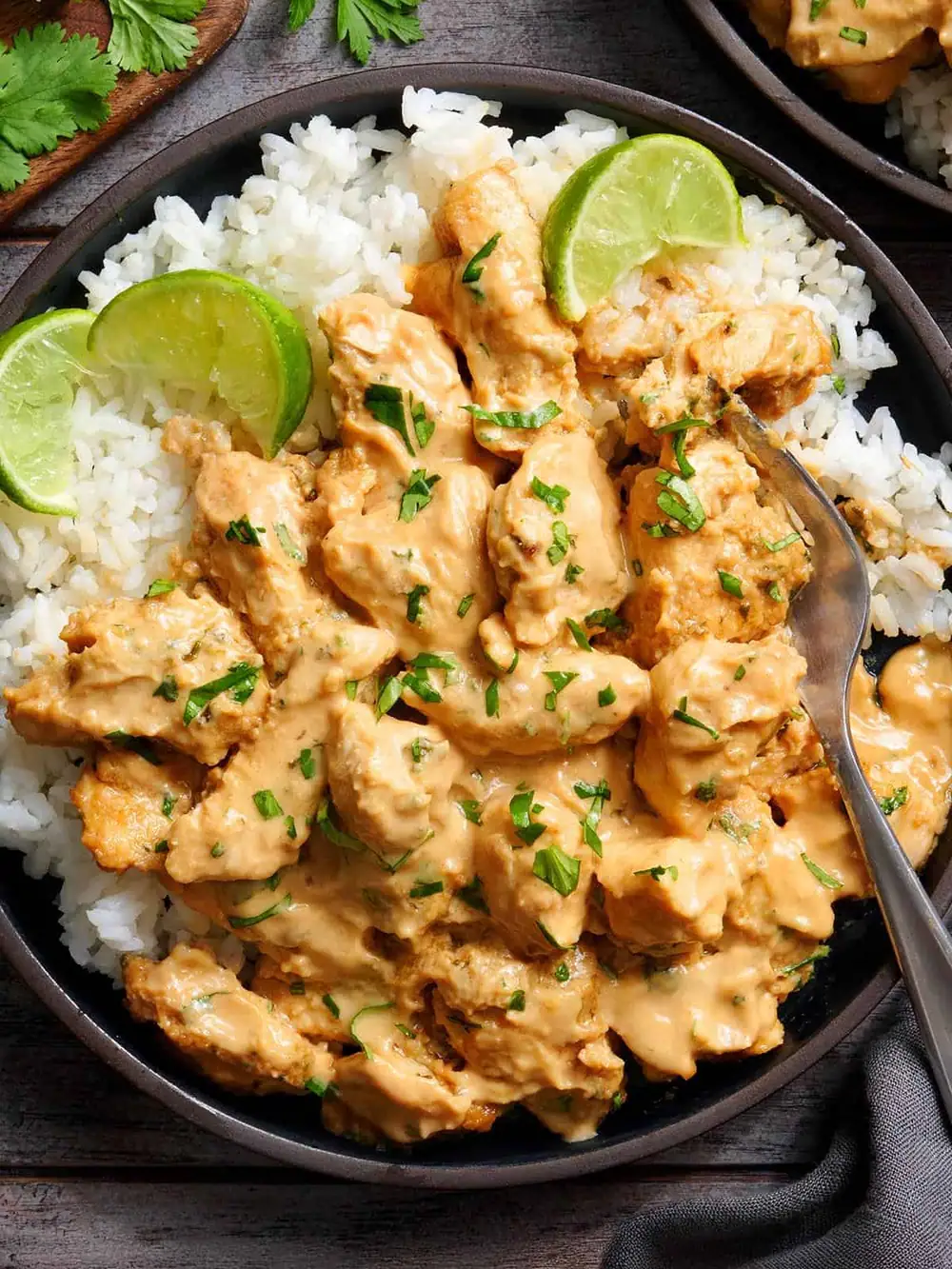
Every once in a while, I get a serious chicken satay craving. It’s one of my favorite takeout orders, but I wanted a budget-friendly version I could make at home without a bunch of extra steps. So instead of cooking the chicken separately and dipping, I keep it simple and simmer the chicken breast right in the sauce. This Thai Chicken Satay is creamy, sweet, and salty, and it totally hits the spot without the takeout bill.
“Another great weeknight recipe that can be marinated beforehand. The flavour of the chicken is so good! I also did as suggested – I made the savory coconut rice to go with it and the combination was heavenly! I scraped off the extra sauce bits from the pan and ate it with rice.” Victoria
Easy and Flavorful Peanut Sauce Chicken
If you’ve never had chicken satay, it’s a Southeast Asian dish of tender seasoned chicken that’s usually cooked on skewers and served with a peanut sauce for dipping. This recipe gives you that same idea in a weeknight-friendly way. Instead of using skewers, I bake bite-sized pieces of chicken breast right in a rich sauce made with pantry ingredients like peanut butter, garlic, ginger, soy sauce, brown sugar, toasted sesame oil, and finished with cilantro. If you have time, let the chicken sit in the sauce overnight for maximum flavor, but even 30 minutes is enough to make it taste amazing!
Recipe Success Tips
Cut the chicken evenly. Try to keep the pieces of chicken breast as close to the same size so everything cooks at the same pace.
Try a different cut of chicken. I’m using chicken breast here, but I originally used drumsticks when I first tested this recipe. The reason I switched to chicken breasts is I feel they take on the flavor much better. There was also a nice amount of sauce left in the dish for drizzling over rice. But this recipe will work with almost any type of chicken! Chicken thighs? YES, that would be so good. Just know the cooking time can change depending on how big your pieces are, how snug they’re packed in the dish, and whether you’re using bone-in or boneless chicken.
Cook to 165°F. Make sure the internal temperature of your chicken reaches 165°F. For me, that was around 30 minutes in the oven. For bone-in chicken, start checking around 45 minutes.
Remove the skin from the ginger. Peel ginger with a vegetable peeler or just scrape the skin off with the side of a spoon, then mince it finely.
Make it your way. Don’t have brown sugar? Swap in honey. Not into chili garlic sauce? Use Sriracha (or skip it if you’re cooking for spice-sensitive people). You can always add a drizzle of heat at the end, too.
Chicken
Sauce
Gather and prepare all ingredients. Spray an 8×10 casserole dish and set it aside.
How to Make Peanut Chicken Step-by-Step Photos
Gather all of your ingredients. Spray an 8×10 casserole dish and set it aside.
Make the sauce: Add 1 minced garlic clove, 1-inch peeled and minced ginger, lime juice from ½ a lime, ½ Tbsp chili garlic sauce, 2 Tbsp soy sauce, 1 Tbsp brown sugar, 1 tsp toasted sesame oil, and 2 Tbsp vegetable oil to a medium bowl. Whisk until well combined.
Add ½ cup peanut butter and 3 Tbsp hot water, then stir until it’s fairly smooth (it will have some chunks from the garlic and ginger).
Now, roughly chop ½ bunch fresh cilantro. Save a handful of the cilantro to use as a garnish after baking, and stir the rest into the peanut sauce.
Prep the chicken: If you haven’t already, slice 2 large chicken breasts into 1-inch pieces.
Remove ½ cup of the peanut sauce from the bowl and set it aside (this will be used to baste the chicken). Add the rest of the sauce to a gallon zip-top bag with the chicken pieces.
Press out the air using your hands, seal, and massage to coat the meat. Marinate in the refrigerator for at least 30 minutes or up to overnight. I like to put a baking sheet under the bag in the refrigerator just to be extra careful. You don’t want any of that raw chicken juice dripping in your fridge.
Bake: When you’re ready to cook, preheat your oven to 375°F. Pour the chicken pieces and all the marinade from the bag into the prepared casserole dish. Make sure they’re in a single layer for even cooking.
Bake the chicken in the preheated oven for 15 minutes, then use a brush or a fork to add the reserved peanut sauce to the top of the chicken.
Return the dish to the oven and cook for an additional 15 minutes. Make sure the internal temperature of the chicken reaches 165°F once done.
Use some kitchen tongs or a wooden spoon to fold and recombine the chicken pieces with the sauce in the bottom of the dish.
Serve: Top your baked Thai chicken satay with the reserved cilantro and serve. Enjoy!
I like to serve this Thai chicken satay with a scoop of rice and call it a very good night. Coconut rice, regular jasmine rice or cilantro lime rice all taste amazing with the rich peanut sauce. Some noodles on the side would be a VERY good idea if you don’t fancy rice. My sesame kale or Thai cucumber salad are also perfect for something green and quick, as is my roasted broccoli salad. The crisp broccoli and crunch from the almonds is so good with the tender chicken.
Storage & Reheating
Let the chicken cool completely, then store it in an airtight container in the fridge for up to 3-4 days. The sauce will thicken as it sits, so don’t be surprised if leftovers look a little thicker! This also freezes really well, so you can portion it into freezer-safe containers and freeze for up to 3 months, then thaw overnight in the fridge. To reheat, warm it gently on the stovetop over low heat or in the microwave in short bursts, stirring in between. Add a small splash of water, chicken broth, or coconut milk if the sauce needs loosening back up.