Distinti Salumi 2026 in Cagli: from May 22nd to 23rd, the pork butcher's art that endures will be on display
The city of Cagli is once again preparing to transform into the most prestigious open-air stage to celebrate an art as ancient as humanity: pork butchering.
The event, born from the synergy between the City of Cagli, Slow Food Italy and Slow Food Marche, aims to tell the story of those who still choose to raise animals slowly and produce without the aid of industrial processes.
The event, the appointments and the dinners
The sensory journey begins well before the market's official opening, with a series of preview dinners involving local inns on May 8th and 22nd. These events are designed to give a voice to innkeepers and restaurateurs, key figures who act as a bridge between producers and consumers, promoting meat from often-forgotten native breeds. One of these special evenings takes place at La Ginestra restaurant, in the picturesque Furlo Gorge, where chef Michele Renga offers a menu ranging from donkey and wild boar salami to complex dishes like double-cooked semi-wild pork. Also in the heart of Cagli, La Gioconda restaurant participates in this gastronomic prelude, serving the finest wild pasture produce and the fruits of the surrounding woods.
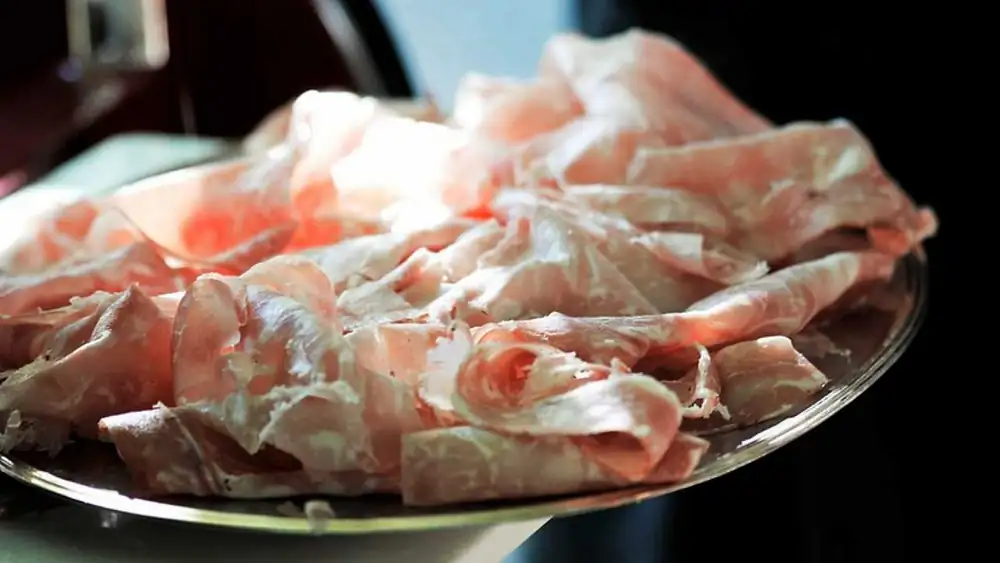
Over sixty exhibitors from every corner of Italy will bring their creations to the city center, offering visitors the opportunity to meet the great masters of Italian pork butchering. Wandering among the stalls, you'll discover rare products protected by Slow Food Presidia, such as the Valchiavenna goat's violino or the Parma black pig, symbols of an agriculture that respects the animal's ethology and the environment.
The event dedicates ample space to in-depth explorations in the three Salt Courtyards, where historic venues like the Palazzo dell'Episcopio open their doors to host guided tastings, pairing cured meats with the finest wines of the Marche region. For those seeking an even more immersive experience, the Taste Workshops offer the opportunity to learn production techniques directly from experts, discovering, for example, why a natural cured meat, made only with meat, salt, and spices, is a better choice not only for flavor but also for health.
Distinti Salumi 2026, however, chooses to go beyond the table, introducing a comprehensive program of conferences to reflect on the challenges of a constantly evolving sector. In the Teatro Comunale and the halls of Palazzo Berardi Mochi-Zamperoli, researchers, farmers, and institutions will discuss pressing issues such as animal welfare and the protection of mountain areas. They will also discuss the paradox of European mirror measures, which risk penalizing virtuous supply chains in favor of less controlled imports, and the advance of African swine fever, which threatens entire territorial systems.
The initiative thus becomes a call for awareness: learning to read a label becomes a political gesture, through which we discover that nitrites and nitrates are not essential in cured raw meats and that the nutritional quality of what we eat depends strictly on how the animal was fed and the territory in which it lived. It tells stories of resistance, like those of producers fighting against industrial standardization, reminding us that the sensory variability of an artisanal cured meat is the purest expression of biodiversity. The event aims to raise awareness that supporting these artisans means preserving a genetic and cultural heritage that would otherwise risk disappearing forever under the weight of intensive standardization.