Own-label mayonnaise closes margin gap on branded incumbents in UK retail
A sensory evaluation of seven supermarket mayonnaise references reveals that discount own-label formulations now match or exceed the branded benchmark while retaining a significant margin advantage.
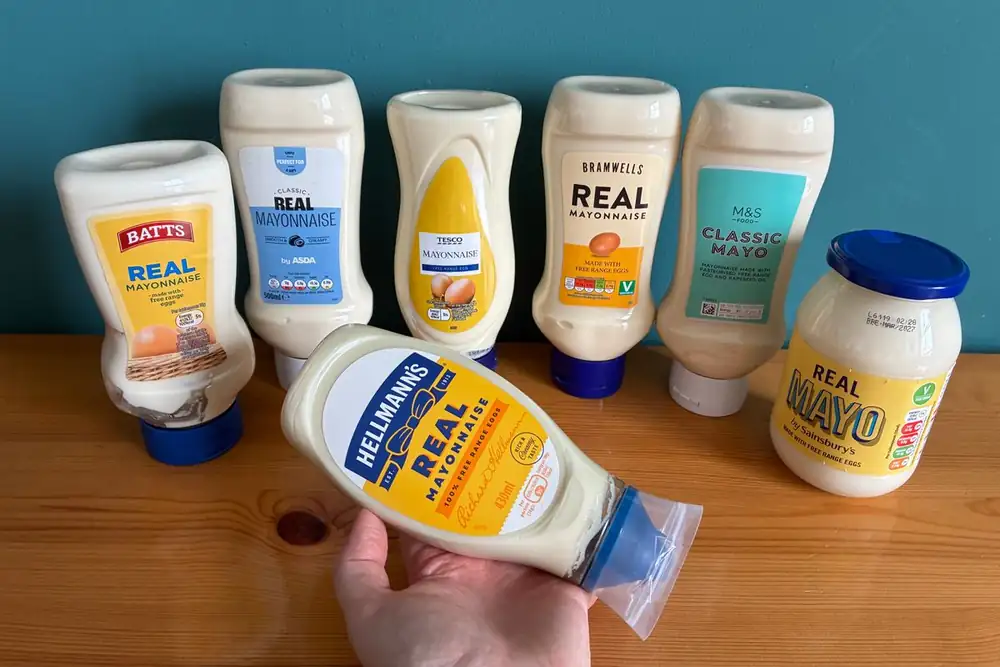
The condiment aisle allocates precisely forty-five centimetres of linear shelf space to mayonnaise, a footprint that has remained static since the last major category review. Within this territory, branded incumbents like Hellmann's command the eye-level position, while supermarket own-label variants occupy the lower decks. A recent evaluation of seven mayonnaise references across major UK retailers reveals a stark inversion of the traditional price-to-quality hierarchy. Asda’s 96p own-label formulation secured the highest sensory rating, directly matching the profile of Hellmann’s, which retails at £2.75 in Tesco stores. The margin that stays in each link of this chain is now the primary battleground for category buyers. Hellmann's retains a premium of £1.79 per unit over the Asda alternative, a differential that funds national brand positioning rather than superior emulsion stability. Aldi’s 95p offering also matched the branded benchmark, indicating that discount manufacturers have reverse-engineered the flavour matrix at a fraction of the cost. This dynamic represents a redrawing of the category map. The discounters are no longer ceding the borderlands of taste; they are annexing the core territory previously defended by legacy brands. Sainsbury’s at 89p and Lidl at 95p hold the middle ground with functional but undifferentiated profiles, while Tesco’s 86p entry retreats to the periphery with an excessively vinegary formulation. Marks and Spencer occupies a distinct coordinate at £1.20, offering a lighter, airier profile that secures a high rating without challenging the core creamy benchmark. The mechanism of the shelf dictates that the 96p Asda variant will move volume, yet the £2.75 Hellmann’s jar maintains its eye-level sovereignty. The rationale for the consumer’s continued selection of the higher-priced option remains opaque when the sensory differential is null or negative. Across the entire supply chain, from the egg processing facility to the regional distribution centre, the cost of goods sold for these emulsions has compressed. The entire margin battle is now fought over the final ninety square centimetres of the jar’s frontal label on the shelf. The definitive metric is rotation. The 96p Asda reference, rated 10/10, will clear the shelf faster than the 86p Tesco alternative rated 2/10, forcing the latter to absorb the cost of stagnant inventory while the volume leader dictates the terms of the next supplier negotiation.