Bell Pepper Caviar for the Winter
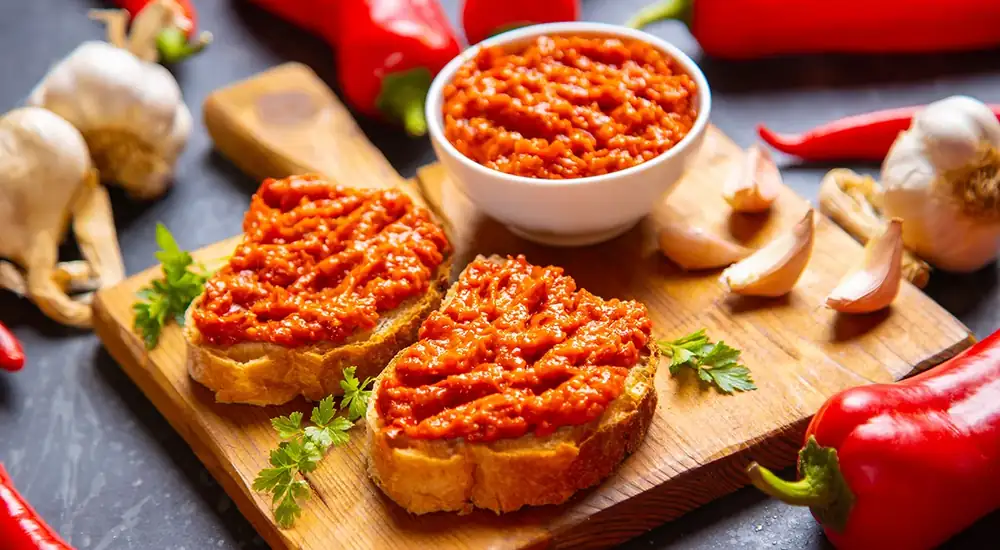
First, roast the bell peppers. Preheat the oven to 230°C (450°F), preferably on the grill. Place the bell peppers whole, without cutting or removing the stems, on a rack over a baking sheet and roast until charred, about 30 minutes, turning occasionally. Step 2
Step 1
First, roast the bell peppers. Preheat the oven to 230°C (450°F), preferably on the grill. Place the bell peppers whole, without cutting or removing the stems, on a rack over a baking sheet and roast until charred, about 30 minutes, turning occasionally. Step 2
Transfer the peppers to a bowl or saucepan with a tight-fitting lid. Let them steam and cool slightly until they're safe to handle. Step 3: Peel the peppers, remove the stems, and seeds. Drain the liquid—you don't need it. To make it easier to drain, place the peeled pepper pieces in a colander.
Step 4: Peel the garlic cloves, remove the seeds from the hot pepper, and chop into pieces. Place the roasted bell pepper, garlic, and chili in a blender and blend until finely ground. Step 5
Add olive oil, vinegar, sugar, and salt and blend again until you reach your desired consistency—either almost a paste or just finely chopped. Step 6
Pour the pepper mixture into a deep frying pan or saucepan and simmer over medium heat, stirring frequently, until a thick puree forms—about 30 minutes. Step 7
Meanwhile, sterilize small jars with lids. When the bell pepper caviar reaches a comfortable consistency, pour it into the jars, seal them tightly with lids, and let them cool upside down. You can store it at room temperature, but a cool place is safer. RECIPE
I've been making this adjika for about five years now. I wanted something tasty, spicy, and definitely with horseradish, something that would go well with dishes as a sauce or simply spread on bread. This sauce isn't like horseradish, although it does contain tomatoes and horseradish, but I made it entirely to my taste. Everyone who's tried it says it's delicious! I'm sharing my recipe with you. Orange caviar is not only a vibrant color, but also a very healthy winter preparation, where the main role belongs to the duet of carrots and apples. But to turn the ingredients into a true delicacy, we suggest adding other cheerfully colored vegetables. For example, sweet yellow or orange peppers are full of beta-carotene, and tomatoes contain the natural antioxidant lycopene.
And red hot pepper. These beneficial components are better absorbed from cooked vegetables, especially when combined with fats. Therefore, don't neglect lightly sautéing ingredients like onions and celery root in vegetable oil; they will also add a richer flavor. For a harmonious blend of flavors, it's best to choose tart Antonovka apples. Try making a piquant, sweet and sour caviar and serve it as a unique side dish, cold appetizer, or spread on bread. And remember, this product also helps strengthen the immune system.
RECIPE: This aromatic, moderately spicy vegetable caviar for the winter, prepared through a meat grinder, is quite energy-intensive to prepare because it's time-consuming. Therefore, it makes sense to prepare a large batch at once. But when you open the jar of caviar in winter, you'll know your efforts were worth it. The beauty of this vegetable mixture is its versatility. It can be served as a separate appetizer.
And as a sauce for hot meat or poultry dishes, add to savory porridge or boiled potatoes. And, among other things, be sure to try using vegetable caviar (we've thoughtfully included beets in the recipe) as a dressing for red borscht – it's an ideal, convenient, and quick option. The flavor of the first course with this sauté is guaranteed to be brighter and richer. All you need to add is garlic, black peppercorns, and parsnips. But that's optional. Vegetable caviar isn't just a traditional preserve; it's a great way to preserve the taste of summer for the winter and a way to recharge with vitamins at any time. It also reduces the time you spend in the kitchen. Open a jar, and on the table is a light snack, the perfect side dish for meat or fish, or even a standalone holiday appetizer. Forgotten grandma's recipe for the most delicious zucchini or "foreign" eggplant caviar? No problem.
We have lots of exciting ideas. In this selection, you'll find caviar with carrots, beets, pumpkin, and tomatoes. Each of these vegetable combinations has its own unique flavor and is suitable for any diet. You don't have to worry about what ingredients are needed for the caviar—all the recipes are carefully crafted, the additional ingredients are perfectly selected, and the proportions are meticulously observed. All you have to do is choose your favorite vegetable appetizer.