Sichuan Pepper Panna Cotta with Blood Orange and Fermented Honey
A Piedmontese cream set so softly it trembles, infused with green Sichuan pepper so the tongue tingles as it melts, under a blood orange caramel and honey fermented with garlic for a month. Cold, numbing, floral, and impossible to describe to anyone who has not eaten it.
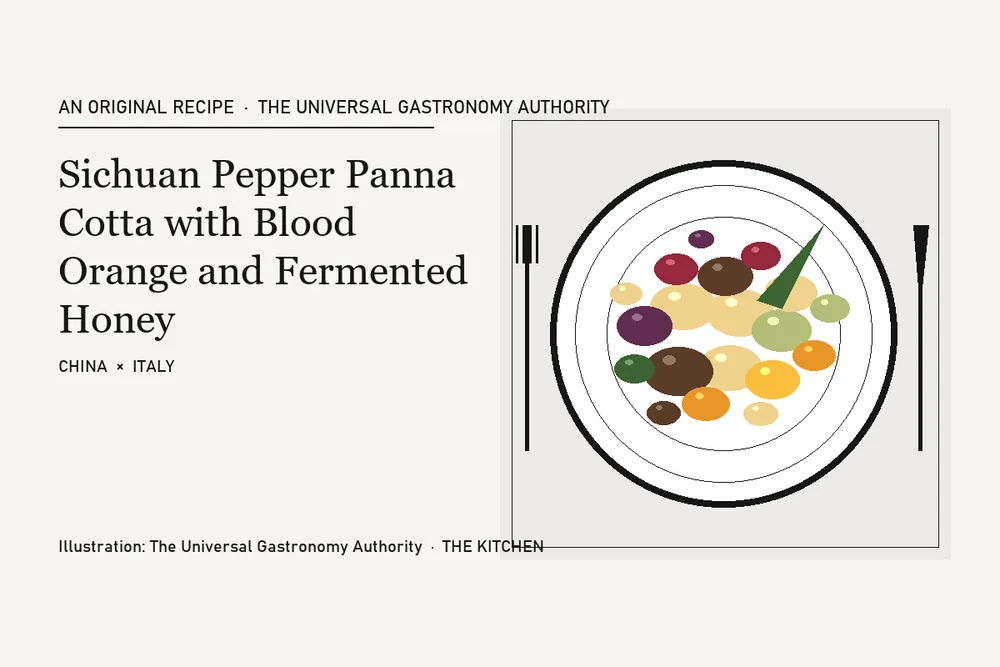
- 600 ml double cream
- 150 ml whole milk
- 90 g sugar
- 12 g green Sichuan pepper, lightly toasted
- 3 sheets gelatine
- For the caramel: 100 g sugar, juice of 2 blood oranges
- 6 teaspoons garlic-fermented honey (raw honey aged 1 month over peeled garlic)
- Blood orange segments
- Warm the cream, milk and sugar with the toasted pepper to just below a simmer. Cover and steep 20 minutes. Strain.
- Soften the gelatine in cold water, squeeze, and dissolve in the warm cream. Pour into six shallow bowls and chill at least 5 hours until barely set.
- Melt the sugar to a light amber, add the blood orange juice carefully, and boil to a syrupy caramel. Cool.
- Spoon the caramel over each panna cotta, add a teaspoon of the fermented honey and a few orange segments. Serve very cold.
Panna cotta, the cooked cream of Piedmont, is the simplest of the great Italian desserts: cream, sugar, a little gelatine, and whatever you choose to infuse into it. Sichuan pepper is not a pepper but the dried husk of a citrus relative, and its famous effect is not heat but ma, a numbing, tingling, almost electric sensation on the lips and tongue. Green Sichuan pepper adds a strong lime and grapefruit aroma to the tingle. Our kitchen wondered what a numbing agent would do to a dessert whose whole point is texture, and the answer is that it makes the cream feel like it is dissolving twice.
The pepper is toasted and steeped in the warm cream for exactly twenty minutes, then strained; longer and it turns bitter. The gelatine is kept to the minimum so the panna cotta barely holds its shape and collapses at the touch of a spoon. Over it goes a caramel made with blood orange juice, whose bitterness meets the pepper's citrus, and a teaspoon of honey that has been fermenting with garlic cloves for a month, a Chinese folk preparation that turns raw honey thin, tangy, and faintly savoury. The garlic disappears; what remains is a honey with a long, mysterious finish.
On the tingle
Twelve grams of green Sichuan pepper per litre of cream gives a clear but gentle numbing. Twenty makes the dessert a dare. Buy the freshest you can; old pepper tingles less and tastes of dust. The fermented honey takes a month but needs no attention: raw honey poured over peeled garlic cloves in a jar, turned once a day for the first week, then left. It keeps for a year.
Serve in shallow bowls, very cold, with a segment or two of blood orange and a scatter of the toasted pepper husks for those who want more. A glass of Moscato d'Asti, chilled hard, is the correct thing beside it, and the sweetness calms the tingle for the next spoon.