Ceviche Cured in Hot Stone Broth: The Reverse Tiradito
Instead of lime, the fish is cured for ninety seconds by a ladle of leche de tigre heated with a river stone, in the manner of a Japanese ishiyaki. The acid cooks it, the heat sets it, and the plate arrives with the broth still hissing. A ceviche that changes state at the table.

- 400 g very fresh corvina or sea bass fillet, skinless
- 8 limes
- 100 ml light fish stock, chilled
- 1 ají limo or red chilli
- 2 cm ginger
- Half a red onion
- Salt
- 1 smooth dry river stone, about 300 g
- Boiled sweet potato, toasted corn (cancha) and coriander to serve
- Heat the oven to 250 C and heat the stone on a tray for 40 minutes. Handle only with tongs.
- Blend the lime juice, stock, chilli, ginger, onion and salt. Strain and chill over ice. It should be sharp and strongly seasoned.
- Slice the fish 2 mm thick and arrange in a single layer on four chilled plates.
- At the table, drop the hot stone into the jug of leche de tigre with tongs. Pour the hissing broth immediately over the fish.
- Scatter the sweet potato, corn and coriander. Eat within two minutes, while the fish is still cold at the centre and the broth warm.
A tiradito is Peru's answer to sashimi: raw fish sliced thin and dressed at the last moment with leche de tigre, the tiger's milk of lime, chilli, fish juice and salt that cures the surface in seconds. Ishiyaki is the Japanese practice of cooking at the table on a stone heated to several hundred degrees. Our kitchen combined them because both are about the last thirty seconds before eating, and because a hot stone dropped into cold leche de tigre does something no chef's hands can: it heats the marinade to a hiss, pours it over the fish, and cooks the outer millimetre in the time it takes to reach the table.
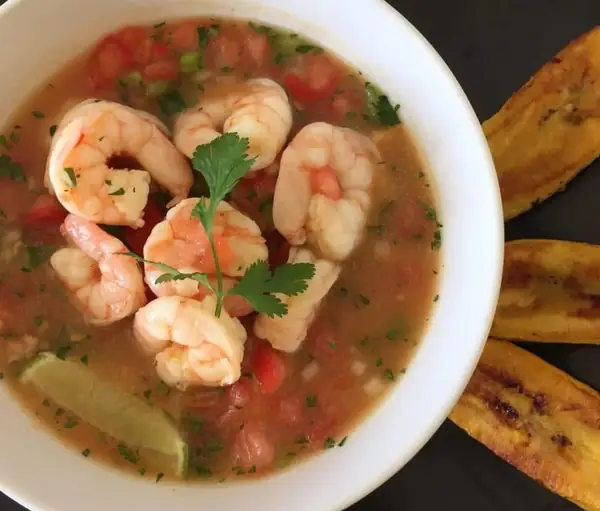
The fish is a firm white one, corvina or sea bass, sliced two millimetres thick and laid on a chilled plate. The leche de tigre is made strong, with extra lime and ají limo, and held ice cold in a jug. A smooth river stone, oiled and heated in the oven to 250 degrees, is dropped into the jug with tongs; the broth boils around it for a few seconds and is poured immediately over the fish, stone and all. The fish turns opaque at the edges, stays raw at the centre, and the broth cools to a warm soup within a minute. It is eaten with a spoon and the fingers.
The numbers
- Fish: 400 g of corvina or sea bass for four, sliced 2 mm thick, chilled to 2 C on the plate.
- Leche de tigre: juice of 8 limes, 100 ml fish stock, 1 ají limo, 2 cm ginger, half a red onion, salt, blended and strained, held over ice. About 350 ml.
- Stone: a 300 g smooth river stone (never a wet or porous one; they can crack) heated 40 minutes at 250 C. It brings 350 ml of broth from 4 C to about 45 C in 10 seconds.
At the table
Pour with the stone still in the jug so the guests hear it. Finish with sweet potato cubes, toasted corn and coriander. The contrast between the warm broth and the still-cold fish lasts about two minutes; that is the dish, and it is worth staging for. Serve with a chilled pisco or a dry, cold sake, both of which understand what just happened.