EU apples expand their footprint in Colombia and captivate Latin America
From European orchards to Colombia: The 6,200-mile journey of an apple
The journey begins in a European orchard and ends on a supermarket shelf in Colombia. Along the way, an apple travels more than 6,200 miles, passing through sorting facilities, cold stores, logistics centers, and ports.
Despite the distance, it reaches consumers fresh and ready to eat. How is this possible?
The answer lies in a carefully planned and monitored supply chain designed to maintain the quality of the fruit from harvest through to delivery.
From orchard to shipment
The European Union is one of the world’s largest apple producers, with around 11 million tonnes harvested from European orchards each year. Production follows common standards applicable across the European Union, including requirements for quality, food safety and traceability.
After harvest, the apples are sorted and placed in controlled-atmosphere cold storage. Temperature and air composition are carefully regulated to slow the fruit’s natural ripening process.
This is where the fruit prepares for the longest stage of their journey. The journey from Europe to Colombia covers more than 6,200 miles and typically takes around two weeks.
Throughout the journey, the fruit is kept under controlled conditions. Maintaining the cold chain is essential.
The appropriate temperature must be maintained during transport to the port, throughout the sea voyage, and during onward transport to the importer. Continuous monitoring of transport conditions helps ensure that the fruit remains within the required parameters until it reaches its destination.
More European apples are reaching Colombia
According to the European Commission, by the end of May in the 2025/2026 season, EU apple exports to Colombia had reached a record 26,375 tonnes, around 18 percent more than a year earlier and nearly 90 percent more than in the 2020/2021 season.
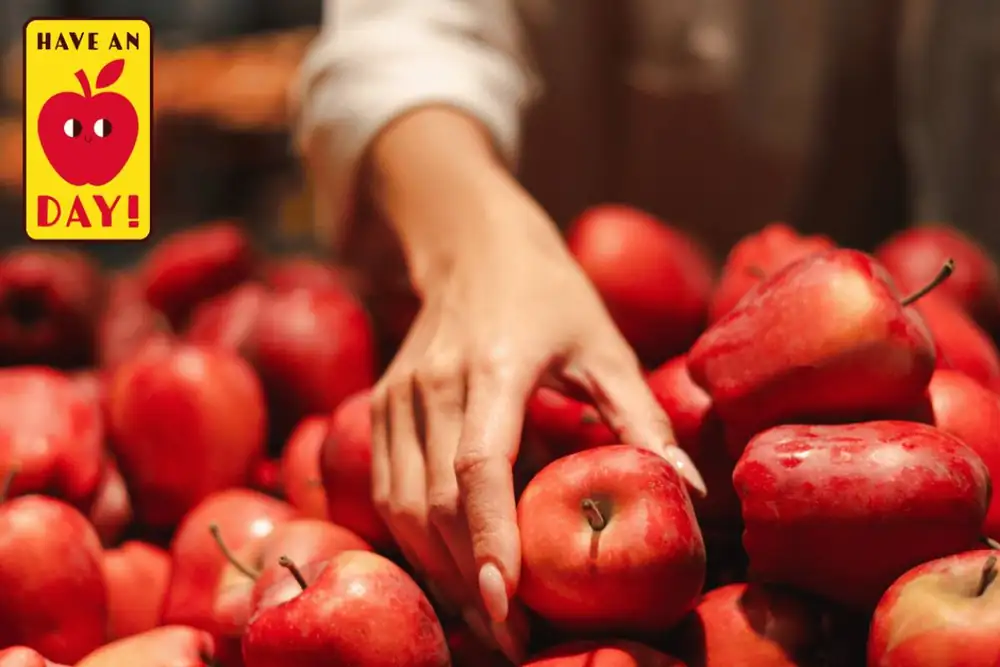
Behind every one of these shipments is a journey of more than 6,200 miles: from European orchards, through storage and transport, to customers in Colombia. The first year of the campaign: a closer look at European standards Showcasing this journey was one of the objectives of the first year of the “Have an apple day!
Discover high-quality apples from the EU” campaign in Colombia. As part of the campaign, a press event was held in Bogotá and European fruit was showcased at Alimentec | Anuga Select Colombia 2026.
The organizers also met with importers, distributors and representatives of the fruit and vegetable sector, alongside a range of information and educational activities. The “Have an apple day!” campaign is a three-year information and promotion program co-funded by the European Union.
It aims to raise awareness among consumers and industry representatives of the quality of European fruit and the standards governing their production, food safety and traceability. “Colombia may be thousands of kilometers away from European orchards, but exports of European apples to the market continue to grow.
This shows that distance does not have to be a barrier to trade and gives us a strong foundation for further building the presence of European apples in Colombia,” says Piotr Janota, President of the Polish Association of Fruit and Vegetable Distributors “Unia Owocowa”, the organization responsible for implementing the campaign.
- Who: Colombia · European Union
- Percentages: 18 percent · 90 percent
- Figures: 11 million · 26,375 tonnes · 18 percent · 90 percent