How an Industry Outsider Rewired an Iconic Restaurant Empire
Nearly 30 years ago, Blackbird helped kick off a shift in Midwestern dining. The restaurant was set in Chicago’s then-gritty West Loop and looked nothing like the white-tablecloth rooms the city was used to.
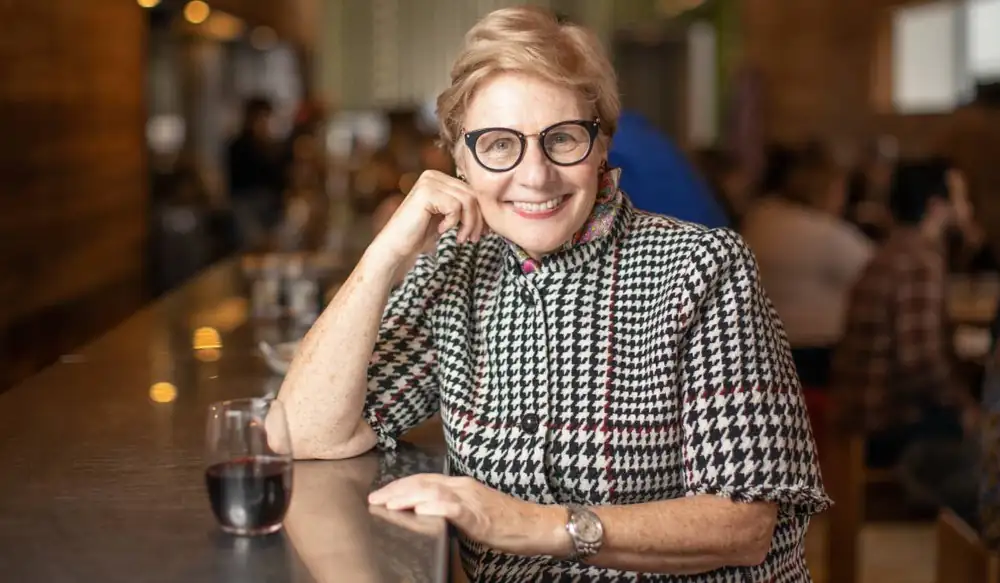
“My growing up was going into companies, figuring out how to fix a problem, designing the process, executing, and refining,”
But by pairing high-caliber technique with an approachable and vibrant minimalist setting, it helped pull fine dining out of its formal past while offering a new, modern blueprint for farm-to-table cuisine. Blackbird’s runaway success helped lay the foundation for what would become One Off Hospitality, a trailblazing collection of restaurants and defining force in Chicago’s food scene.
From the rustic, communal warmth of avec and the beer-and-pork-laden halls of The Publican to the honky-tonk energy of Big Star and the craft cocktail precision of The Violet Hour, the group has helped reshape the independent dining landscape with its array of concepts over the years. Along the way it has earned nine James Beard Awards, Michelin recognition, and widespread acclaim.
And its kitchens have produced a generation of chefs who have gone on to make their own marks on the industry, cementing One Off’s status as an institution in American dining. Which is why, at first glance, the appointment of Karen Browne as the company’s first-ever CEO in 2019 seemed like an unexpected choice.
Here you had an influential restaurant group, known for operating hugely successful spots in one of the world’s most celebrated food cities. And the woman stepping in to steer the ship was a total newcomer to hospitality.
But nearly eight years after hiring an outsider to lead an insider institution, One Off is thinking bigger than it ever has before. It has started to look less like a collection of concepts and more like a hospitality ecosystem—restaurants, yes, but also catering and events, partnerships, and other touchpoints that extend its culinary prowess beyond the dining room.
Behind the scenes, it’s a more disciplined company than it used to be. There’s tighter reporting, clearer systems, and a framework designed to protect what made these places successful while making room to grow across The Windy City, the suburbs, and eventually beyond.
The Fixer Steps Inside
To understand how Browne set out to professionalize a chef-driven empire, it helps to start with where she came from.
She arrived at One Off with deep executive experience leading some of the country’s largest human capital organizations, including a decade-long run as president of PeopleScout. There, she helped turn the Chicago-based firm into a global hiring force by “building a system that leveraged scalability and centralization” to make recruiting more efficient without stripping out the human element. Later, she was tapped to lead Advantage xPO, where she consolidated dozens of struggling staffing firms into a handful of brands and steered the company through its sale to Recruit, the HR giant behind platforms like Indeed and Glassdoor.
From there she served as president and COO of EG Workforce Solutions before launching her own consulting and creative firm.
One Off Hospitality
HQ: Chicago
Established: 1997 Across those roles, her work kept circling the same idea: solving problems through people. “My growing up was going into companies, figuring out how to fix a problem, designing the process, executing, and refining,” Browne says.
That systems-driven approach wasn’t necessarily how One Off had been built. The group was shaped by career restaurateurs, including executive chef Paul Kahan and partners Donnie Madia, Terry Alexander, Eduard Seitan, Peter Garfield, and the late Rick Diarmit.
The creatives spent years developing unique concepts before formalizing that collaboration under the One Off Umbrella in 2011. When Browne arrived eight years later, they had a proven track record and plans to grow, but needed more structure to support it. Stepping into One Off marked a new dynamic for Browne, and not just because she was entering a different industry.
It was the first time she’d taken her playbook inside a company instead of applying it as an outside fixer. As CEO, she wouldn’t just be responsible for diagnosing a problem and designing solutions. She’d be responsible for building the framework and living inside it, too.
When she first took stock of the company, she saw a group “overflowing with creative firepower,” but with “a framework that wasn’t really scalable.” It began with Blackbird, the West Loop restaurant that opened in 1997 and established the group with a more contemporary, minimalist approach to fine dining rooted in Midwestern cuisine. The second concept was avec, a wood-paneled, communal space that opened nearby in 2003, serving Mediterranean-influenced shared plates alongside a nationally recognized wine program.
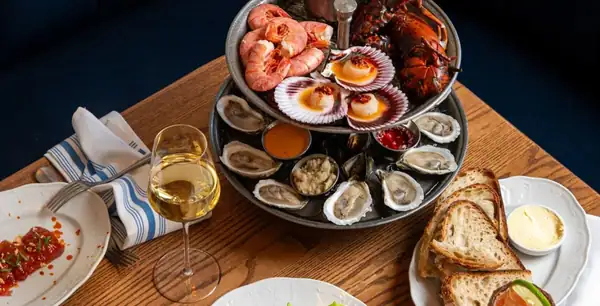
It was followed in 2007 by The Violet Hour, a pioneering speakeasy marked by its ever-changing exterior mural and unmarked entrance. At the time, Chicago’s craft cocktail scene was still in its infancy, and the bar helped introduce a more rigorous approach built around fresh juices and classic preparations. In 2008, the group expanded into Fulton Market with The Publican, a large-format beer hall inspired by European farmhouse traditions, centered on pork, oysters, and beer.
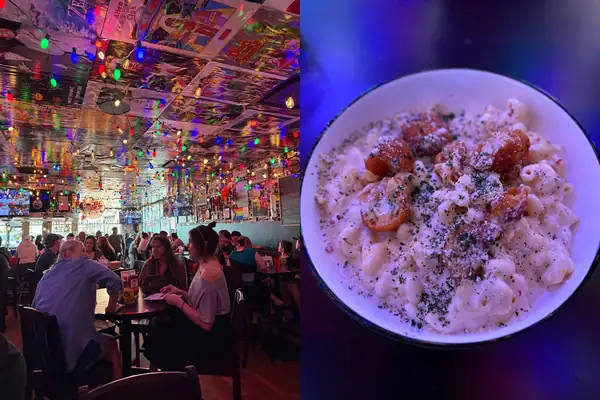
Big Star came a year later, introducing a high-volume taqueria and whiskey bar in Wicker Park, built around Mexican street-style food and a busy outdoor patio. In 2012, the company added Publican Quality Meats in Fulton Market, a butcher shop and market that serves sandwiches by day and operates as a private event space at night.
In 2014, the team introduced Dove’s Luncheonette, a smaller, counter-service diner in Wicker Park serving Southern-influenced Mexican comfort food, and launched Publican Quality Bread as a wholesale baker supplying its restaurants. The following years brought extensions of some of those ideas into new settings, including Publican Tavern in O’Hare International Airport and a larger-format Big Star location in Wrigleyville.
By the time Browne arrived, One Off had grown into a portfolio of distinct concepts spanning full-service restaurants, bars, retail, and production—each developed individually and each operating with its own approach. “You had five very talented partners, together for over 20 years, and almost everything they touched was highly successful,” she says. “They had a plan to grow and they knew they needed someone with an outside perspective to help them do it.
What I’ve worked on is a governance model that lets the creatives spend their high impact on creating delicious dishes and magical moments.” In theory, the job was supposed to be “more conceptual.” Browne says she was brought in to help at a high level and not necessarily dive into every operational detail.
But she immediately reverted to her natural style—“super hands-on, just getting in there and fixing things”—and began tightening up the way the company handled everything from finances and contracts to hiring and communication. One of her first orders of business was getting talented operators and chefs to see margin not as a constraint on the work but as part of it.
Step one, she says, was “getting people comfortable with the fact that businesses have to be profitable.” That means learning how to manage the variables they can actually control. “To manage controllables, you have to teach creatives how to read a P&L and know the targets for labor costs, food costs, bar costs, and everything else,” Browne says. “You can’t just say, ‘We’re busy, guests are happy, we must be fine.’”
Since then the company has built “really sophisticated reporting” so teams aren’t just cooking and selling but operating with a clear picture of the business behind every plate. They know what they’re buying, the cost of each dish, and what that dish should actually be priced at.
Browne says menu margins are never purely mathematical. But they can’t be treated as instinct alone, either.
Ultimately the work is a blend of art and science. “Sometimes we deliberately lose money on a dish because we know the guest won’t tolerate the real price, but then you have to know where you’re making it back,” she says. “You can’t do it blind.”
The same logic applies beyond the menu. Browne sees contract management as one of the more important guardrails in the business, especially in an industry where operators often sign agreements without fully understanding the long-term implications.
Someone has to be tracking termination clauses, understanding what rights the company actually has, and asking what happens if they need out. Otherwise, it’s easy to lock yourself into an arrangement that erodes the very margin you’re working so hard to protect.
Structurally, she’s tried to build that oversight through what she calls a matrix organization, where centralized finance, marketing, and HR teams are “matrixed into the field with a service mentality.” The advantage is consistency.
Instead of every concept improvising its own systems, processes, and playbooks, support functions are centralized under people who specialize in those areas. “You have true experts who support all of the brands, and that creates scalability,” Browne says. If there’s one area where she has the most advice to offer, it’s staffing—recruiting, retention, and everything in between. Browne has spent her career building hiring engines, and she understands how even strong operators can end up sabotaging themselves.
“Desperate hiring managers will do desperate things,” Browne says. “What that means is when they’re understaffed, they’re hiring bodies, they’re not pre-screening for the successful attributes you need for the job.” Her advice to restaurant leaders struggling on the staffing front? “Slow down and design a system.”
That system can’t rely on passive recruiting. Hospitality hiring is still deeply personal, she says, and the best candidates aren’t going to emerge from emails or a string of automated messages. That’s why she still calls candidates herself every week, especially when a part of the business—say, catering and events during a busy stretch—is understaffed.
Just as important, she believes restaurants often fail to explain why a job matters in the first place. Too many postings reduce the work to wages, hours, and shifts, when what candidates actually want to understand is what they will gain from the experience and where the job might lead. “You have to have a compelling employment proposition,” Browne says, recalling how she once reframed a customer service call-center job around purpose—“be someone’s superhero for a day”—instead of a sterile list of hours and requirements.
Then there is speed, which Browne sees as one of the industry’s most consistent self-inflicted wounds. “You’ve got to move candidates through the funnel quickly,” she says, noting that restaurants often call a candidate but then get busy and leave them hanging. When they return, “that person is already long gone.”
That’s important in the current environment because the industry is entering a period of “candidate abundance” with more talent in the pipeline. For roughly the past five years, she says, employers have been operating in a candidate-scarce environment.
Now the pendulum is moving the other way. Her message to restaurateurs is not to waste that moment.
If there are poor performers dragging down a shift, it might be the time to upgrade. That can be uncomfortable, but she argues it is necessary, “especially because high performers rarely want to work alongside low performers for long.”
The other defining dynamic in restaurant labor right now is technology and automation. But for all her focus on systems and efficiency, Browne isn’t especially interested in a future where hospitality gets engineered out of the experience.
She can imagine some consolidation in back-end areas like marketing. But on the floor, where hospitality is actually felt, the human role is enduring. There will always be guests who don’t want to scan, tap, and self-serve.
“They want to talk to someone and they want the staff to socialize with them,” she says. “They want to know about the cut of meat. They want to hear about how the cocktail was built.
I’m pretty bullish on that human element as the distinguisher in this industry.”
Expanding the Playbook
Browne was brought in with scalability in mind, and that goal runs through nearly every part of her agenda—from reporting systems to hiring frameworks and centralized support.
But what does scalability look like for a group like One Off? For Browne, it means a mix of new ideas and expanding proven brands, with growth rooted in efficiency—not just adding more dining rooms.
“We will absolutely create new concepts, but a lot of the opportunity right now is taking the brands that already have a following and being more thoughtful about where and how we replicate them,” she says. Since her arrival, One Off hasn’t launched a new flagship concept, instead expanding in more targeted ways. The company has grown Publican Quality Bread beyond its original wholesale business, opening a flagship bakery and café in West Town before adding suburban and airport locations.
It also transformed Pacific Standard Time into avec River North and its rooftop companion, Bar Avec, while pruning its portfolio with the closures of Blackbird, Café Cancale, and, more recently, The Violet Hour. One Off has also developed F&B concepts for Bally’s Chicago casino and the Blackhawks Ice Center.
That approach still leaves room for creativity. The partners, Browne says, “always have ideas swirling around,” but near-term growth is largely coming from scaling existing brands.
A third avec in the North Shore suburb Highwood is currently in the works. Publican Quality Bread is another major focus, with plans to add roughly five locations over the next three years.
Browne frames the current strategy as leaning into replication where demand already exists—places like Highwood, where residents have been lobbying for an avec—while leaving room to introduce new concepts more selectively over time. Geographically, the plan is to lay down more real estate across the Midwest in a deliberate way, starting with Chicago’s suburbs, then radiating outward once the model is fully dialed in closer to home.
The structure and guardrails now enabling One Off to think about scaling beyond Chicago have been years in the making. But when Browne arrived, none of that was a given. She recalls walking into what felt like “a suspect crowd,” with people questioning how an outsider’s playbook would translate to restaurants.
Early on, she had to prove her approach could hold up in a very different environment. It didn’t happen seamlessly.
When she pushed teams to focus on managing controllables, “I failed in the beginning of my tenure,” she says. She was “probably too rigid” and initially mistook a lack of tools for a lack of effort. That realization led her to build more sophisticated systems and reporting, giving teams clearer visibility into the business instead of simply asking them to hit targets.
That kind of work is never really finished, she says. The systems evolve and the expectations keep moving. Now, One Off is layering in AI-driven business intelligence tools to give teams deeper insight and support better real-time decisions.
She points to Big Star and its high-energy patios as an example. “If it’s sunny outside, we could already know how many covers we’re going to do and how many people we’re going to need,” she says. “That kind of sophistication with AI is going to be very relevant in this industry.”
Even with the learning curve—coming in as an outsider and aligning a large group around a new way of operating—Browne initially saw the role as something of a “victory lap.” It was supposed to be “the fun job, the easy job,” she says. Within a year, COVID turned it into the toughest assignment of her career.
The scope of the job changed overnight. One Off went from more than 1,000 employees to roughly 20, shut down its dining rooms, and effectively mothballed much of the business. Browne stepped into a crisis command role, framing the moment as a survival mission—triaging cash flow, negotiating with partners and landlords, and preserving enough of the organization to rebuild when guests returned.
Under her lead, One Off created new revenue streams in real time: at-home offerings and subscription-style boxes built around signature dishes, along with a suburban supper series that brought Publican and avec favorites into neighborhoods outside the city. At its peak, the effort generated several million dollars in annualized revenue. Looking back, Browne describes COVID as a “perfect exercise” for her skill set.
The partners let her run the play, and she focused on revenue relief and structural resilience rather than day-to-day execution. The experience reshaped how she thought about the business. If One Off could sustain itself with at-home boxes and suburban suppers while dining rooms were closed, then growth didn’t have to mean just more restaurants.
It could mean more ways to extend the brands across different channels. Coming out of COVID, the company pushed hard in that direction: diversifying revenue streams, building infrastructure to support them, and treating catering, events, and off-premises channels as core parts of the business. Catering, in particular, was an obvious opportunity.
Demand had long been there, but the operation was fragmented—run out of individual restaurants and pulling labor away from core service. Browne led the effort to centralize it, spinning out a dedicated events and catering arm supported by a roughly $3 million commissary kitchen in Chicago’s West Town, located next to Publican Quality Bread’s first retail spot.
The shift has worked “very, very well,” she says, becoming a meaningful growth driver and extending One Off’s brands beyond their own four walls. It’s part of a broader evolution in how the company sees itself as an expanding hospitality ecosystem.
That mindset is creating new opportunities. One Off has deepened its ties to Chicago through partnerships with three professional sports teams—the Chicago Fire, Chicago Red Stars, and Chicago Blackhawks—feeding players and staff in relationships Browne says open the door to “a whole host of other business.” The partners had shown early “ecosystem” instincts years earlier when they launched Publican Quality Bread as a wholesale bakery supplying its restaurants, and again when they opened Publican Quality Meats across from The Publican.
“Their vision was to have whole animal butchered at the butcher shop and carried across the street to Publican, and we still do that today,” she says, noting that the model reinforced the group’s farm-to-table DNA while offering a blueprint for how different parts of the portfolio could feed each other. Now, that thinking is being applied even more deliberately. As the group prepares to open a third avec in Highwood, Browne uses something as simple as hummus to illustrate the point.
It’s labor-intensive and requires specialized equipment, raising a question: does it make more sense to produce it centrally and distribute it across locations? The same logic applies to salsas and other components—relieving kitchen teams while capturing efficiencies without outsourcing. Publican Quality Bread is increasingly central to that strategy, evolving into a hub for the portfolio that doesn’t just supply restaurants and anchors its own retail locations, but also serves as a platform for distributing products across brands.
Browne sees it becoming something “closer to a gourmet grocer” where guests can buy signature focaccia alongside PQM cuts, avec’s beloved hummus and dates, and other staples, effectively packaging the One Off ecosystem into a format people can take home.
It All Comes Down to People
When asked how she describes the company today, Browne says she hears it all the time and agrees that One Off is “a cadre of iconic brands.” And she’s quick to remind people that the concept ideation will always be driven by the partners, citing the origin story of Big Star as an example: Donnie Madia and Paul Kahan on the roof of Violet Hour, looking down at the future home of the restaurant and realizing it would be a great spot for a high-energy, patio-centric taco place.
That eventually became the honky-tonk, whiskey-slinging concept Chicagoans know and love today. The creative minds at One Off never just say “let’s open a burger place,” Browne explains.
It always starts with something more specific and conceptual, an idea with texture and a point of view. Looking ahead, she distills the next few years down to two key priorities: expanding the company’s iconic brands into more locations and ensuring that growth is supplemented by auxiliary revenue streams. But it’s the people that ultimately tie it altogether and motivate her to keep pushing ahead. “That’s what I see everyday,” she says. “It’s the partners and teams who are deeply invested, who care about what they’re building and how it shows up.”
It’s the throughline across her own career, and across a portfolio that encompasses different cuisines and formats and increasingly diversified revenue streams. “I know it sounds so soft and cushy, but it all comes down to having the right people,” Browne says. “Because if you don’t have the right people, you don’t care for your people, and you don’t mentor your people, you’re not going anywhere.”
- Who: One Off · Publican Quality Bread
- Money: $3 million
- Figures: 3 million