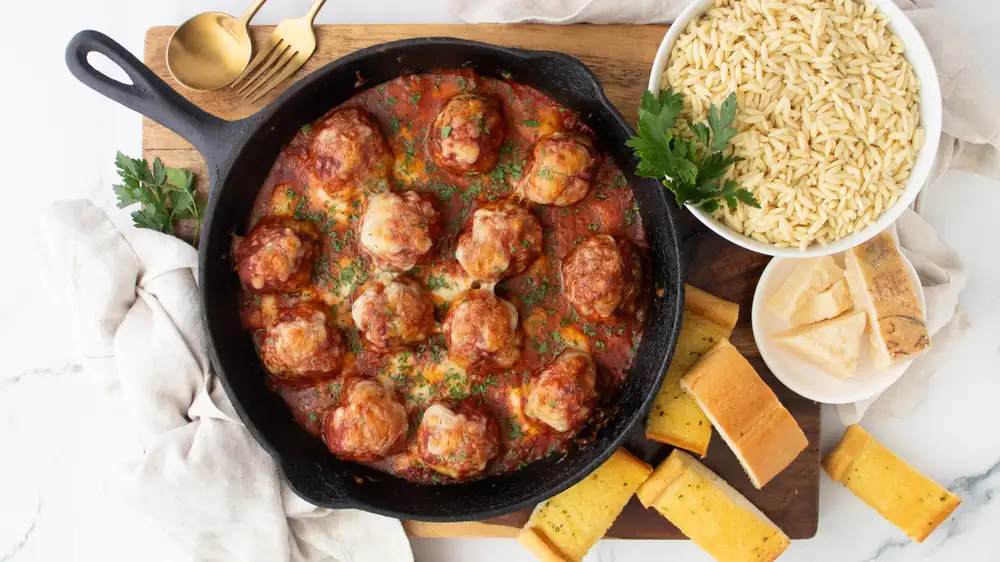
Receta de albóndigas de pollo a la parmesana en sartén
No hay nada como una pequeña competencia culinaria para estimular la creatividad, y eso fue precisamente lo que inspiró esta receta de albóndigas de pollo a la parmesana en sartén.
- 1 libra de pollo molido
- 2 dientes de ajo, pelados y picados
- ¼ taza de cebolla amarilla picada
- 2 cucharadas de perejil fresco picado, dividido
- 1 cucharadita de condimento italiano
- ½ cucharadita de sal
- ¼ cucharadita de pimienta negra
- 3 cucharadas de queso parmesano rallado
- ⅔ taza de pan rallado panko
- 1 huevo
- 2 cucharadas de aceite de oliva
- 1 frasco (14 onzas) de salsa para pizza
- ½ taza de queso mozzarella rallado
- ½ taza de queso provolone rallado
- Para preparar las albóndigas, coloque en un tazón grande el pollo molido, el ajo, la cebolla, 1 cucharada de perejil, las especias italianas, la sal, la pimienta, el queso parmesano, el pan rallado y el huevo.
- Con las manos, mezcla los ingredientes hasta que estén homogéneos y bien combinados.
- Divide la mezcla en porciones del tamaño de 2 cucharadas.
- Humedece tus manos con un poco de agua y forma bolas con las porciones.
- Precaliente el horno a 400 °F.
- Calienta el aceite de oliva en una sartén grande apta para horno a fuego medio-alto.
- Una vez caliente, añade las albóndigas a la sartén, cocinándolas por tandas si es necesario.
- Dora las albóndigas por todos lados hasta que estén doradas.
- Una vez doradas las albóndigas, vierte la salsa de pizza sobre ellas. Mueve ligeramente la sartén para que la salsa se distribuya uniformemente.
- Espolvorea las albóndigas con salsa con ambos quesos y coloca la sartén en el horno.
- Hornear durante 12 a 15 minutos o hasta que las albóndigas estén bien cocidas y el queso burbujee y adquiera un ligero color dorado.
- Retire la sartén del horno y decore con el perejil restante antes de servir.
There's nothing like a little culinary competition to get the creative juices flowing, and that's exactly what inspired this chicken Parmesan meatball skillet recipe. What started as an innocent enough meatball-making challenge with my brother-in-law years ago (one that I won, by the way) has led me to crafting the perfect meatball recipe, or at the very least, as close as it gets. This chicken Parmesan meatball skillet is the ground-chicken version of my mastered meatball recipe, and it yields delightfully succulent results.
These are some flavorful meatballs. Garlicky and umami/Parmesan-y with a hint of savory herbs and pepper. They are moist and meaty with just enough binder (panko and egg) to hold 'em all together and keep them juicy-tender. For all of my chicken Parmesan-related feats, I prefer pizza sauce (over marinara) for its thicker, less chunky consistency and saucy coat-ability, no sauce-soggy meatballs on my watch. This is also why we sear the meatballs before we sauce them, which traps the juices inside and adds to the perfect tenderness and also allows them to hold their shape once they're coated in all that sauce and melty provolone and mozzarella.
Gather the ingredients for this chicken Parmesan meatball skillet
For the meatballs themselves, start with ground chicken, minced garlic, minced yellow onion, fresh parsley, Italian seasoning, salt, pepper, grated Parmesan cheese, panko breadcrumbs, and an egg. Then, to sear the meatballs and assemble the skillet, you'll need olive oil, jarred pizza sauce, grated mozzarella cheese, and grated provolone cheese.
Step 1: Add the meatball ingredients to a bowl
Step 2: Combine the chicken meatball ingredients
Step 3: Portion out the meatball mixture
Step 4: Roll the portions into meatballs
Step 6: Heat olive oil in oven-proof skillet
Step 7: Place the meatballs in a hot skillet
Step 9: Pour pizza sauce over the meatballs
Step 10: Add the cheese and transfer to the oven
Step 12: Garnish the chicken Parmesan meatballs with parsley before serving
Chicken Parmesan Meatball Skillet Recipe
In our easy skillet, a quick sear seals in the juices in tender garlick-y chicken meatballs, which are smothered in pizza sauce and 3 melty cheeses.
What's the difference between marinara and pizza sauce?
Pizza sauce and marinara sauce are sometimes used interchangeably, and they are quite similar both in appearance and flavor. Both tomato-based sauces, a key difference between the two is that pizza sauce is often uncooked (since it will cook atop your pie in the oven) and pretty minimal in ingredients. Marinara, on the other hand, is typically already cooked and may feature more ingredients, ranging from garlic and onion to herbs and spices. Perhaps the biggest distinction between the two sauces simply comes down to how they're used, with pizza sauce being pretty apparent with the name (though it's also often used for calzones) and marinara being more of a pasta sauce.
I specifically gravitated to pizza sauce for this recipe because it tends to be thicker than marinara, which was helpful in preventing sogginess in the meatballs. If you'd prefer to use marinara, I'd recommend adding in a few dollops of tomato paste and simmering it on the stovetop for a few minutes to thicken it up. You can, of course, use either jarred or homemade sauce in this recipe; just make sure it has a spoon-coating thickness before adding it to the meatballs.
Can I sear meatballs in the oven instead of on the stovetop?
Considering that the bulk of the cooking in this recipe happens in the oven, you may wonder if the stovetop sear is necessary. I do recommend searing the meatballs, as it helps lock in all that savory, juicy flavor and maintain the balls' shape. However, you don't necessarily need to turn on a burner at all, and you can simply sear the meatballs in the oven instead.
To do an oven-sear, preheat your appliance to 400 to 425 F. Place the freshly rolled meatballs onto a parchment-lined baking sheet and pop them in the oven for an initial 10 minutes. At that point, flip the meatballs (which should have a nice sear on the initial cooking side) and cook for an additional 10 minutes, until they're generously browned all around. Keep in mind that the meatballs don't need to be fully cooked at this point, as you'll transfer them to the skillet and finish baking them with the sauce and cheese. As a little make-ahead tip, after you finish searing the meatballs (be it on the stovetop or in the oven), you can let them cool to room temperature, transfer them to a zip-top plastic bag, and freeze them until ready to use them. This way, you can have seared meatballs ready to go; just make sure to completely thaw the meatballs (overnight in the fridge is the best bet) before proceeding with this recipe.