Turkish Pide Recipe
Pide is a true Turkish staple.
- 500g beef or lamb, cut into chunks (you can substitute with chicken if preferred)
- 2 onions, chopped
- 3 cloves of garlic, minced
- 2 carrots, diced
- 1 bell pepper, chopped (any colour)
- 2 medium tomatoes, peeled and chopped
- 1 medium aubergine, cut into cubes
- 2 tablespoons tomato paste
- 4 cups beef or vegetable broth
- ½ cup olive oil
- 1 teaspoon paprika
- ½ teaspoon black pepper
- 1 teaspoon dried thyme
- Salt to taste
- In a mixing bowl, combine warm water, sugar, and yeast. Let it sit for 5-10 minutes until frothy
- Add flour, salt, and olive oil to the yeast mixture. Knead the dough until smooth and elastic
- Cover the dough and let it rise for about an hour until it doubles in size.
- For the ground beef pide, cook the ground beef and onion in a skillet until browned. Add tomatoes, green pepper, paprika, salt, and pepper. Cook until vegetables are softened. Stir in parsley
- For the spinach and feta pide, sauté garlic in a pan with olive oil. Add spinach and cook until wilted. Stir in feta, pine nuts, nutmeg, salt, and pepper
- For the kuşbaşılı pide, add your olive oil to the pan and cook your meat until soft. Add vegetables and spices and cook until softened. Season to your liking
- Preheat the oven to 450°F (230°C).
- Divide the dough into portions and shape them into oval or boat-like shapes on a baking sheet lined with parchment paper. Try and get your pide as thin as possible for a really crispy taste
- Add your desired toppings to each pide
- Bake for 15-20 minutes or until the crust is golden brown and the toppings are cooked
If you don’t try it while you’re visiting, you’ve really missed out. You can make it at home if you’re missing your new favorite thing in the world! Skip Ahead To My Advice Here!
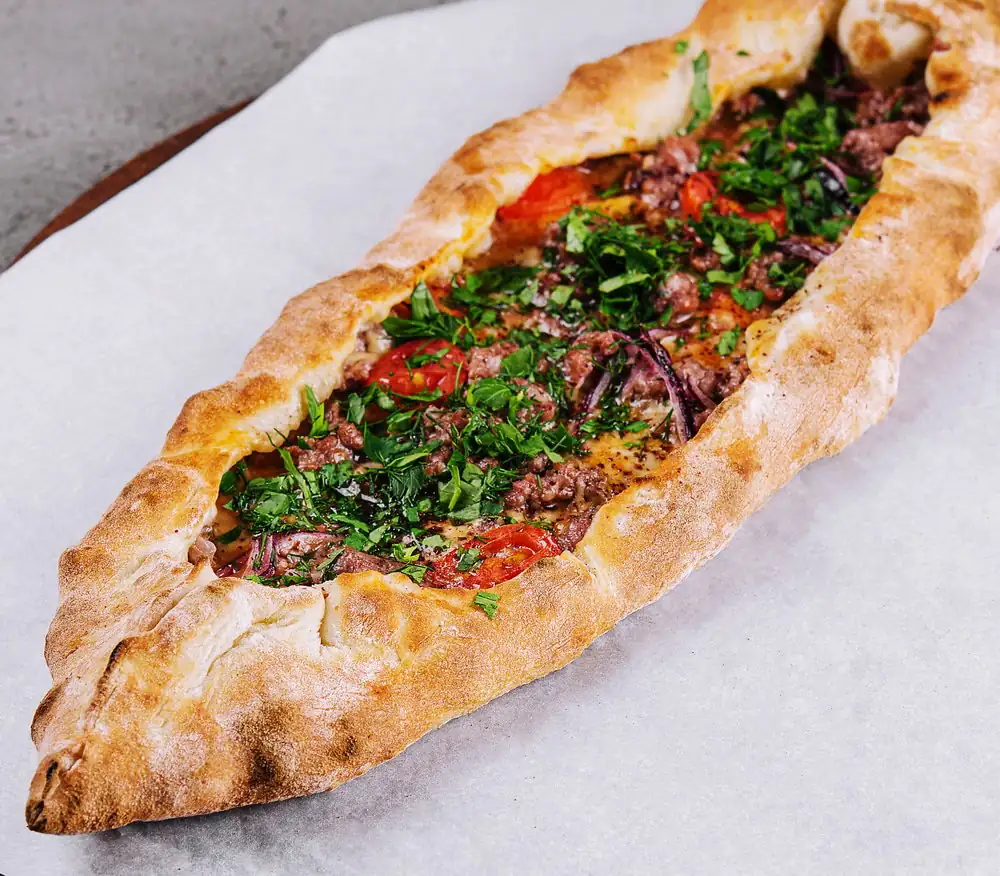
Pide is a flatbread that looks a bit like a boat shape and comes with all different types of toppings – more on that shortly. That said, you can as well get a round pide, which is another variation but equally as delicious.
The dough is usually made with flour, water, yeast, and salt, and it is baked in a hot oven until golden brown and crispy. Pide is a popular street food in Turkey and can be found in many restaurants and bakeries throughout the country.
It is a delicious and versatile dish that is perfect for sharing with family and friends. You won’t struggle to find pide anywhere – it’s that popular.
It’s a great snack, a full meal, and it’s amazing if you’ve got the munchies after a night out. Pide is a traditional Turkish dish that has a long and fascinating history. Originating in Central Asia, it was brought to Anatolia by the Turkish tribes during their migration from Asia to the Middle East.
Historically, pide was first mentioned during the Ottoman period in a book called “Divan-ı Lügat-it Türk” written by the famous Turkish linguist and lexicographer Mahmud al-Kashgari in the 11th century. It was a popular dish among nomadic tribes due to its simple components and portability. Over time, pide evolved and gained popularity throughout the Ottoman Empire, with different regions developing their own variations of the dish.
Even so, the most famous variation within Turkey is connected to the Black Sea coast, and Trabzon in particular. The Black Sea region is known for its rich and diverse culinary traditions, and pide is a beloved dish that reflects the flavors and ingredients of this coastal area. In the Black Sea region, pide is often made with locally sourced ingredients such as anchovies, corn, and a variety of herbs and spices that are abundant in the area.
The Black Sea coast is famous for its seafood, particularly anchovies, which are a popular topping for pide in this region. The use of fresh, locally sourced elements gives Black Sea pide a distinct and delicious taste that sets it apart from pide found in other parts of Turkey.
In addition to the components, the preparation techniques used in the Black Sea region as well influence the preparation of pide. Pide in this area is often baked in wood-fired ovens, which gives it a unique smoky taste and crispy texture.
The traditional methods of preparing and baking pide in the Black Sea region have been passed down through generations, making it an integral part of the region’s culinary heritage. Today, pide is not only enjoyed in Turkey but also in neighbouring countries such as Greece, Bulgaria, and Armenia.
Brands We Use And Trust
In all honesty, you can put whatever you want on a pide and it’s still pide.
That said, there are some traditional toppings that you should definitely try.
1. Kiymali Pide (Minced Meat Pide)
A classic variation of pide, filled with a savory mixture of seasoned minced meat, onions, tomatoes, and bell peppers.
The flavors come together to create a delicious and hearty option that is popular among pide lovers. You can as well add cheese on the top, which is called kiymali kasarli pide.
2. Sucuklu Pide (Turkish Sausage Pide)
This variation features slices of sucuk, a spicy and flavorful Turkish sausage, combined with melted cheese and a cracked egg on top.
The combination of succulent sausage and gooey cheese makes this pide a satisfying choice for those looking for a bold and spicy flavor.
3. Peynirli Pide (Cheese Pide)
A simple yet delicious option, the peynirli pide is filled with a blend of Turkish white cheese, parsley, and sometimes a sprinkle of black sesame seeds.
The gooey melted cheese paired with the crispy crust creates a delightful contrast of textures in every bite.
4. Ispanakli Pide (Spinach Pide)
For a lighter and vegetarian-friendly option, the ispanakli pide features a filling of sautéed spinach, onions, garlic, and feta cheese.
The combination of earthy spinach and tangy feta cheese creates a harmonious taste profile that is sure to satisfy even the most discerning palates.
5. Kuşbaşılı Pide (Meat Pide)
The name “kusbasli” translates to “from the bird’s head,” referring to the traditional preparation where the meat mixture is placed in the centre of the pastry, resembling the shape of a bird’s head. It usually consists of small pieces of beef or lamb, peppers, onions, and tomatoes that are all chopped very small.
It’s very filling but a true taste sensation!
6. Hamsi Pide (Anchovy Pide)
This variation of pide showcases the rich and savory flavors of anchovies, a popular seafood option in Turkish cuisine. Even so, this is a less common type of pide and you’ll typically only find it on the Black Sea coast.
Anchovies are typically marinated in olive oil, garlic, and herbs before being placed on top of the pide dough, along with sliced onions and parsley. The result is a flavorful and aromatic pide that is a favourite among seafood enthusiasts. When it comes to serving and enjoying pide, here are some helpful tips:
- Pide is best served hot and fresh out of the oven to fully enjoy its flavorful fillings and crispy crust. - You can serve pide on a large platter or individual plates, along with some lemon wedges and fresh herbs for added savor.
- If you’re hosting a gathering, consider cutting the pide into smaller slices or pieces for easy sharing. You’ll as well need some tissues as it tends to be quite messy, especially if you’re opting for a meat version!
Eating Turkish Flat Bread
- Using your hands is the most common way to eat pide.
Simply tear off a piece of the crust and dip it into any accompanying sauce or condiment before taking a bite. - You can as well use a knife and fork if you prefer a neater eating experience, especially with toppings that may be more challenging to handle. - Don’t forget to squeeze some lemon juice over your pide for a zesty kick that pairs well with the rich flavors of the fillings.
Remember, pide is a versatile and delicious dish that can be enjoyed on its own or paired with salads, dips, or side dishes. Unfortunately, there’s no easy way to make pide dough without actually getting your hands dirty, but I promise the final result will be worth it!
Feel free to get creative with the toppings and customize the pide to your liking. From Mediterranean-inspired toppings like olives and sundried tomatoes to classic margarita or spicy lamb options, the possibilities are endless!
Discover the art of making authentic Turkish Pide, a delicious flatbread sometimes called Turkish pizza that everyone will love. - 500g beef or lamb, cut into chunks (you can substitute with chicken if preferred)
- 3 cloves of garlic, minced - 1 bell pepper, chopped (any colour)
- 2 medium tomatoes, peeled and chopped - 1 medium aubergine, cut into cubes
- 2 tablespoons tomato paste - 4 cups beef or vegetable broth
- ½ teaspoon black pepper
Prepare the Dough
- In a mixing bowl, combine warm water, sugar, and yeast.
Let it sit for 5-10 minutes until frothy - Add flour, salt, and olive oil to the yeast mixture. Knead the dough until smooth and elastic
- Cover the dough and let it rise for about an hour until it doubles in size.
Make the Toppings
- For the ground beef pide, cook the ground beef and onion in a skillet until browned. Add tomatoes, green pepper, paprika, salt, and pepper.
Cook until vegetables are softened. - For the spinach and feta pide, sauté garlic in a pan with olive oil.
Add spinach and cook until wilted. Stir in feta, pine nuts, nutmeg, salt, and pepper
- For the kuşbaşılı pide, add your olive oil to the pan and cook your meat until soft. Add vegetables and spices and cook until softened.
Assemble and Bake
- Preheat the oven to 450°F (230°C). - Divide the dough into portions and shape them into oval or boat-like shapes on a baking sheet lined with parchment paper.
Try and get your pide as thin as possible for a really crispy taste - Add your desired toppings to each pide - Bake for 15-20 minutes or until the crust is golden brown and the toppings are cooked
Pide is one of those dishes that basically everyone loves. I mean, there’s a topping for every taste, so what’s not to like? Making pide at home is a really satisfying experience and you can be as diverse as you want to be.
Even so, if you want to stick to the traditional route, the recipes above will see you through. Enjoy with a warm glass of cay!