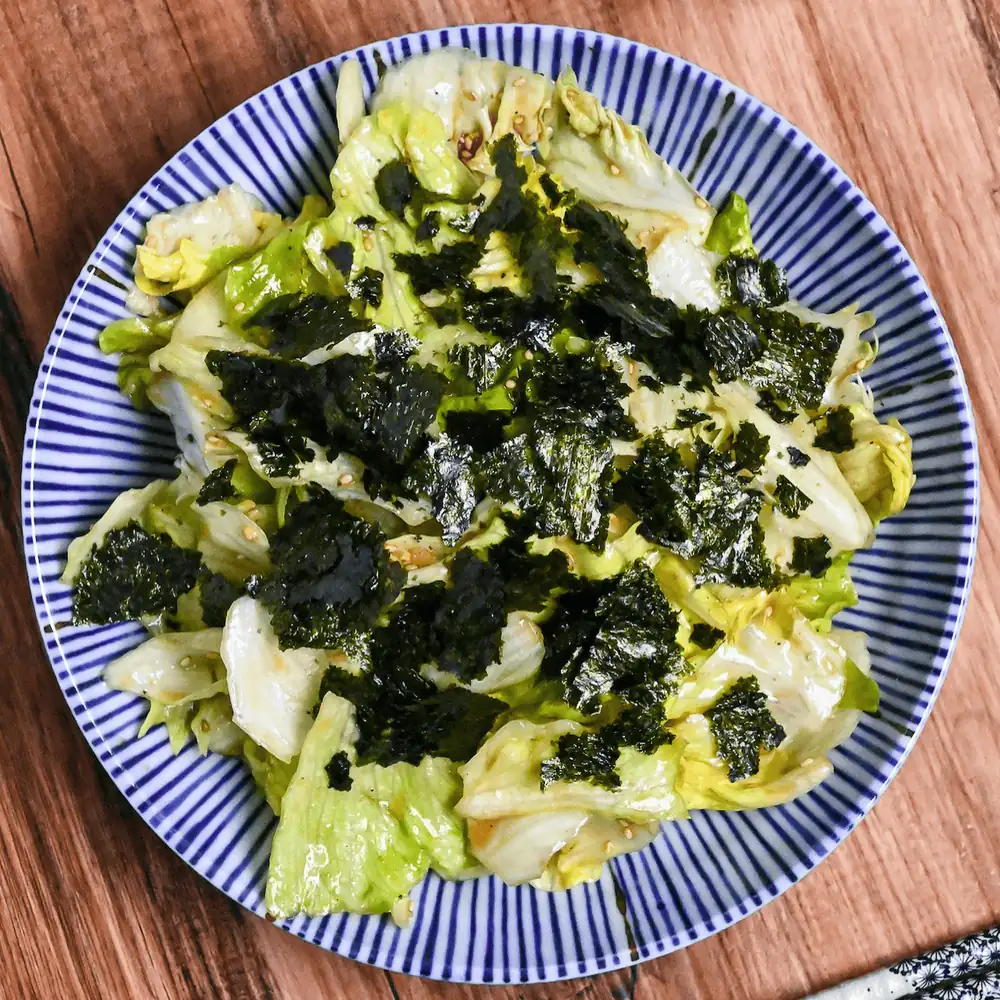
Japanese Yamitsuki Lettuce Salad
This is now one of my favorite go-to fast side salad recipes!
Featured Comment
This is now one of my favorite go-to fast side salad recipes!
I LOVE this salad enough to even pull it out sometimes at breakfast!! BELIEVE the man when he says get yourself some Chinese chicken bouillon… It’s a game changer!👌
★★★★★ In Japan, “yamitsuki” means you cannot stop.
It is the word for dishes that hijack your chopsticks and empty the bowl before you realize what happened. This lettuce salad earns that title. The dressing stacks sesame oil, dashi, and miso into something far bigger than a side dish, and it belongs right alongside the rest of my yamitsuki recipes.
Yamitsuki Lettuce Salad
- What is it? A no-cook Japanese salad where hand-torn lettuce is tossed in an umami dressing made from toasted sesame oil, dashi granules, chicken bouillon, miso, and garlic. It belongs to a genre of izakaya-style salads designed to be impossible to stop eating.
- Flavor profile: Nutty sesame aroma up front, followed by layered umami from the dashi-bouillon-miso trio, with garlic heat and a clean rice vinegar finish.
- Why you’ll love this recipe: Store-bought dressings cannot replicate this flavor because the umami comes from 3 separate sources working in synergy. 5 minutes, no cooking, and it consistently steals the show from whatever main dish it sits beside.
- Must-haves: Toasted sesame oil (not light/untoasted), dashi granules or hondashi, and a way to thoroughly dry the lettuce after washing (salad spinner or paper towels).
- Skill level: Beginner-friendly. No cooking, no knife work, no timing. The only technique that matters is drying the lettuce before dressing.
Summarize & Save this content on:
Have you ever heard of “yamitsuki”? It is a Japanese word that means being completely hooked on something, that feeling when you simply cannot put the bowl down.
In cooking, it describes dishes so good you reach for one more bite without thinking. I have been building a whole series of yamitsuki recipes over the years.
It started with salted cabbage, then tataki kyuri (smashed cucumber), shio okra, mugen cabbage, and mugen piman. Each one uses a slightly different combination of umami seasonings to make a single vegetable irresistible. This lettuce salad is the newest addition to that lineup.
For this recipe, I wanted to capture the flavor you get at a yakiniku restaurant, where even a simple side salad tastes so good you finish it before the meat arrives.
- Lettuce: Honestly, any lettuce works here, but I recommend iceberg. Its high water content and rigid structure give you the most satisfying crunch, which is essential for a yamitsuki salad. Romaine is a solid runner-up if iceberg is not available.
- Toasted sesame oil: This is the defining ingredient. It is less about flavor on the tongue and more about the aroma that hits the moment you toss the salad. That nutty, roasted scent is what makes the dish smell like a yakiniku restaurant. Look for bottles labeled “toasted” or “roasted.” Light or untoasted sesame oil will not produce the same result.
- Dashi granules: One of the 2 umami sources that make this dressing addictive. Dashi granules contain bonito extract and often kombu extract, delivering both glutamate and inosinate in a single pinch.
- Chinese-style chicken bouillon powder: The second umami source. Combined with dashi granules, you get a layered umami effect that is far stronger than either one alone.
- Iceberg lettuce → Romaine lettuce: Romaine gives you a similar crunch, especially from the thick center rib. Green leaf or butter lettuce also work, but they are softer and will wilt faster after dressing.
- Dashi granules → Kombu powder: If you do not have dashi granules, a pinch of kombu powder adds similar glutamate.
- Chinese-style chicken bouillon powder → Vegetable bouillon powder: For a plant-based version, swap to vegetable bouillon.
- Rice vinegar → White vinegar or apple cider vinegar: White vinegar is a touch harsher, so use slightly less. Apple cider vinegar adds a faint fruitiness that actually pairs well with sesame oil.
Have trouble finding Japanese ingredients? Check out my ultimate guide to Japanese ingredient substitutes!
i. Begin by tearing the lettuce into bite-sized pieces.
When you tear lettuce by hand instead of cutting it with a knife, you’re working with the natural fiber structure. This means less discoloration and better texture overall.
Plus, those torn edges are great for holding onto the dressing. ii.
Then give them a quick cold water bath. iii.
You can use virtually any type of lettuce for this recipe, but I personally used iceberg lettuce for its satisfying crunch. The crunchiness of the lettuce is a key element in this dish.
A quick cold water bath helps restore and enhance that essential crisp texture we’re looking for. This is especially true for iceberg lettuce.
i. While your lettuce is soaking, let’s get that addictive sauce going. In a large mixing bowl, combine all your sauce ingredients.
ii. The bowl should be spacious enough to accommodate the lettuce for tossing later, so don’t be shy about sizing up here. i.
Here’s where attention to detail really matters. Drain your soaked lettuce and get ready for the most critical step – thorough drying.
A salad spinner is your best friend here, but a thorough shake in a colander and some paper towels work just fine too. Remember, any lingering water will dilute that sauce we just made, and we definitely don’t want that.
i. Now for the fun part.
Take your dried lettuce and add it to that flavorful sauce waiting in the bowl. Get in there with your hands and give everything a good massage. Hand mixing makes sure each leaf gets an even coat of the dressing.
The gentle massaging motion while mixing helps the flavors come together, making the final dish a lot better. i. For serving, arrange your dressed lettuce on plates and top with hand-torn nori.
I used Japanese nori, but Korean seaweed can add an extra dimension to the dish if you’re looking to bring up the level of addictiveness.
- Aim for completely dry lettuce before adding the dressing. Residual water sits between the oil and the leaf surface, blocking adhesion and diluting every flavor in the mix.
- Use your hands to toss, not tongs or a spatula. The gentle massaging pressure opens micro-tears on the leaf surfaces, letting the dressing absorb into the first cell layer. Utensils either under-coat or bruise the leaves.
- Serve immediately after dressing. The salt and acid in the mix begin pulling water from the lettuce cells within minutes, and the crunch degrades fast.
With these simple tips in mind, you’re set for success every time you make yamitsuki lettuce. Fridge: Not recommended.
Freezer: Not recommended. Meal Prep: Mix the dressing in a sealed jar and refrigerate for up to 3 days.
Prep the lettuce separately (tear, soak, dry) and store in a sealed container lined with paper towels. Combine only right before serving time.
Why is my yamitsuki lettuce watery? The lettuce was not dried thoroughly enough before dressing.
Water trapped on the leaf surfaces dilutes the dressing and pools at the bottom of the bowl. Use a salad spinner or blot carefully with paper towels until no visible moisture remains.
Can I make the dressing in advance? Yes.
Mix all the dressing ingredients in a sealed jar and refrigerate for up to 3 days. Shake or stir well before using since the miso and oil will separate. Do not dress the lettuce until you are ready to eat.
Can I use a different type of lettuce? Any lettuce works.
Iceberg gives the most crunch, which is ideal for this style. Romaine is a strong alternative with a similar bite. Softer varieties like butter lettuce or mixed greens will taste good but wilt faster after dressing.
If you love quick, flavor-packed salads like this one, take a look at my full Japanese salad recipe collection for even more ideas. The ingredient brands and tools I trust are in my Japanese pantry guide and my cooking tools guide.
Can’t find certain Japanese ingredients? See my substitution guide here.
Instructions
- Rip 150 g lettuce leaves into rough pieces and place them in a bowl of cold water while you mix the sauce.
- Add all of the sauce ingredients to a bowl (1 tbsp toasted sesame oil, ½ tbsp toasted white sesame seeds, 1 tsp Japanese soy sauce (koikuchi shoyu), ½ tsp sugar, ½ tsp dashi granules, ½ tsp Chinese-style chicken bouillon powder, ½ tsp garlic paste, ½ tsp yellow miso paste (awase), ½ tsp unseasoned rice vinegar (komezu), ⅛ tsp salt, and ground black pepper) and mix.
- Drain the lettuce and dry thoroughly, either using a salad spinner or kitchen paper. It's important the lettuce leaves aren't wet as any remaining water will dilute the sauce. Then add them to the bowl of sauce and mix by hand until evenly coated.
- Transfer to a serving bowl. Tear 1 sheet roasted seaweed for sushi (nori) into rough pieces and sprinkle it over the top.
- Serve immediately and enjoy!
- Who: Japanese · Method Rip